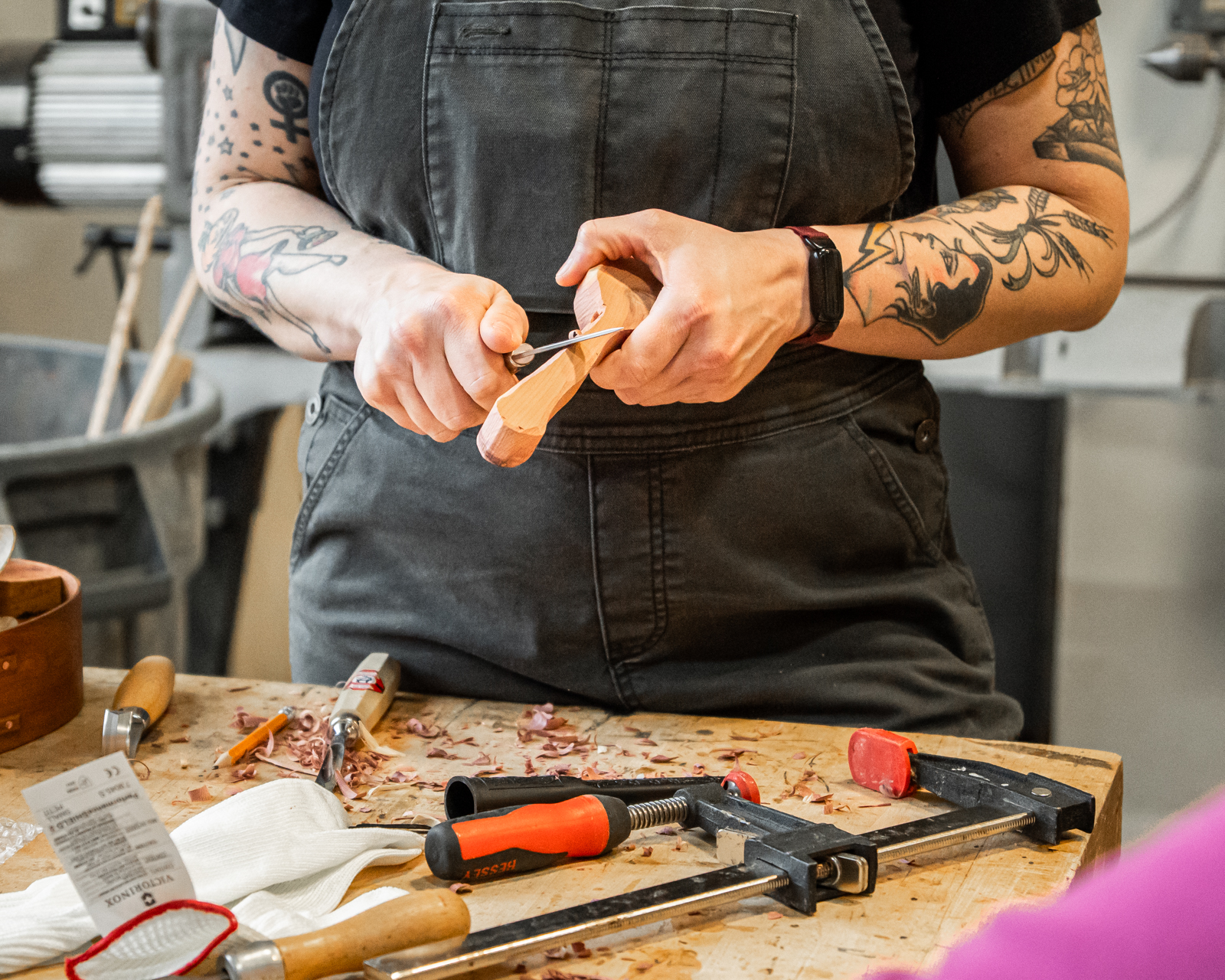
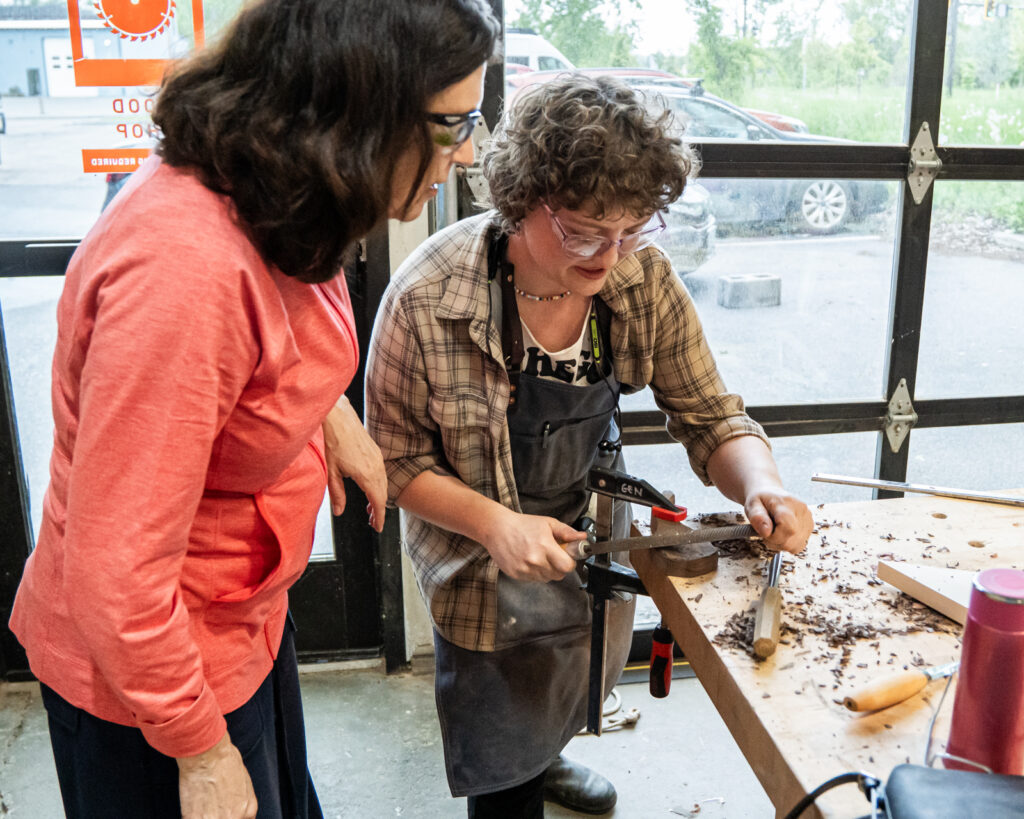
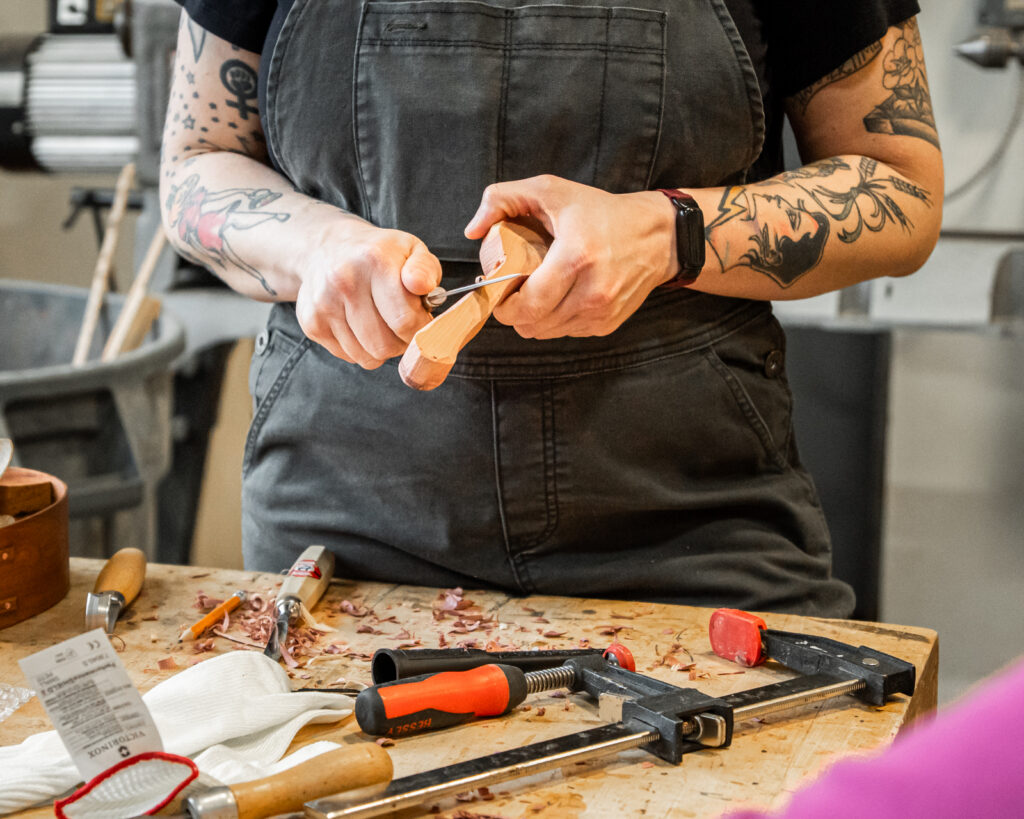
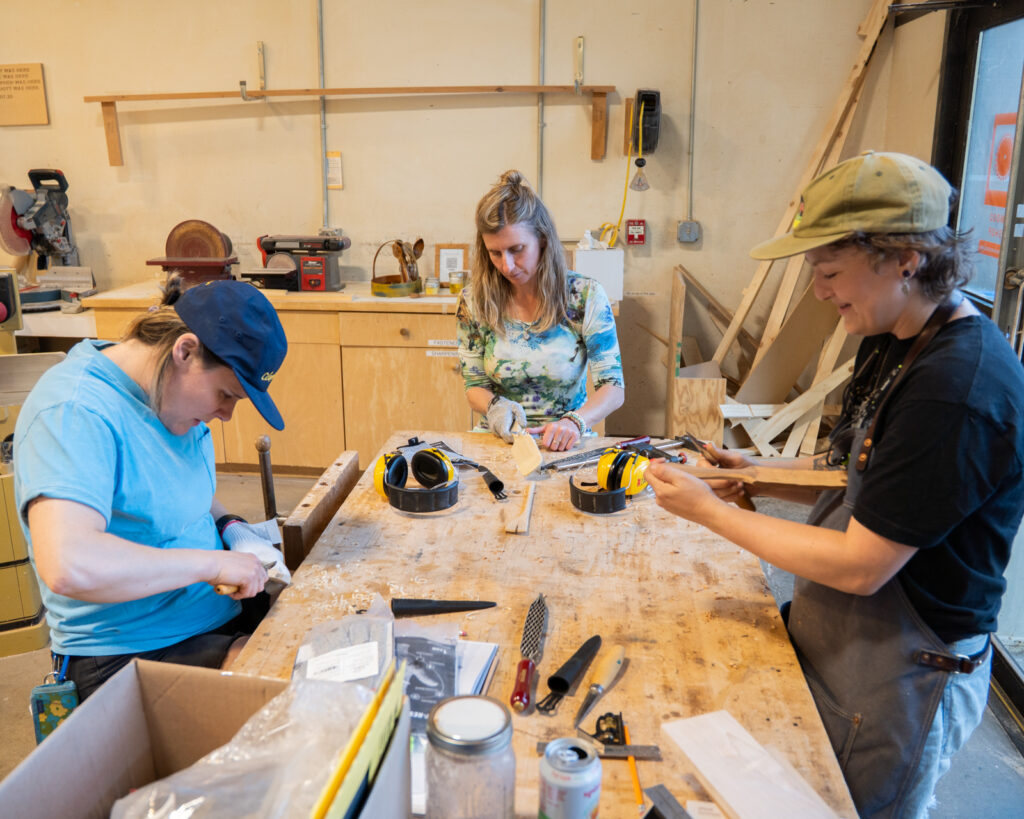
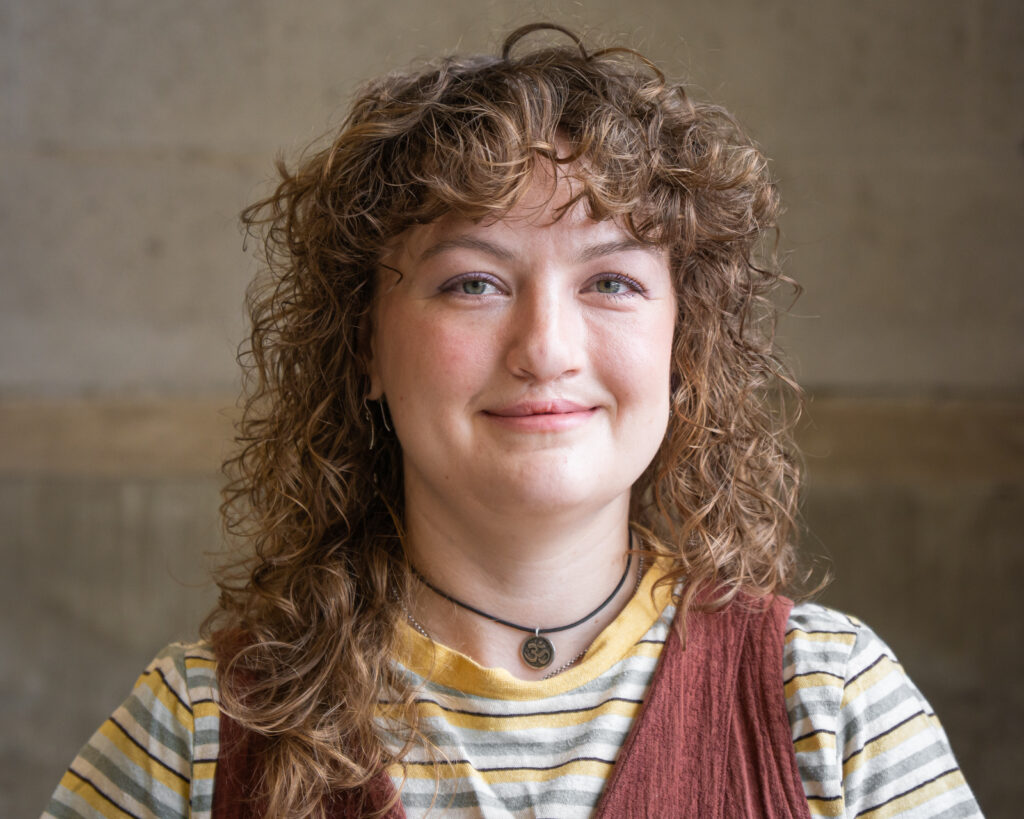
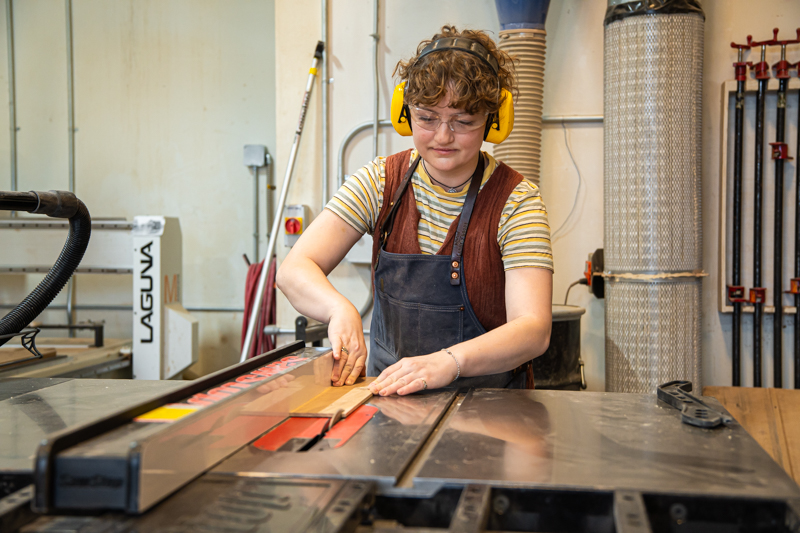
This five-workshop series invites you to slow down and reconnect with the meditative rhythm of hand carving. Whether you’re a complete beginner or have some woodworking experience, you’ll learn to create beautiful, functional kitchen utensils from locally sourced wood, guided by Barbara’s expert instruction and deep appreciation for the craft.
Each workshop focuses on a different essential kitchen tool, building your skills as you master the fundamental techniques of wood carving—from initial shaping and hollowing to finishing touches that bring out the wood’s natural beauty. You’ll work with traditional carving knives and hook tools, learning proper hand positioning, grain direction, and the satisfaction of creating something useful and lasting with your own hands. Take one, or take them all… It’s up to you!
Each piece you create will become a treasured kitchen companion and a reminder of the craft tradition you’re now part of.
All skill levels welcome. Tools and materials provided. Leave with a finished piece and the knowledge to continue carving at home. Individual workshops do not depend on each other, take any one, or any combination of workshops that make sense for you.
Join us at Generator for two evenings of sharing, learning, and making! Whether you’re curious about how things are made or passionate about fixing what’s broken, these community gatherings are designed to celebrate and share the knowledge, skills, and creativity contained within our maker community.
A big thank you to Sophia DiLibero for helping us plan and host these events!
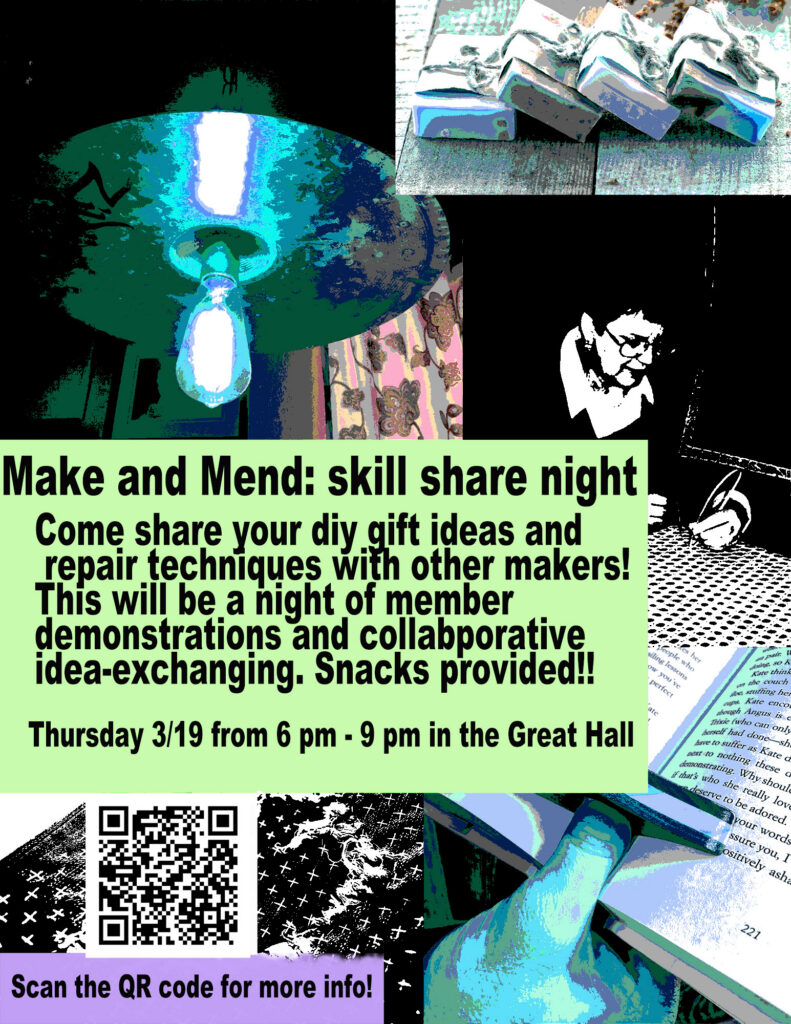
Make & Mend – Thursday, March 19
Bring your broken items and DIY gift ideas to our Make & Mend community gathering! This event is another experiment in coming together, connecting with each other, and exchanging ideas.
The plan is to meet in the Great Hall and connect people with broken items to individuals with appropriate repair skills. This event is also an opportunity to show off previous fix-it victories, and share ideas and examples of projects that would make useful or meaningful gifts for friends and family.
Whether you’re patching jeans, reviving electronics, or brainstorming your next homemade creation, this is your chance to learn from fellow makers and show off your repair wins. Come ready to share what you know and leave with new skills and inspiration.
What: Make & Mend Repair & DIY Gift Event Where: Generator Great hall When: Thursday, March 19 Time: 6-9pm Cost: Free
If you are planning to attend, you can just show up, but we’d prefer if you RSVP’d below. This will help us gauge whether this is a good idea or not and ensure we are properly prepared. Please also consider bringing some snacks to share.
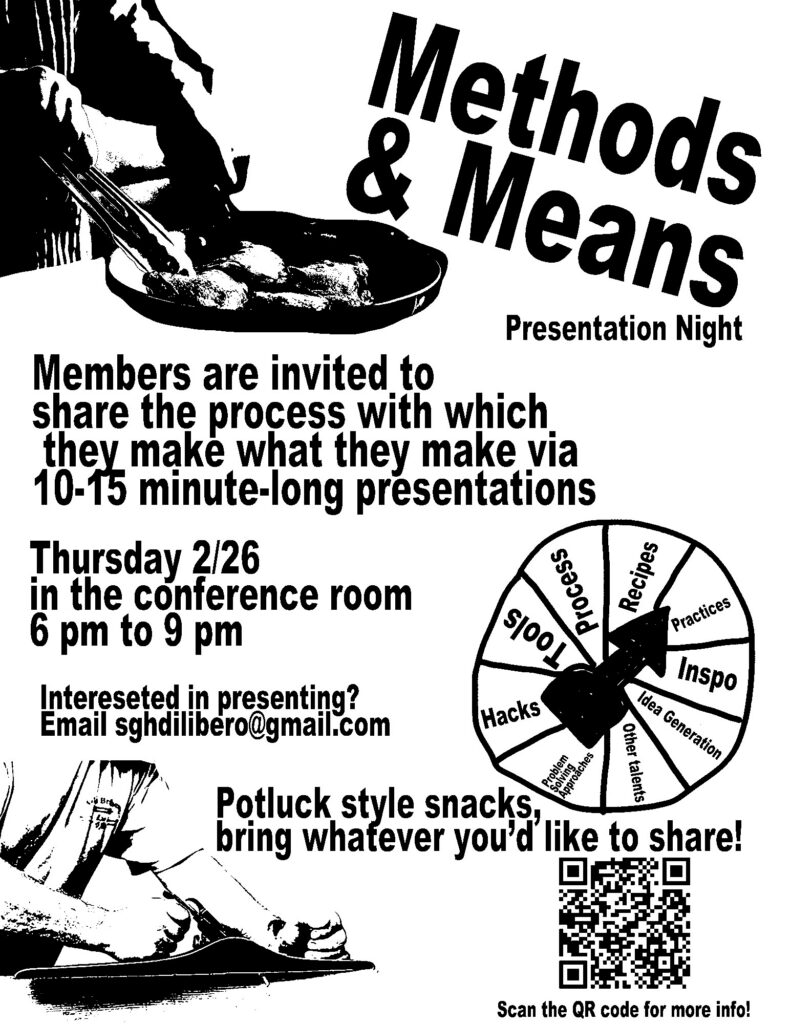
Ever wondered how different people approach certain tasks or projects? Methods & Means is a show-and-tell type of event where our community members are invited to pull back the curtain on their approach to a particular process.
This is an experiment, and there are no rules or expectations on what should be shared, or how to share it. Take us through some slides, set up a demo, do an interpretive dance… It’s your choice!
No Topic Is Off Limits Tell us about how you approach using 3D printing to create molds for slip casting ceramics… Walk us through the steps and ingredients necessary to make the most awesome cup of hot chocolate… Or explain the theory and reasoning behind how you organize files on your computer.
The Format Is Simple Share your methods, reveal your means, and give us a little glimpse of your inner-nerd so we can appreciate the passion behind the maker/doer! Each person will have ~20 minutes to use however you want. We’re planning for 10-15 minute presentations followed by discussion… But please don’t let our lack of creativity limit your plan.
Interested in Sharing? We are currently seeking ~6 community members interested in presenting. If you have a thing you’re passionate about—be it practical, whimsical, or anywhere in between—we’d love to hear from you.
Please contact Sophia at [email protected] to share your theme and reserve a spot.
Current Lineup
Greg Maino – The Perfect Oreo Dunk
Patrick Fahey – A Simpleton’s Guide to Sharpening Tools
Bjorn Peterson – Design Rabbit Holes
Neil Shah – Oru Woodstove Monitor
Jim Hodson – Developing Agreement via App
Sam Francis – Papier Mache Masks
Lux – Creativity Through Spontaneity
Aurora Calderon – Craft Switching Thru The Seasons
Greg Maino – The Art of Making Good Bad Decisions
What: Methods & Means Show & Tell Event Where: Generator Conference Room When: Thursday, February 26 Time: 6-9pm Want To Present: Contact [email protected] Cost: Free
If you are planning to attend, you can just show up, but we’d prefer if you RSVP’d below… even if you are presenting. This will help us gauge whether this is a good idea or not and ensure we are properly prepared. Please also consider bringing some snacks to share.
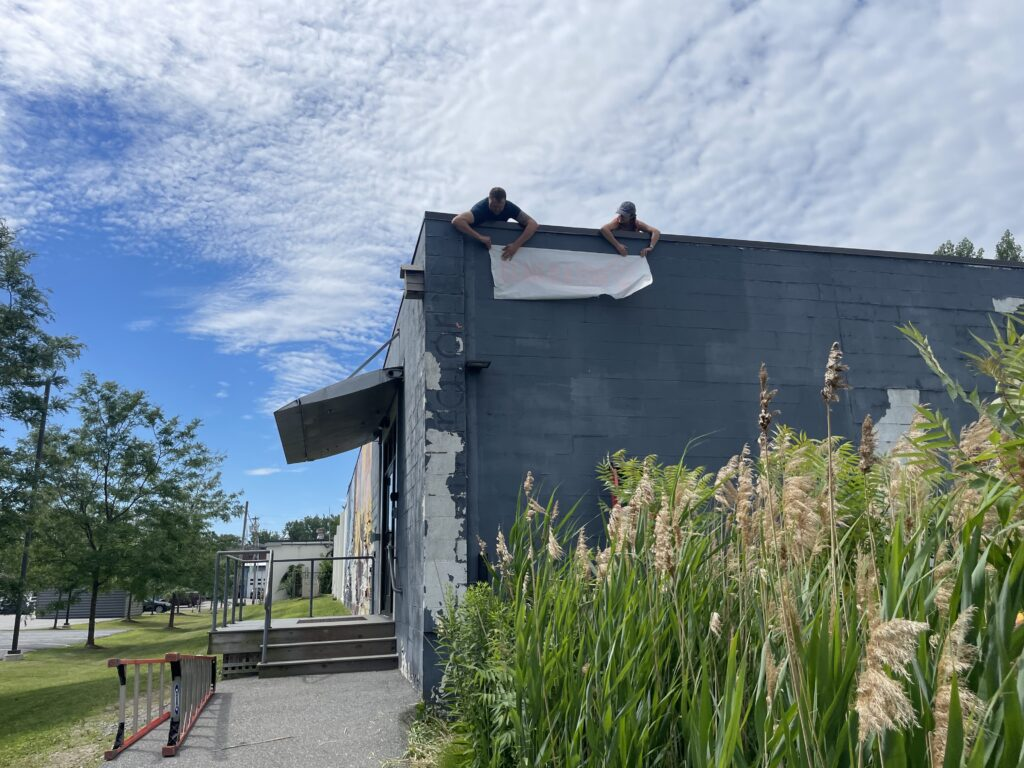
Mason Merriam is the Director of Facilities and Operations here at Generator. He has been at Generator for a little over a year. Mason comes to us with experience as a freelance carpenter off-Broadway, Foreman in New York City, and more recently as a maintenance technician at the University of Vermont Medical Center. It has been so fun getting to know Mason this summer. He is a funny guy who is always willing to help. There is no one else I’d want to hang off the roof with!
We hope you enjoy reading a little more about how Mason got here, what he does, and what brings him joy in his own words.
Hometown/Birthplace? Ription, VT
Current Home Location? Vergennes, VT
What is your job title at Generator, and what do you do? Director of Facilities and Operations. I am tasked with making sure the facility is kept running smoothly. This includes everything from writing policies, to fixing equipment & scheduling major repairs and upgrades, to running our Fabrication Services & Space Rental programs.
How did you first discover Generator, and how did you end up working here? A good friend of mine has been a member here for many years and told me he thought that I would be a good fit at Generator.
When you’re at Generator, what brings you joy? Why? I love getting to interact with the members and see all of the interesting, cool projects that they’re working on. It’s a really wonderful community.
What’s one rewarding/fulfilling aspect of working at Generator you either didn’t expect, or didn’t know would be part of your job? It’s really wonderful to be part of a team that is fun, creative, emotionally intelligent, and excited to be part of such a cool place.
What’s one aspect of your job you wish you could do more of? I would love to be able to do more physical repair work on the tools and equipment.
If you didn’t work at Generator, what would you be doing right now? Probably still working at University of Vermont Medical Center.
If you had 2 weeks to do whatever you wanted to do, and all the money you needed to do it… What would IT be? I would book a two week fishing trip to Sweden, Norway, and Finland.
Here at Generator our mission is to help people make stuff. What is it about making something that is so important, and why should other people care? When you learn a new skill and use it to create something, or you learn to use complicated or dangerous tools safely and well, it builds confidence and allows you to bring that into other areas of your life. “If I can do X, why can’t I do Y?” Learning to make something exercises both physical and mental traits. You have to problem solve, you have to try out new methods, or ask a fellow member for help and in doing so you grow and become part of a community. It can bring a sense of pride and self reliance to a person.
How would other community members describe you? Devastatingly Handsome™
Barbara Sauer-Davis first came to Generator as a fledgling woodworker looking to make use of the full suite of tools in our woodshop. Since then her skills and her small business have grown, and we’re thrilled to have her in this year’s cohort of our JumpStart entrepreneurship program. Barbara has a unique focus on using traditional craftsmanship techniques to make furniture that connects history, sustainability, and quality.
We hope you enjoy reading about Barbara’s woodworking journey in her own words.
Woodworking for me isn’t just about crafting furniture – it’s about weaving together history, craftsmanship, and community. I’m Barbara Sauer-Davis, the maker behind Wolf and Wood Thrush. Being a member at Generator, and now as an entrepreneur in their JumpStart business incubator, has allowed me to elevate my business to new heights.
At the heart of my practice is an appreciation for history and sustainability. Using traditional centuries-old techniques, I aim to forge connections between the past and the present. My commitment to sustainability drives me to challenge the disposable culture of mass-produced furniture and to craft pieces that transcend trends and are made to last.
My woodworking journey began at the Yestermorrow Design/Build School, where I took an 11- week certificate course that sparked my interest in historic craftsmanship. During the course I constructed a chair using only hand tools and fell in love with the process of crafting furniture by hand. After selling my final project, an old fashioned wooden coffee grinder, I launched an Etsy store and ventured into entrepreneurship.
Joining Generator Makerspace in 2018 was transformative for my business. I was able to expand from the hand-carved spoons I was making at home to larger cutting boards and pieces of furniture that I could make in the woodshop. Being a member opened up so many opportunities, like accessing a full suite of tools and selling at the Art Hop and Holiday Humbug markets.
I’m now enrolled in Generator’s JumpStart program and I’m gaining guidance on all the logistics of running a small business. Before this class I was flying by the seat of my pants. Now I’m learning all the specific steps and skills I need to move my business forward – from taxes to marketing strategy. JumpStart has given me clarity on my business goals and a concrete roadmap for the future, empowering me to navigate entrepreneurship with purpose and direction.
As I work towards turning Wolf and Wood Thrush into a full-time career, Generator remains a vital resource for me. Generator members have given me advice, support and creative inspiration in what would otherwise be a very solitary pursuit. Its community, tools, and supportive environment have been instrumental in my growth as a woodworker and entrepreneur.
JumpStart and Generator have given me the confidence to grow my business in ways I never thought possible. I hope they can continue to help other makers like me in the future.
Right now Generator is trying to raise $20,000 in community donations to unlock a $20,000 matching donation. These funds would provide vitally needed support for Generator’s educational programs.
We’re 25% of the way towards our goal. Will you join me in giving back to Generator?
Sincerely, Barbara Sauer-Davis
Thank you so much for sharing Barbara!
As a nonprofit Generator relies on community support to continue to offer our impactful programs and resources to makers like Parker. Will you give today to support Generator?
We currently have a fundraising goal to raise $20,000 in community donations to unlock an additional $20,000 match from our generous sponsors – which means if you give today your gift will have twice the impact!
Parker Silver is a talented multimedia artist and performer who strives to use art to bring people together and create joy and healing. Since becoming a member two years ago, they’ve been creating gothic artwork for their small business on the laser cutter, and also actively building community at Generator. Now they’re launching their own community arts nonprofit that also incorporates creativity, experimentation, and connection.
We hope you enjoy reading Parker’s story about building “Third Spaces” that foster creativity and inclusivity.
My name is Parker Silver, and I wear many hats – business owner, artist, performer – and a member of Generator. This makerspace community has supported my creative exploration, and has also played an important role in my growth as an artist and entrepreneur.
As a multidisciplinary artist, I work with acrylic paint, digital design, resin, and wood cutting to make pieces inspired by gothic and art nouveau aesthetics, and anatomy and nature. Access to Generator’s tools and space has been instrumental in developing my artistic practice. The rapid prototyping tools at Generator have allowed me to make pieces more quickly and with a wider variety of materials.
I made use of these tools when I was previously operating Hi Ho Silver, my small business selling art, apparel, and stickers – many of which were made using Generator’s laser and vinyl cutters. I am also a contemporary performance artist, working in spoken word, burlesque, and as an emcee since 2018.
Recently, my focus has shifted to Grimm’s Domain, a community arts event nonprofit that I lead. Our mission is to create spaces and events where people can connect, express themselves authentically, and celebrate diverse voices from the QTPOC and Disabled community.
Grimm’s Domain offers free and paid programming that spans vaudeville, drag, and pole dance performances; and community events focused on somatic wellness, self-expression, and intergenerational connections. In the next year we are hoping to launch free movie and karaoke nights, tabletop role-playing game meetups, and an inclusive DIY fashion show event. We aim to provide inclusive environments, epitomizing the concept of a “third space” where people can connect beyond work or home.
I see Generator as another example of a thriving third space in Vermont. My favorite thing about this community is that the professional equipment and expertise is paired with a sense of play. People aren’t limiting themselves to projects for a specific goal or job – they are experimenting because they love to learn and create.
The greatest benefit Generator offers, in my opinion, is the access to a network of support. The community’s unwavering support means that even if there’s a glitch with a machine, there are always people to help you troubleshoot or find alternate solutions, ensuring that you are still able to create.
As a nonprofit Generator relies on community support to continue to offer our impactful programs and resources to makers like Parker. Will you give today to support Generator?
We currently have a fundraising goal to raise $20,000 in community donations to unlock an additional $20,000 match from our generous sponsors – which means your gift can go twice as far!
Rob Rock was one of Generator’s first members and a pivotal part of launching our makerspace back in 2014. Rob is a talented maker, artist and inventor, but also has the unique experience of applying his skills to his other passion – farming. As the co-owner of Pitchfork Farm he’s customized, built, and invented many agricultural machines to assist with farm work. We’ve been wanting to share his maker story for years, and Rob was kind enough to take time out of the busy spring planting season recently to write up his history of making at Generator.
We hope you enjoy reading Rob’s story in his own words.
I’m Rob Rock, the co-owner of Pitchfork Farm and a Generator member. Pitchfork Farm is a diverse 22 acre vegetable farm located in Burlington’s Intervale, and Generator has been integral to the operation of our farm and to my exploration of designing and building agricultural machinery.
I’ve been a part of the Generator community since its founding days, and as soon as I became familiar with the tools I began applying them to farming. I quickly started customizing farm equipment and prototyping new agricultural tools. I used 3D-printed parts to create a high-density seeding tool for small-scale farming. I then began building tractor-drawn implements in the metal shop, as well as an electric motor driven prone weeding platform that allows farmers to comfortably lie flat for hand weeding or transplanting while increasing efficiency.
Rob transplanting onions using his prone weeding platform.
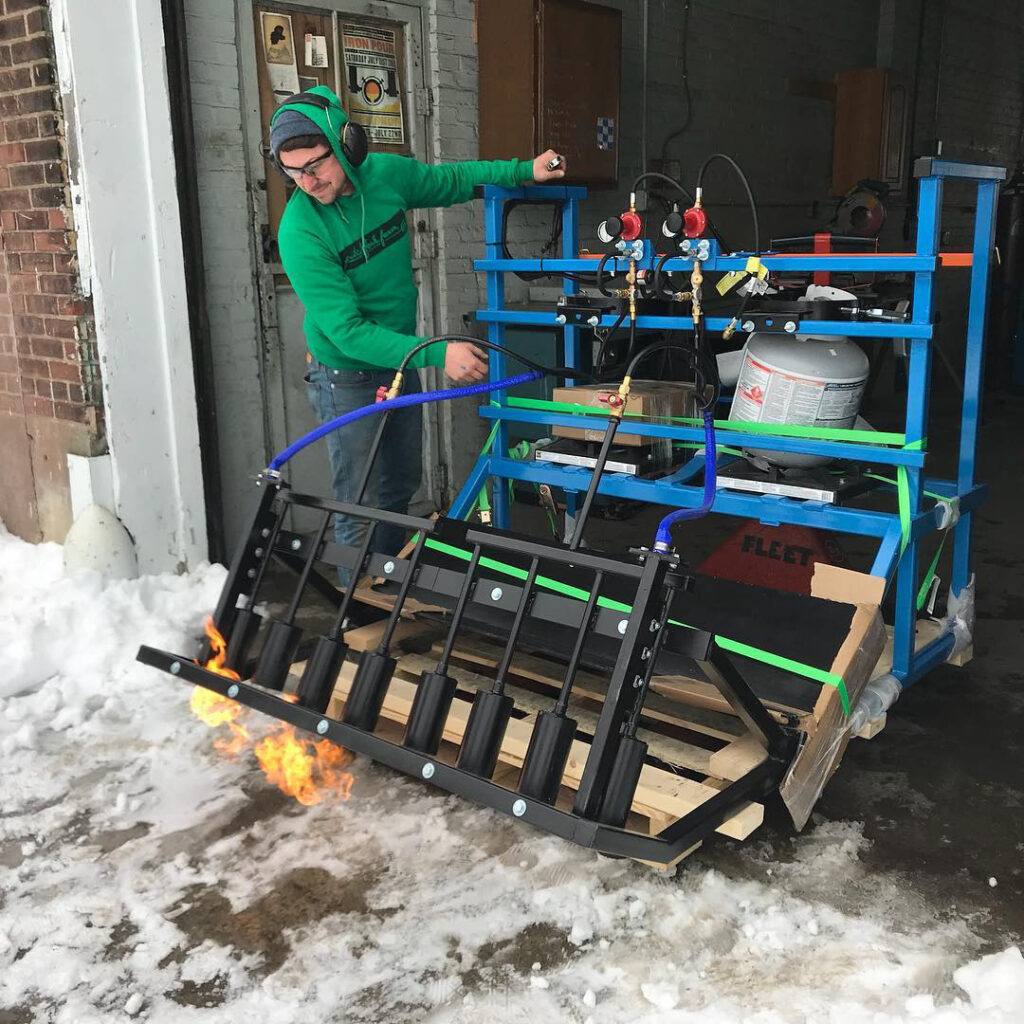
At this point I was itching to start a company after seeing so many early Generator members launch businesses. I started Upstream Ag and began building next generation machinery for small farms. The tool that really took off was our FlameWeeder, which was a tractor-mounted propane torch that quickly killed weeds without the use of pesticides. I sold about 50-60 FlameWeeders (before it became a little too hectic running a farm and a manufacturing business), and fabricated most of them at Generator. I relied on the plasma cutter to make custom parts, and hired Generator members to help with production since they were the most highly skilled workers in town.
Rob testing out a prototype of the FlameWeeder.
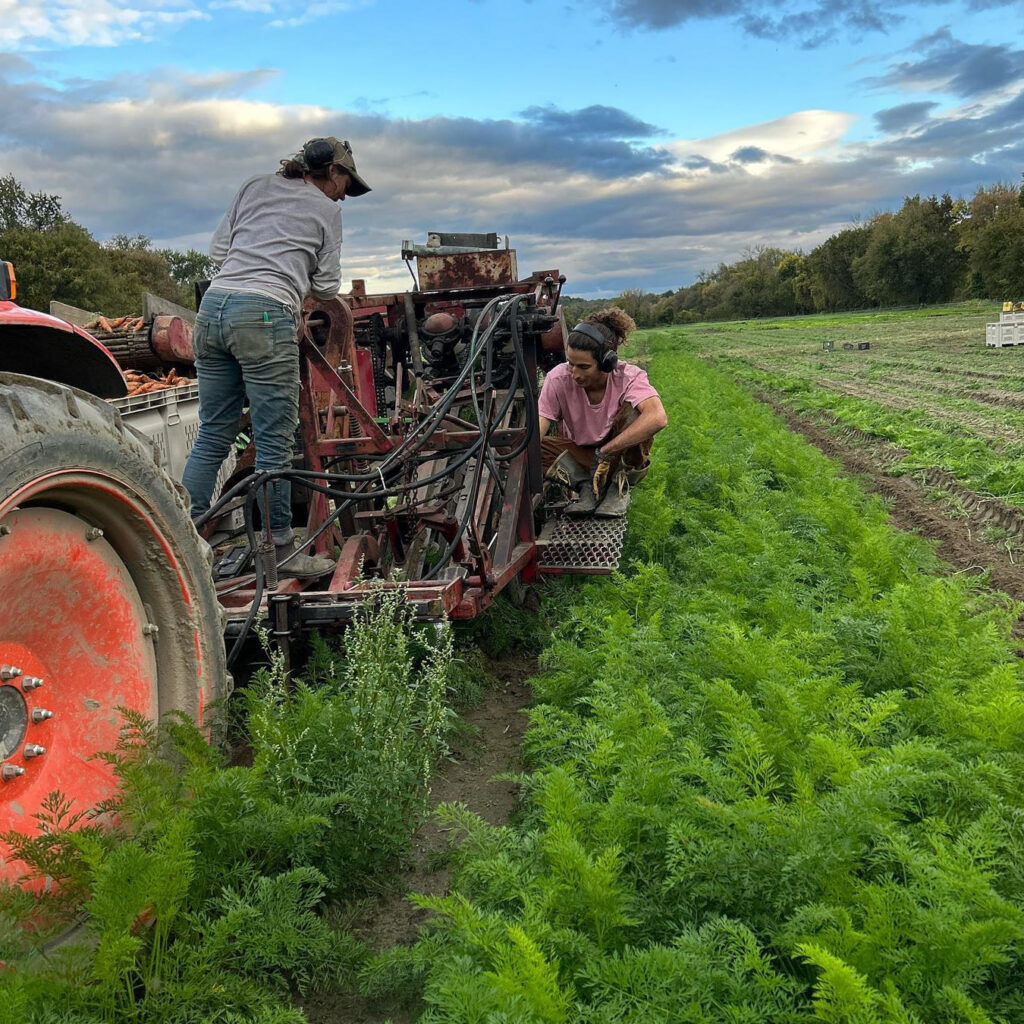
Most recently I have been making use of the Generator tools to design, adapt, and repair equipment for Pitchfork Farm. Recently I repaired a vintage carrot harvesting machine built sometime in the 80s for which parts are no longer readily available. When the lift arm mechanism broke I was able to fabricate a new mount using the milling machine at Generator. For a small farm, this is a big win that allows us to save money and extend the life of unique equipment that fits our scale of production.
The laser cutter and 3D printers have helped me to develop a ‘speed seeder’ which allows us to manually seed a 144 plug greenhouse flat with lettuce seed in a little under one second – it’s a pretty good result for now but I’m thinking maybe I can automate it!
The carrot harvester in action on the farm.
Generator is a treasure trove for anyone working in a physical medium – whether that’s the arts, trades, or agriculture. The tools and community at Generator were vital in helping me through the early years at Pitchfork Farm and in realizing projects that would otherwise have been impossible to make, and I remain excited to keep the projects flowing as I look to the future.
Generator has made a huge impact for me, and I want to make sure other makers continue to have access to their resources.
– Rob
Thank you Rob!
As a nonprofit makerspace, support from our community is what allows Generator to offer a wide variety of programs and provide access to resources that makers like Rob find valuable. Might you be willing to contribute today?
We are currently in the middle of our spring fundraiser. Thanks to some generous sponsors we have the opportunity to unlock a $20,000 matching gift if we can raise $20,000 in community donations by Sunday, June 16th, 2024. If you contribute today, you gift will go twice as far!
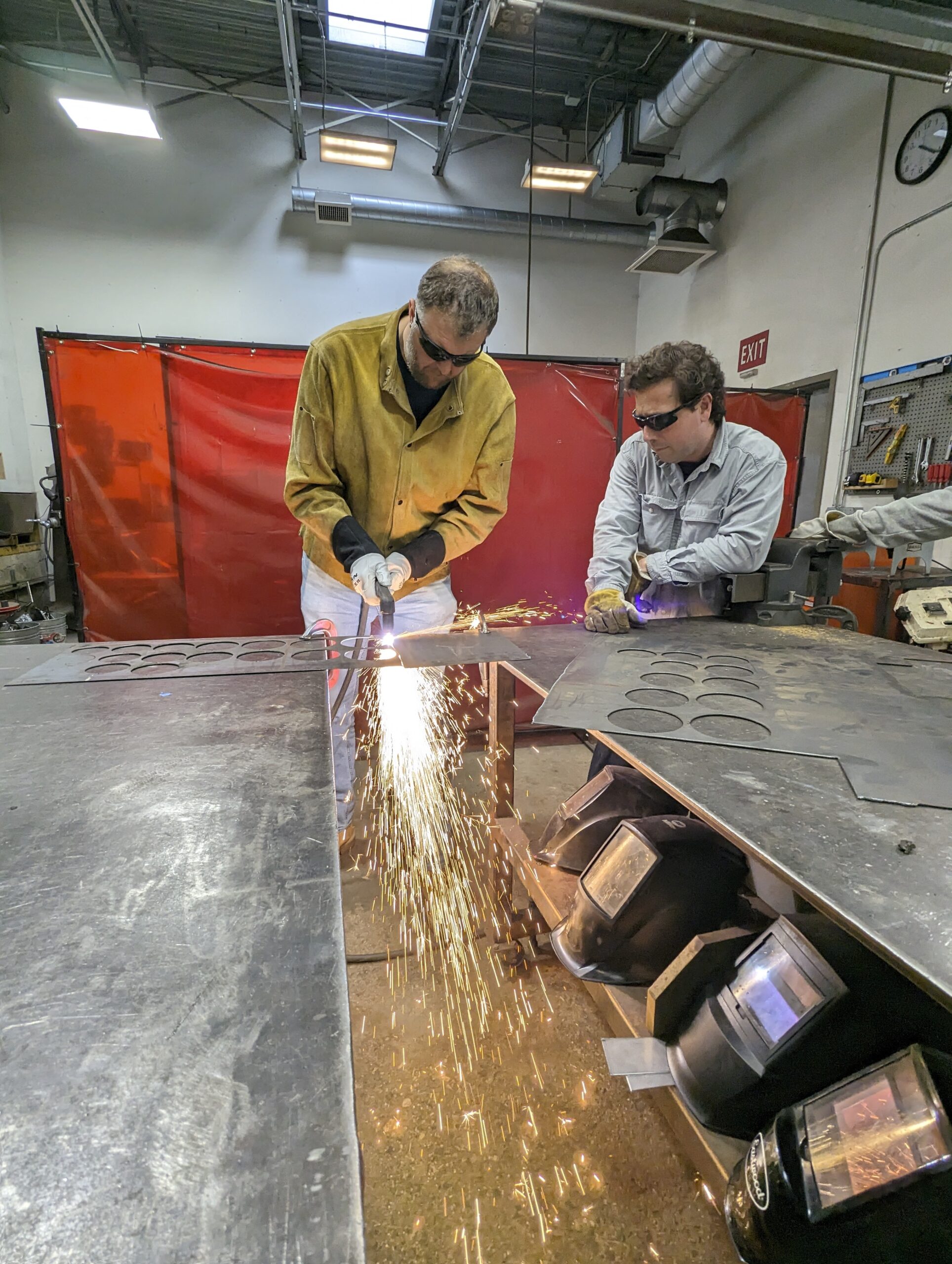
A month or so ago I reached out to our membership through the forum asking if anyone had a project or story they’d be willing to share. One of the people that replied was Dan Rabinovitch. Dan had recently taken our MIG welding and CNC Plasma trainings, and wanted to share a short video documenting a cool mini-firepit he had made as a way to practice his new skills. Dan appeared to be having a great time learning and experimenting, and a couple of weeks later we were able to connect in person so I could chase Dan around our metal and wood shops with my camera. After spending time with Dan I was even more curious, so I sent Dan a selection of questions about where he’s from, what he does outside of Generator, asking about his history as a maker, and his experience here at Generator. Below is the result.
So please enjoy this short piece of writing courtesy of Dan himself!
Name: Dan Rabinovitch Current Location: Stowe, VT Birthplace: IsraelBusiness: Aromatic Designs Website: www.aromaticdesigns.org
I was born and raised in Israel. At age 13, my family relocated to New Jersey.
I spent the majority of my life living in urban settings, mostly New York City. Around my mid-thirties, I started undergoing an existential process that, only in hindsight, I can recognize as a mid-life crisis. There is of course, far too much depth to this history than can be summed up in a few sentences, but suffice it to say that this was the point I realized that to preserve my sanity, I needed to live in a place where there is more earth than pavement, and make more art.
It took several more years of plotting, exploring, and untethering, but I finally managed to make the (timely) move from NYC to the greater Stowe area in 2019. Around this time I had started working on some ideas for interactive large scale installations, the manifestation of which would require dusting off and expanding my scope and skills. To that end I began to seek out a makerspace/community in the area, and it wasn’t very long before I discovered Generator!
I have not been very disciplined about coming to generator regularly at a specific time, but since joining I’ve taken quite a few tool trainings and tried my hand at several small projects, from home projects like a simple plywood dolly for my stereo system, to custom speaker shelves, to signs and award plaques, to a portable mini-firepit. In almost every case, I’ve benefited from the advice and guidance of generator members and staff, both in person and on the online forum. Thanks generator community!
With a background in graphic design, I naturally gravitate towards using the ever-satisfying CNC tools like the laguna router, the cnc plasma cutter, and the laser cutters. I feel most comfortable in the metal shop at this point, but I’m getting more confident in the wood shop as well. It feels very rewarding to complete small projects, but they are really stepping stones towards a bigger plan for an interactive, kinetic art installation – a human powered, life size music sequencer. As I’ve been honing my fabrication chops and developing a tabletop scale model, I’ve also been refining the simplicity and practical feasibility of the design, and I hope to enlist the considerable knowledge and skill of some of generator’s finest to scale up from a tabletop model to human size, starting this spring.
I feel art is very important, perhaps more so in our time than ever before. Art holds the influential potential, not only to connect hearts and minds to fresh moods and perspectives, but in addition, to ignite a sense of curiosity and wonder. Such an attitude is too often hushed or brushed aside by social influences towards increasing reliance on digital technology, hyper-specialization, and an education system rooted deeply in “the authority of the already established,” at the expense of experimentation and creativity.
Curiosity is a skeleton key to the doors of intuition and imagination.
Marcus Bretto is a violin luthier, blacksmith, and artist. In his Generator studio, he crafts beautiful violins by drawing inspiration all over the makerspace – from the work of his knifemaker studiomate to the filament assemblies on the 3D printers.
[spacer height=”30px”]
Path to Generator
[spacer height=”30px”]
Marcus grew up in Hingham, Massachusetts and started making things from a very young age. Inspired by his musician father, Marcus remembers making cardboard guitars with rubber band strings as a child. He enjoyed playing instruments too – he learned to play the violin in sixth grade and soon picked up the drums and the keyboard.
[spacer height=”15px”]
In high school, Marcus realized he could pursue making instruments as a career. He went on to attend North Bennet Street School in Boston, where he trained one-on-one with a professional violin luthier for three years.
[spacer height=”15px”]
Marcus moved to Burlington in 2018. Looking for a studio space to continue his violin-making practice, he found Generator. “I had always been looking for a space where I could share ideas with other people and artists and have access to all these neat tools,” he says. “I was on the lookout when I moved here, and that’s when I just popped in. I was like ‘What!? I didn’t know this kind of space actually existed. This is amazing!’ I got a membership as soon as possible after that.”
[spacer height=”30px”]
Inspiration and Experimentation in the Makerspace
[spacer height=”30px”]
The collaboration and inspiration at Generator has been especially exciting for Marcus. He shares a studio with one of his best friends, professional knife maker Mats Thureson. The two started blacksmithing together, partially for fun, and partially to help Marcus gain a better understanding of metalworking. Marcus believes this collaboration has helped elevate his craft. He also credits inspiration to his studio neighbor, Leslie McCurdy, a fellow luthier who makes electric bass guitars. “Leslie is in the studio right next to me, and I get to peer over the wall and see what he does over there all the time, he says. “I’m like, ‘Oh, this is pretty cool. He’s got the cool stuff.’”
[spacer height=”15px”]
Marcus also appreciates the creative exploration that Generator allows. “Almost every single time I make an instrument for myself, there is some experimentation going on, even if they’re just small adjustments in the process of making templates or, you know, how would I make this little section easier?” Watching other makers create in other shops helps Marcus think outside the box. “There’s almost always some sort of example that’s coming from around here completely unrelated. I’m like, ‘Oh, I saw some way that somebody assembled something in the 3D printing area or like how people are doing laminations with the vinyl. I think ‘Okay, I can take ideas from this and make little adjustments to my process in that way.” The experimental and collaborative atmosphere at Generator help make Marcus’ violins unique.
[spacer height=”30px”]
Advice to New Makers
[spacer height=”30px”]
To new makers, Marcus says, “Don’t judge where you are in the process too early. I see so many people get discouraged about these grand ideas where they think they’re supposed to be. There’s so much that’s in front of you already, so much that you’ve made progress on and improved upon, and it might speak to people in ways that you don’t expect. Somebody will find something to like about your work. And what you do is just keep doing it.”
Leslie McCurdy is a craft luthier who makes electric basses completely by hand. Prior to becoming an instrument-maker, he spent much of his life as a professional musician playing the electric bass. For the past 12 years, Leslie has honed his craft and artistry, building basses across the northern United States before joining Generator. He hopes to expand his sources of inspiration in our makerspace by taking jewelry or even 3D printer classes.
[spacer height=”30px”]
Lesley was born in South America and grew up in the Caribbean, parts of Canada, and the United States. He eventually landed in Austin, Texas, where he spent several years playing with a heavy metal country rock band.
[spacer height=”15px”]
When he decided to move away from the band scene, instrument-making felt like a natural transition., “I got a little older and I just wanted to continue being involved in music, and what I know is bass. So I took some classes and started making instruments,: he says.
[spacer height=”15px”]
Inspired by the likes of Leo Fender –“a semi hemi deity,” as Leslie calls him – Leslie dove headfirst into the world of bass making. He took classes in Michigan for six months before being hired by one of his other great inspirations, Roger Sadowsky. Working with Sadowsky, Leslie learned to appreciate the art of hand-crafting instruments. “I want the basses to have the hand of the maker in them,” he says. “I want you to pick them up and go, ‘Okay, this was not made on a lathe or whatever, but this neck feels like somebody’s hand.’ That’s what I’m striving for.” Due to his handcrafted approach, each of Leslie’s basses are unique. “They’re all different. They have a basic template. But from there I just kind of go, ‘Oh, the grain is going this way. I think I’ll cut this, man.’ Or I’ll say, ‘This one is chipping here, so I’m going to do this here.’”
[spacer height=”15px”]
After working with Sadowsky for about a year and a half, Leslie opened up his own shop in Beacon, New York, where he worked for five years. Later though, having lived in Vermont earlier in life, Leslie realized he “never should have left,” and moved back to Burlington, where he found Generator.
[spacer height=”30px”]
Inspiration in the Makerspace
[spacer height=”30px”]
Leslie has been at Generator for less than a year, but has already felt inspired by other makers in the space. He worked closely with makers in the space, such as woodworkers Alex Brumlik and Juju Lobo.“There’s a lot of the social aspect of being here that’s very helpful, ” Leslie says.“ He also mentioned how the spaces around him at Generator spark interest, drive curiosity, and inspire ideas he hopes to implement into his work. “I’ve just been watching other people and seeing what they do,putting it in the back of my head,” he says.“The jewelry department definitely does know how to decorate things and make them look better. At the end of the day, you just want to make it look pretty.”
[spacer height=”30px”]
Advice to New Makers
To new makers, Leslie says, “You have to decide early on whether you want to be ‘a craftsman’ or ‘an artist.’ If you want to be a craftsman, you have to consider starting to make things with more machines, making more of them, figuring out a way to market them more.I fall into the artist category. I want to do what I do, as much of it as I can, for the people who like it.”