Author: GeneratorVt

  • Meet Edward Burke: Maker-in-Residence Jan/Feb 2017

    Meet Edward Burke: Maker-in-Residence Jan/Feb 2017

    Lagerphones
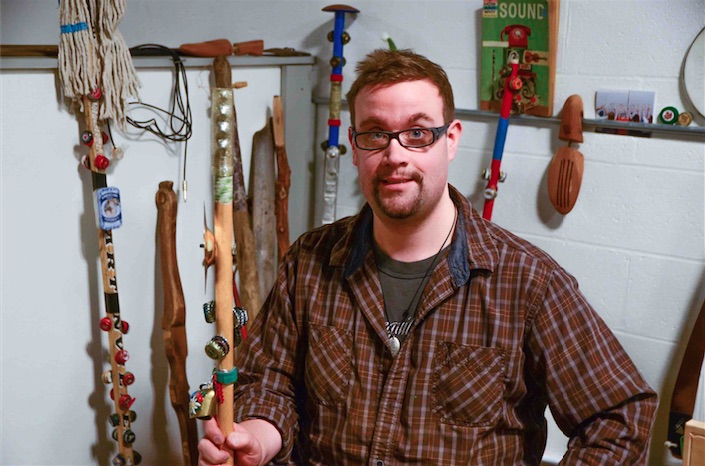
    Lagerphones by Jan/Feb Maker in Residence Edward Burke.

    Meet Edward Burke, Generator’s January/February 2017 Maker-in-Residence.  It’s not hard to spot him whittling his stumpf fiddles in his studio at Generator.

    I have always been fascinated with the idea of building and playing my own instruments – instruments that were portable, easy to learn and play, and ones which would let me make a variety of interesting sounds, while making me stand out in a crowd with unique looks; instruments that elicit the question of “What IS that thing, man”? or “What do you call that”?

    With the power of YouTube and his bedroom as a studio,  he started crafting his own DIY stumpf fiddles. Stumpf fiddles and similar instrument go by different names like the lagerphones, which are played in Australia, stumpf fiddles, which are played in Germany, and ugly sticks, played in Newfoundland, Canada. If you see a kind of walking stick with a rubber ball at the bottom and a bell, horn, woodblock, springs and a tin pan drum — that’s a stumpf fiddle! In order for Edward to make his own, he had to collect odds and ends like old broom handles, screen door spring, antique pie plates, bike bell, bike horn, wood block, bottle caps, etc.  Upcycle to the extreme!

    I had no blueprints; only the videos I saw from YouTube to go on. It was rough, and primitive, and my first attempt was not put together well, but then a visit to my Dad in the summer of 2016 gave me the necessary “oomph” I needed to finish the instrument. His help and suggestions proved invaluable to me, and sparked my curiosity and enthusiasm for wanting to build more instruments, and hone my woodworking/simple hardware skills. My Dad’s help was similar to the kind of personable suggestions, constructive criticism, and technical advice you get from volunteers and staff members here at the Generator.

    Through the residency, Edward seeks to make great strides in his craft of making unique sounds.  These instruments are ideal for empowering street artists to share in a truly unique way.  Edward came to the opinion after college that the best and most poignant music was made not by a classically-trained musician on the most expensive instrument; it was music which was made on the simplest instruments and sung from the mouths of people who have a variety of stories to tell, be they good, bad, uplifting, or funny, that was always the best, most inspiring music.

    An overall belief and mantra leading me in my projects is this: Music is communal, and is conversation, is collaboration, is inspiration. To use a cliche, Less is more. And to quote the late, great Frank Zappa: “I am not a virtuoso. Virtuosos can play anything.  I can’t”. This is the spirit in which I hope to finish out my residency, and give a final performance to the Generator community. I’ve got some wierd lyrics I’ve been writing up that just BEG to be accompanied by my mad-cap hooligan arsenal of noise-bringers”.

    Come join Edward in his performance at the next Generator Member meeting on Monday, March 13th at 5:30pm!

  • It’s about doggie prosthetics with Courtney Reckord!

    It’s about doggie prosthetics with Courtney Reckord!

    STEAM to the Extreme!

    Courtney Reckord is interested in bringing practical engineering challenges to her students.  Through Generator, Courtney is going to be doing some of her own test trial prototyping prosthetics for the furry creatures in need.  Her students will get to experience step by step what goes into designing and creating wearables that require skills in art and design, engineering, and mechanics.  What a fun project to introduce students to rapid prototyping equipment like the laser cutter and 3D printers to spark new connections.  Stay posted to find out more about what unfolds during Courtney’s time in Generator’s Educator-in-Residence program.

  • Meet Alixandra Klein

    Meet Alixandra Klein

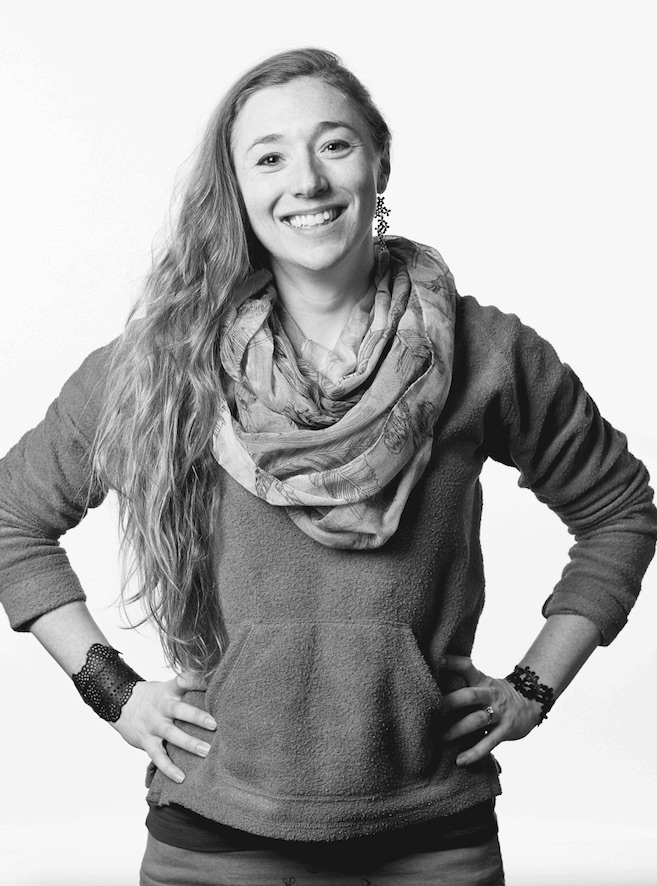
    If you are a Generator member, it is more than likely you have spotted Alixandra Klein.  She is a spunky member, self-driven business owner, teacher, and member representative on the board.  Between all those roles, she spends a good chunk of time at Generator with black hands from the soot from her freshly laser cut bicycle innertube earrings, necklaces and cuffs.

    Alix’s jewelry making adventures started in Tahoe, California. Alix and her husband, Hans Jonathanwakil von Briesen, moved to Vermont and created her brand “ABD” (Alixandra Barron Designs) in September of 2014.

    My business has grown through many baby steps.  Slowly but steadily, with many little successes.  I currently have 15+ wholesale accounts and an online shop and social media outlets all bringing in revenue! From handcutting everything with scissors before I found Generator, to streaming my production methods, it has been very exciting to see it take a shape all on its own.

    One of the scariest and most vulnerable transitions for any self-employed individual, is making that transition to full time entrepreneur.  Alix made that plunge with grace in October of 2016.  It was worth the investment to focus on her own production line.

    Being introduced to the Generator is the single most important thing that has happened so far for ABD.  Not only for the tools that I have access to, but the community of inspired, creative and engaged folks that always seem to have time to bounce ideas off of.

    Alixandra Klein is one of Generator’s top talent and has participated in “a rising tide lifts all boats“ culture. Generator is a platform to help people improve their skills and get to the next stepping stone in their business!

    Check out her jewelry at ABD!

    You can find her teaching laser classes at Generator.

  • Member Projects: Even Greenwald’s Painted Snowboards and Skis

    Member Projects: Even Greenwald’s Painted Snowboards and Skis

    Painting on Unusual Canvases

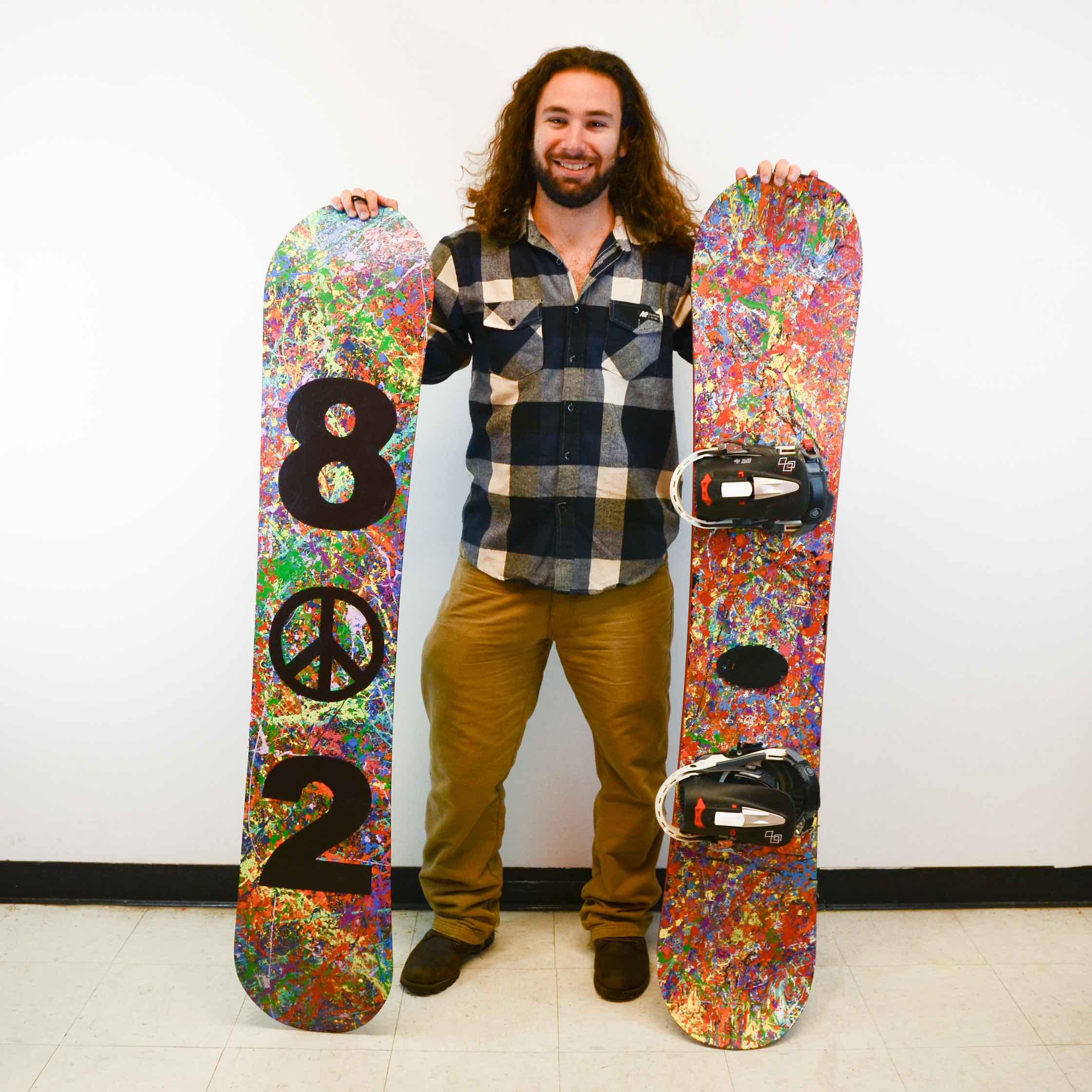
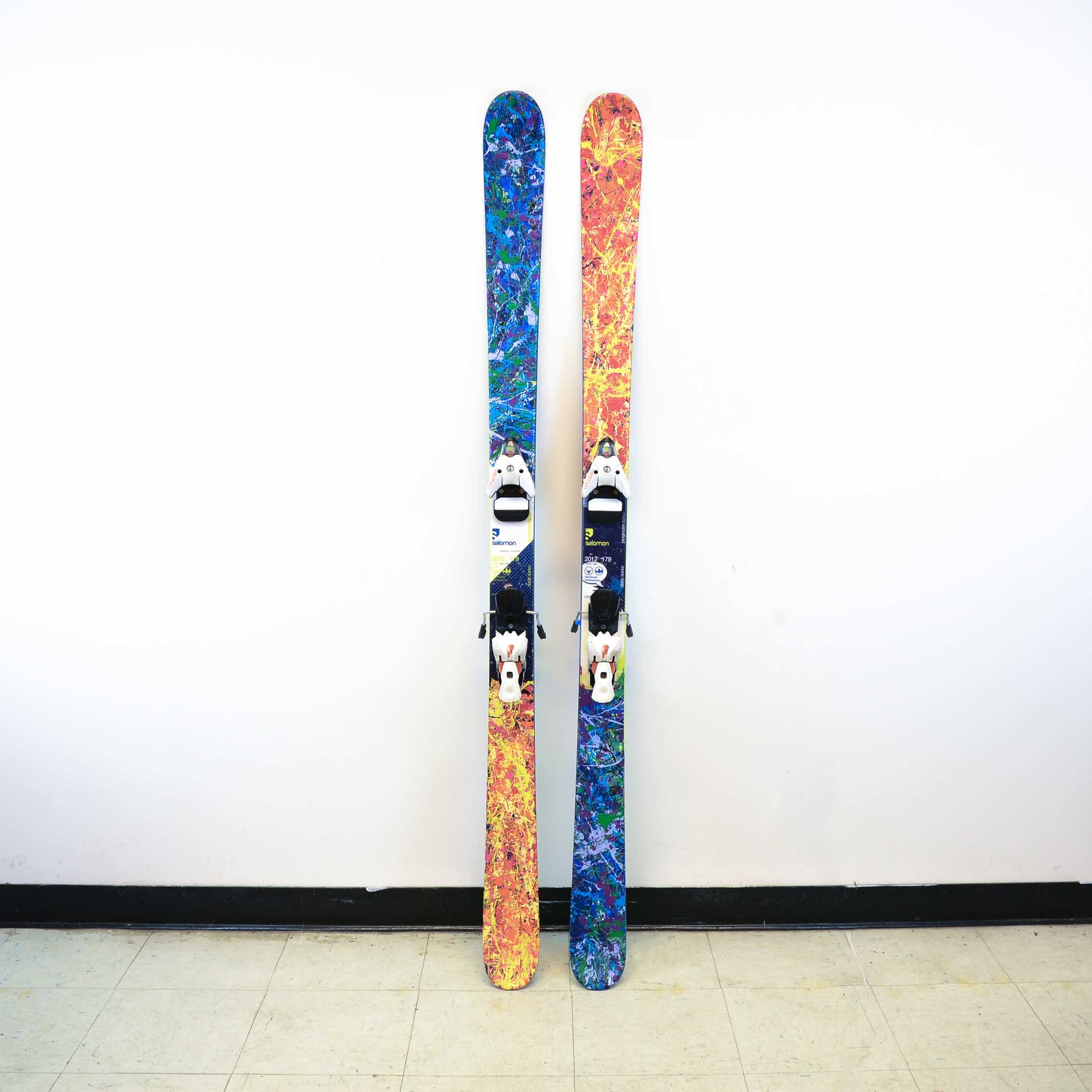
    Generator member Evan Greenwald found inspiration in a social project for a good cause.  Reach out to him if his new direction is something you would like to participate in or if you have some helpful advice for the next steps he needs to take.

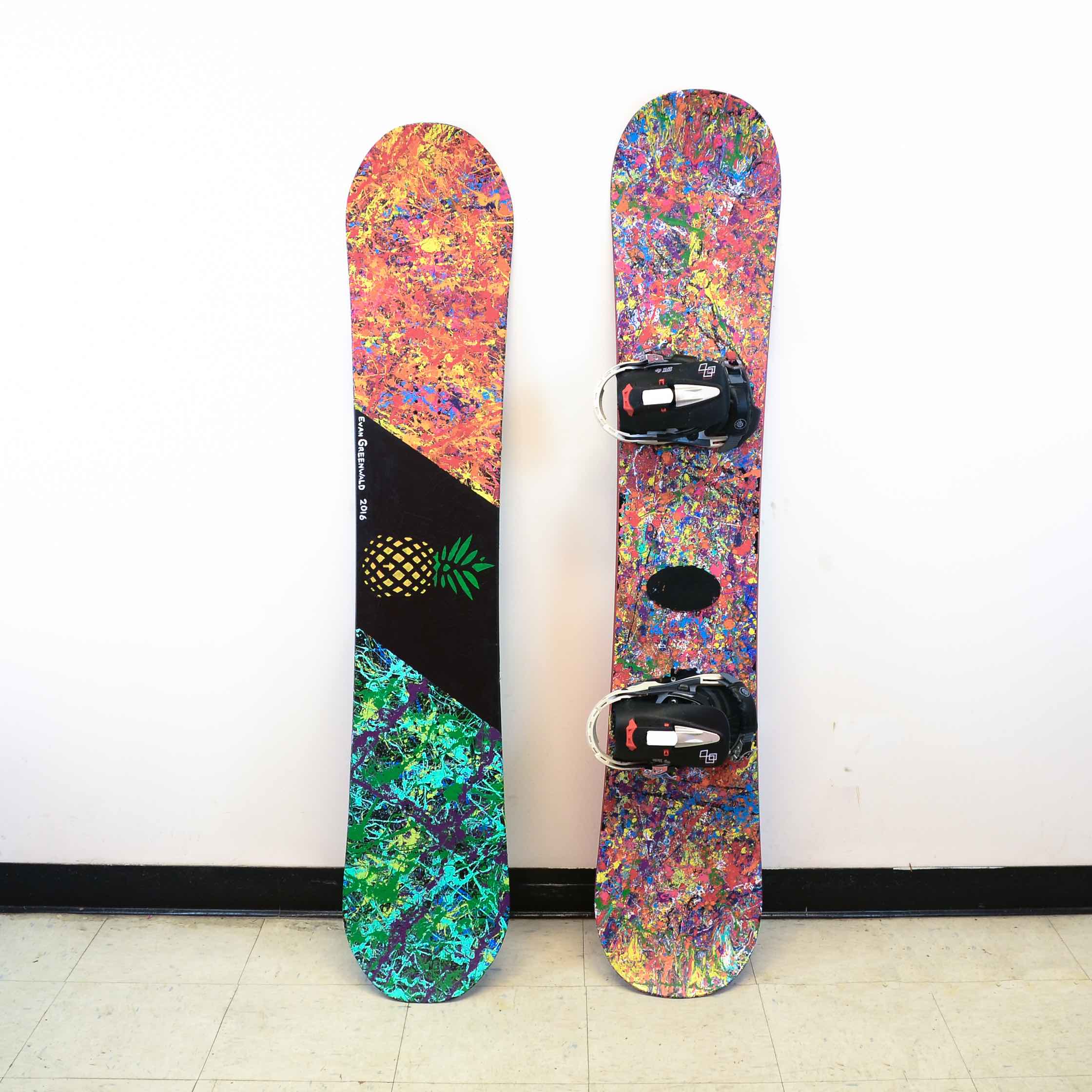
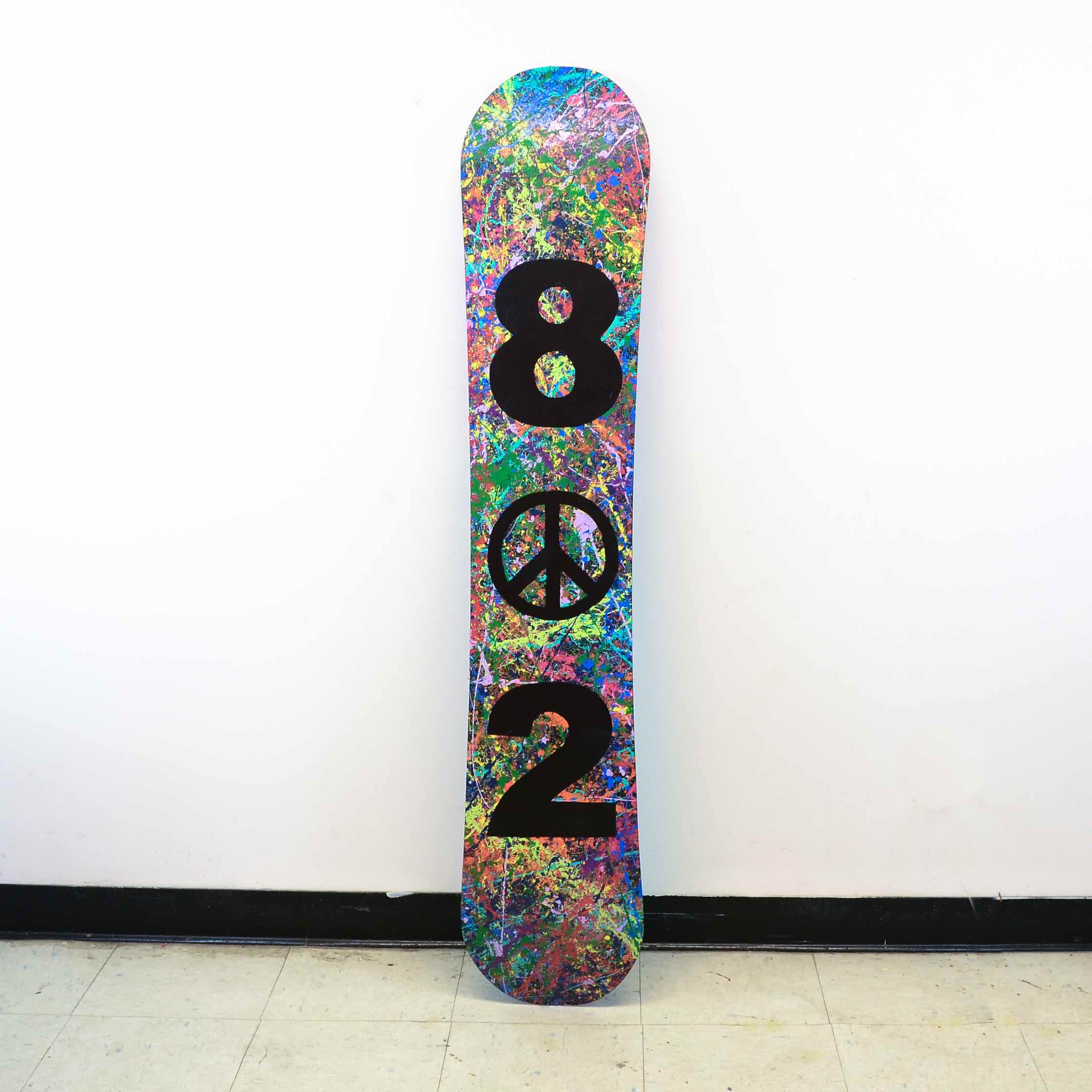
    I saw a call to artists looking for local Burlington artists to decorate old snowboards and skateboards that would be sold to fundraise the Chill Foundation, an organization that inspires youth to overcome challenges through board sports. I was given a free snowboard and freedom to paint it however I wanted. In my opinion, the coolest pattern for a snowboard graphic would be bright, colorful, splatter painted design.

    Using tape and laser cut stencils, I defined which parts of the board were colorful splatter and which parts were black graphics. Once the paint had dried, some touch up work was done to make everything look crisp and sharp. The top design is mean so that the rider can have a completely different looking board (from their perspective) when they are riding switch and the bottom design is an ode to the great, peaceful state that I live in. I had so much fun with this project that I decided to splatter paint my actually skis and snowboard. I used a latex interior house paint for all of the designs which when dry is surprising water and scratch resistant. So far the designs have sustained two full days of active riding with minimal wear and tear.

     By taking pictures of these painted designs, I am interested in trying to convert these physical paintings into digital graphics that can be scaled and manipulated to fit different board shapes if these designs interest any snowboard manufacturers.  This digitalization process is important if I want to ever get a splatter pattern on the base of a functional snowboard.
     -Evan Greenwald
  • A Year in Review: 2016

    A Year in Review: 2016

    2016 at Generator

    A Year in Review

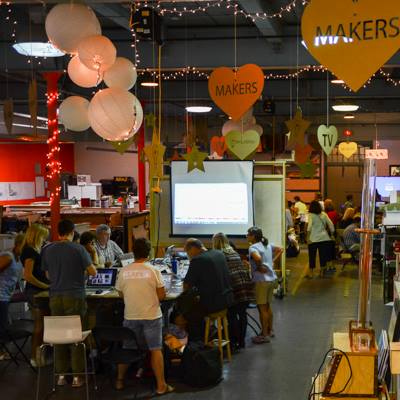
    Holy smokes! Yet another year has flown by.  Generator aims to be a community of collaboration among artists, engineers, and entrepreneurs to foster a fertile environment for innovation, creativity and entrepreneurship. We exist at the intersection of art and technology and offer our community a full suite of tools, workspaces, and education opportunities. Generator makes high-tech equipment available to our members: hobbyists, tinkerers, craftsmen, and professionals. Even more importantly, Generator members are a collaborative creative group of people  with a wide range of skills and interests. Let’s look at how people have come together in 2016 to achieve forward thinking work.

    Let’s reflect on the pillars of Generator as an organization: Creativity, Education, and Entrepreneurship.

    Member creativity and collaboration-

    If you aren’t a Generator member, then you wouldn’t be aware that members have a social and constructive meeting every month.  One of the topics of discussion at these meetings is how to spend the pocket of money called “member money”.  Members make proposals about what could benefit from the member money whether it be a project that could use a boost, a good cause that needs fund raising, or a member organized field trip.  This year’s Member Funded projects were Lucy Delabruere and Gary Shores RasPi “Project of the Month” kit for self-directed learning on micro-controller programming, Pinbox 3000 fundraising, Generator member retail cart, and Jake Blend’s desktop Arcade. That’s just a sample of the bigger projects members worked on! Check out the member products that got pumped out this year.

    Education-

    We have had the pleasure of bringing on our new Education Coordinator, Karen Cornish, this year.  Karen’s professional life began in inventory and operations management, moved through marketing and website design, and landed– where else? – in musical theater.  Her interest in education stems from a determined desire to keep production and technical arts alive in our schools and communities.

    Alison Novak says it well in The Maker Spirit.

    It’s exciting that our kids are growing up at a time when technology is creating so many new learning opportunities.

    Karen brought Generator’s spirit to the Champlain Mini Maker Faire in September. It is that kind of playful excitement that Generator works to foster for people of all ages, all the time.  Karen has worked hard in 2016 to ensure the foundation for sparkly new classes and bright new talent to teach at our new 40 Sears Lane location.

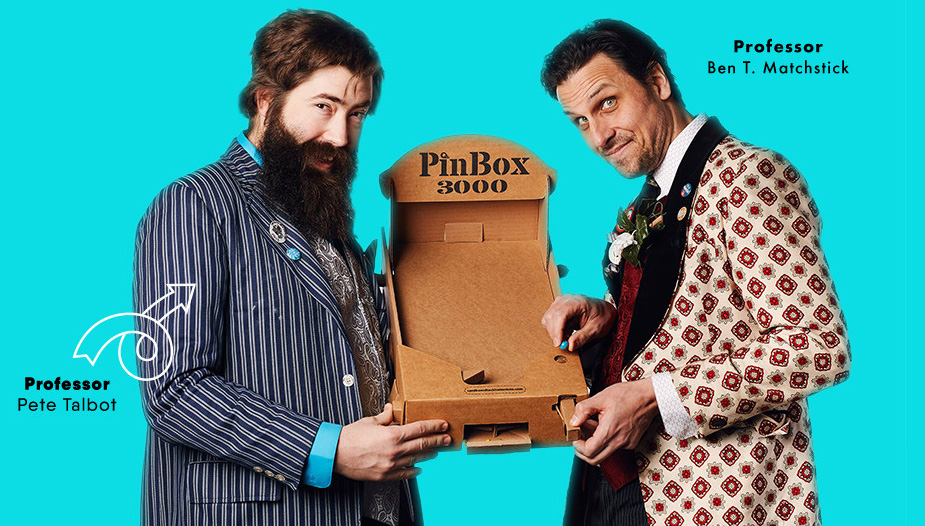
    Generator members are equally passionate about helping advance education in the school systems too! Check out this video on how Generator members Pete Talbot and Ben Matchstick support STEM education. They have created a low cost-high fun platform for children to explore new ways of learning. Education isn’t only about the children; the other half of the equation is the educators themselves.  Lucy Delabruere hosts an annual workshop for educators called Create, Make, Learn and hosts it out of Generator.  Generator is proud to present its brand new Educator-in-Residence program. Every two months, Generator welcomes leading educators into our community to tackle an educational learning challenge in collaboration with Generator members. The goal of the Educator in Residence program is to provide gifted educators in any discipline with access to tools and talent that will create breakthroughs in instructional design.


    Entreprenuership-

    Several members have made huge pivotal steps in the pursuit of their entrepreneurial adventures this year.  A big transition for everyone at Generator was for Matt Flego and Erik Cooper, co-owners of M//E designs, to export their design and fabrication shop to Alternator on Pine Street.  Their growing success and contract with Room and Board confirmed their need to expand the company. In June of 2016 they moved out of Generator into the ALTernator: 388 Pine Street, Suite 3-M-1 in Burlington VT.  Matt and Erik have created a private studio to house M//E Designs, Cardboard Teck Instantute, Tim Peters and John Yasaitis. Take a glance of all the steps they took to grow and launch out of Generator! 

    Pete Talbot and Ben Matchstick of Cardboard Teck Instantute have also forged great strides this year! Read up on their journey.

    We’ve manufactured over 7,000 units in our Philly factory, working with a marketing firm 20nine, we’ve raised over $100,000 for the P3k, now working regularly with projection films out of Middlebury, and we’re in more than 50 stores & counting across the US (Marbles the Brain Store & others), things are shaping up for the Alternator & this new PinBox 3000 has glowing reviews!

    -Pete Talbot

    Connie Lisle has independently expanded and flew the coop this year. Generator provided Connie access to a $45,000 laser engraver to try her ideas and explore the production of products over two years to see if, in fact, it would be marketable and sustainable. At Generator there was a supportive community that encouraged her every step of the way, pointed out various contacts and connections to answer a myriad of questions. She has reached that point of success that she needed to buy her own laser cutter to be etching away more hours in a day. Her business future is strong and the hardest challenge is to not scale up too fast.


    Thank You For Making Generator Possible!

    Like it was said in the video created by Susan Reid in partnership with Young Writers Project…

    We decided that the combination of this unique place, Burlington, and the cool people who have chosen to live here and work here is a combination for success.

    Generator members, partners, staff, board of directors, and volunteers have all pitched in to facilitate the successes evident in 2016.  The last collaboration of the year has been to transplant Generator into the South End Arts District at 40 Sears Lane.  Here is more information about the move and we can’t wait to greet you into our new home in 2017.


  • Makers on the Move!

    [vc_row type=”in_container” full_screen_row_position=”middle” scene_position=”center” text_color=”dark” text_align=”left” overlay_strength=”0.3″][vc_column column_padding=”no-extra-padding” column_padding_position=”all” background_color_opacity=”1″ background_hover_color_opacity=”1″ width=”1/1″ tablet_text_alignment=”default” phone_text_alignment=”default”][vc_column_text]

    Makers on the Move: Sears Lane Here We Come!

    “Oh Generator,
    Memorial will go dark
    without your bright bulb”

    -Miro Weinberger

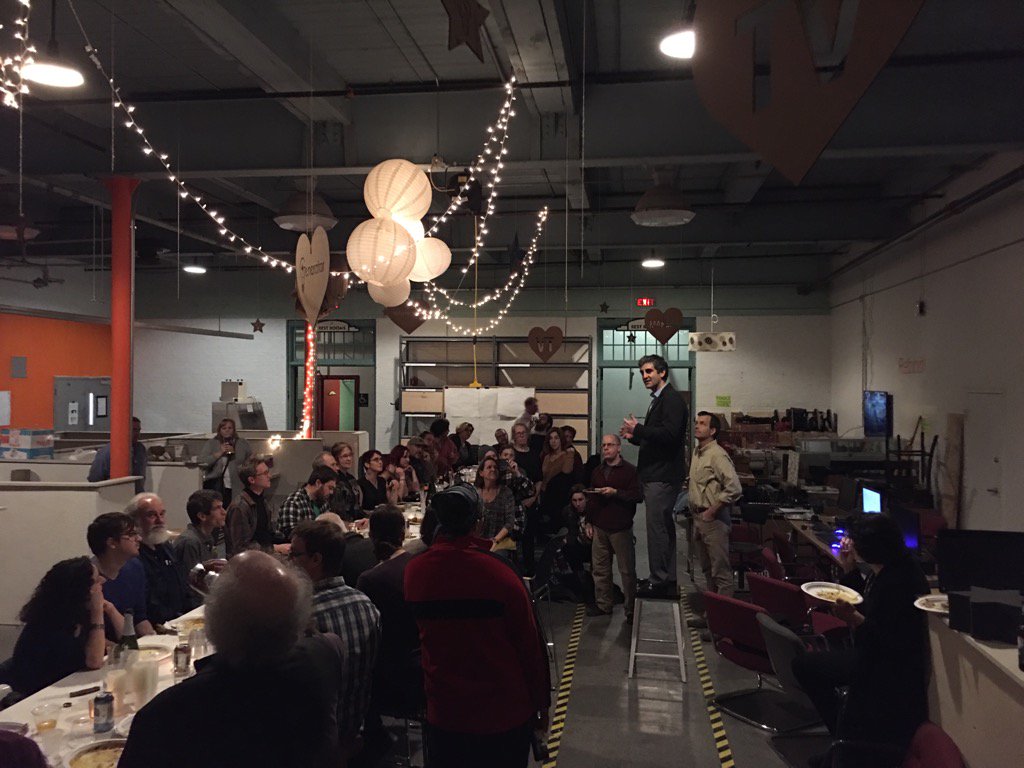
    Generator received a haiku from Burlington’s Mayor, Miro Weinberger, in the final moments at Memorial Auditorium. The doors closed on November 30th and immediate transition mode kicked in. In one week Generator was packed and moved to the South End Arts District at 40 Sears Lane. Our current members will be thrilled to know that our lighting in the new space is far superior to what was experienced at Memorial Auditorium.  That’s not the only upgrade, there is more space, dedicated teaching room, free parking, bigger metal and wood shop, some new equipment, and more studio spaces. All the studios have been filled but don’t be shy to get on our waiting list.

    Here is information/FAQ about the transition and a link to our official press release.

    [/vc_column_text][/vc_column][/vc_row]

  • Burlington’s Generator Begins Move to South End After Successful Capital Campaign

    FOR IMMEDIATE RELEASE | Nov. 28, 2016

    Media Contacts:
    Lars Hasselblad Torres, Generator, [email protected] | 802-595-0605 Stephen Mease Champlain College, [email protected] | 802-865-6432

    Expanded Facility in Partnership with Champlain College to Reopen in January

    BURLINGTON, Vt. – Generator, the city-supported maker space currently located in Memorial Auditorium, will begin remaking itself in December for its move to a new, larger space in Burlington’s South End. On Nov. 30, Generator will close its doors at Memorial Auditorium and the 170-member creative community will move to its new home on Sears Lane.

    Generator’s move to 40 Sears Lane is made possible by an investment in infrastructure improvements from Champlain College and a $300,000 capital campaign led by Generator board members Michael Metz and businessman Steve Conant. “More than 100 individuals, companies and philanthropic organizations contributed toward the campaign’s success, for which Generator and Champlain College are deeply grateful,” explained Generator Chair of the Board Dan Harvey.

    Generator is planning an open house for the community in mid-January and a series of on- going events to introduce the new space to neighbors, students and members of the public.

    Founded in March, 2014 with support from the City of Burlington, Champlain College, the University of Vermont and numerous institutional, corporate, and individual donors, Generator has become a hub of creativity, learning and entrepreneurship. Generator’s 5,600 square foot location in the lower level of Memorial Auditorium housed 16 studios and several dedicated workshops for wood, metal, prototyping and rapid prototyping. In addition to making these tools available to its members, Generator sustains a monthly schedule of workshops and classes to provide training and support to its members and the public.

    Generator’s new 8,500 square-foot home at Sears Lane is a renovated portion of Champlain College’s Facilities and Operations warehouse. The new space is expected to open on Jan. 2, and will be 35 percent larger with more space for individual studios, workshops and build areas. The site is opposite Champlain’s Miller Center at Lakeside, which is home to the Emergent Media Center and the College’s own MakerLab. Generator has signed a three-year lease with the College that includes an option to renew for five more years.

    “We are pleased to be working with Generator to help facilitate this move and further strengthen the collaboration between Generator and Champlain College,” said Champlain College President Donald J. Laackman. “Champlain College has been a partner and supporter of Generator since its inception. Generator has provided our faculty and students with exciting opportunities to innovate at the intersection of technology and art in furthering Vermont’s creative economy.”

    The new facility will feature dedicated Learning Lab classroom space, state-of-the-art LED lighting, improved ventilation, and accommodations for bicycle commuters. Burlington Telecom will continue to provide gigabit network infrastructure and service; Vermont Energy Investment Corporation will deploy an eGauge energy consumption monitoring system; and Generator will be a node on the BTV Ignite supported city-wide LoRa network.

    In addition to the joint fit-up effort, Champlain College and Generator demonstrate a vibrant collegiate collaboration that includes equipment procurement, student-faculty exchange, and public engagement efforts. Champlain College has purchased and installed a computer controlled milling machine and 3D printer at Generator and covers the monthly cost of student, faculty and staff access to the Generator facility through its “Exchange” partner status.

    Along with the University of Vermont, Vermont Tech, and the Community College of Vermont (Winooski campus), Champlain has helped to lead the formation of an intercollegiate consortium housed at Generator that fosters cross-campus encounters among students and makers, joint social and learning opportunities, and project development. Among the activities supported by the consortium are a BioFabLab, the Pitch It Fab It product design competition, a “Makers in the Classroom” teacher assistant program, and the BIG Maker speaker series. Students from participating institutions have also taken part in hands-on workshops in the arts, micro-controller design and assembly, and rapid prototyping.

    “Generator is thrilled to bring these and other resources to the growing arts, fabrication and entrepreneurial ecosystem of Burlington’s South End,” said Executive Director Lars Hasselblad Torres. “Both Champlain College and Generator view the upcoming transition as an investment in Vermont’s creative economy and are proud to be contributors and allies to the South End district’s history of fusing the arts and industry. Through this move, Generator will continue to demonstrate that the hands-on, experiential learning environment of a makerspace promotes creativity, innovation and entrepreneurship consistent with the values and aspirations of the city and our state as a whole.”

  • Member Share: “dark link” Zelda Costume

    Member Share: “dark link” Zelda Costume

    Micah is a Generator member that has been kind enough to share his process. Check it out!
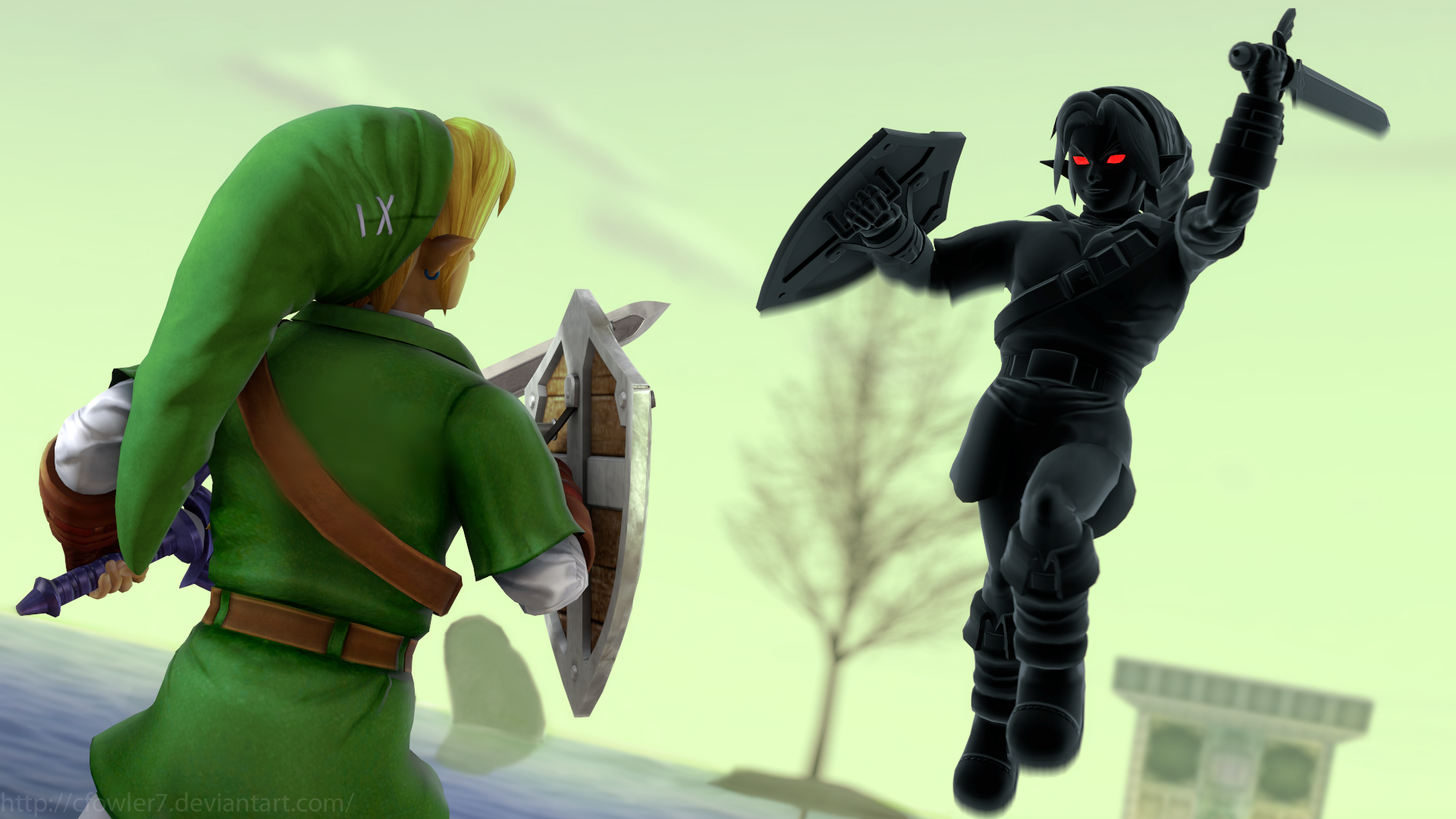
    Some of you may remember I kinda get into making halloween costumes.  This year I decided to make a “dark Link” Zelda costume for a friend’s themed halloween party
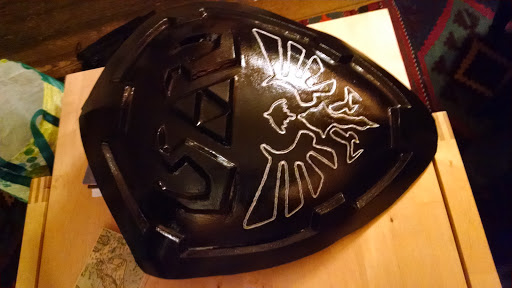
    The sewing for the tunic, hat, etc was probably the most complex (and fun) part, but the shield was probably the most classic maker-ish part so I’ll show that here.
    First, EVA foam is amazing.  People into costuming all seem to know this, but it was new to me.  It is a go-to material for the cosplay community and youtube is just littered with great tutorials and examples of complex projects.  There’s a great instructable that gives an overview of cutting, gluing, shaping and painting this foam.  And I never tried putting it down on the laser cutter, but there are tons of prepared pattern files available for pepakura (3d paper folding) that can give you a boost creating very complex shapes.
    My shield was much more simple, but here’s a quick walkthrough.
    The first thing was to buy some foam. I got six 2×2′ interlocking floor mats for $23 on amazon.
    Then I cut out a simple shape.  Nothing special here – I think i eyeballed the shape and just took a guess where the notches should go.

    Then I did a little shaping.  If you use a heat gun to warm the foam and roll it over a hard smooth object, you can impress a nice dome shape into it.  I ended up taking the ball hitch off our car and locking that in a vice – weird, but it worked like a charm.
    Look how nicely it holds it’s shape:
    A little superglue does a great job at high-stress points like these seams:
    A side note – although EVA is very stable and doesn’t really off-gas anything significant I did notice that when I put the heat gun over the super glue something nasty evaporated.  The glue blistered white and my nose burned a little.  I avoided doing that any more..
    The glued-up seam was somewhat puckered above the plane of the rest of the shield.  I trimmed down the foam with my primary cutting tool – an extendable box cutter – and sanded the foam down flat.

    Modge Podge is a great tool with this foam as well.  After sanding I put a coat down and it behaved very much like the first coat of varnish on wood – it raised up the tiny torn fibers of the foam and hardened them.  That made it very easy to do a second sanding, which put a very nice smooth finish on the areas that I had trimmed previously.  It’s also great for putting a shine on the foam.

    I cut an outter edge for the sheild.  Obviously it didn’t lay very flat against the shaped shield.  (But you can see the contrast between the edge and the shield that has been modge poged’.)
    But I still had my heat gun for shaping:
    That’s a decent fit, even without any glue.  I used a low-temp glue gun to attach the edging and it did the trick nicely.

    There are a few raised elements on the shield so I cut those out of scraps.  I did it free-hand and it took me a few tries to get shapes I was totally happy with, but since they all had beveled edges this was probably the most efficient approach.  If I had thought of it, I totally would have tracked down that 45 degree matt cutter I have somewhere for matt board.  Instead I went for the trial and error approach.  Meh.

    Once the edges and raised elements were glued down, I went over everything with paintable caulking and created smooth, rounded transitions.  It took 2-3 coats with sanding in between for me to be happy with the texture because I was really hoping to put a metallic finish on this thing.

    This is another cool thing you can do with this foam.  I cut a shallow design on the face of the foam and then ran the heat gun over it.  The foam will pull away from the cut and give you a nice, clearly defined engraving.
    I don’t have a photo of that, but here I am doing the same thing on forearm armor.  You can see the difference between the etched lines on the left.  Also, the heat gun seals up the foam and puts a gloss on the foam.

    The finishing wasn’t too tricky.  I used a can of Plasti Dip Spray first.  It goes on thick and smooths over any small cuts or surface inconsistencies.  At that point I could have put a high-gloss coat of spray paint down, but I think I ended up just using another coat of modge podge which worked nicely.  Notice from this point on you really can’t see any of the seams at all.

    I put a little metalic silver paint over the design and attached some straps to the back with super glue.  I might go back and add a little more silver detailing somewhere around the edge, but this is what I took to the party.

    The finished costume was pretty great.  All in all, it took two full weekends and some weeknights to complete – with some trial and error learning beforehand.  I learned a lot this year about sewing, face paint and obviously foam.  Also I discovered that they make contact lenses that glow in UV light and since this party just happens to have a black light in the kitchen I figured why not (contacts are about $25 per pair quick and easy to get online).

  • Meet Jake Blend!

    Meet Jake Blend!

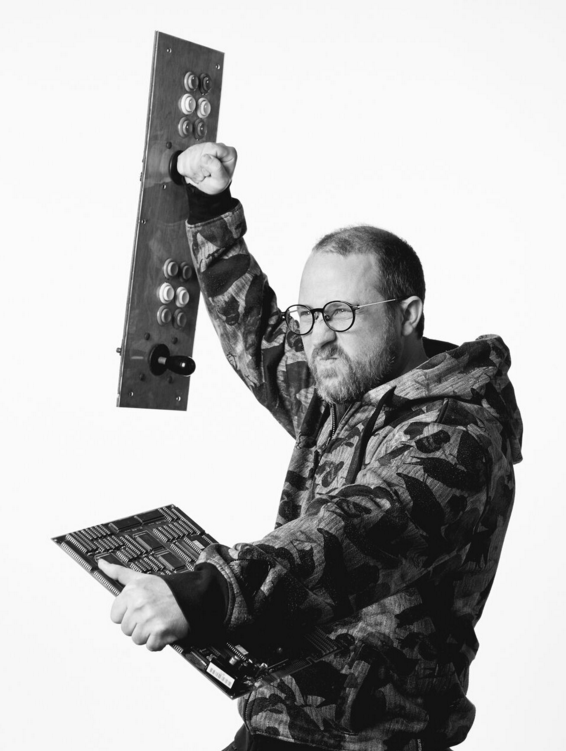
    Jake Blend is Generator’s arcade ninja.  He has reached many mile markers with his creative work and always provides the Generator community with immense amount of I.T. help. It is quite telling that in High School he started a sci-fi club and he was voted “friendliest” and “helpful attitude” for life.

    As a navy brat he went to Japanese school where he got to play with hammers and nails to build wood spacecrafts and run around like a cowboy, ninja, Superman, and Zorro. With creativity already kindling, he cleaned his first computer, an apple 2e, with a metal tipped vacuum.

    I remember the electric arc and the smell…needless to say, I was grounded for killing the digital family member (the computer).  But we got an IBM clone, where I played Dungeons and Dragons. I lost a 6 month saved game when our computer died so I taught myself to hack a new saved game and went through it for the story with perfect stats and max gold (hex file comparison, did not know the words at the time, just did it).

    Went to UVM for Botany but felt it was too slow. I fixed computers for dorms, got through school by selling Simpson’s pure commercial free mixtapes, modding playstations, and solving whatever problems scientists could throw at me.  During a long break, I continued to solve tech problems for a living, and combined that with glassblowing.  I made my own colors with chemicals (blue from Borax and such, spun with a drill over molten style).  

    I also taught myself electrical engineering as needed.  I am a born troubleshooter. I think I have been gamifying everything forever.  Some say I don’t take life seriously, which I know can be annoying, but I try to have fun with whatever I’m doing.  Always aiming for a high score, even if the “game” sucks or is rigged or I’m forced to play.  I want to have fun.”

    Jake Blend has recently made it into Gallery exhibits with Frog Hollow and Art of Horror. Through a proposal to the Generator community for an arcade community build, he received funding for a quick month long turnaround to make an arcade for Generator.  He was also the winner of Road Pitch, an annual innovation competition.  Jake Blend uses his mix of talents at The Archive (a local bar-cade) as “Pinball Wizard”.

    “I recently reverse engineered and built a transcranial direct current stimulation (brain trainer) device for $40 worth of parts.  The machine I created gets rented for $700 a week normally, and I hope to get the device in the hands of the needy, as it is used for post traumatic stress, addiction, and a variety of other uses.  I know the circuit by heart and could build it out of easily available materials.

    Of course, the greatest thing I’ve ever made is my daughter, Alexis.  I am very proud to continue the Blend tradition of teaching anything and everything I can.

    Generator took me in when I was feeling very alone and I realized a lot of things were holding me back, like my inner child being told to sit in the corner by authority during life lessons.  Light in the darkness, only child with a now very large extended family that adopted me, people that saw some glimmer inside a chunk of coal and squeezed me into a diamond, uncut and raw but made me love my flaws, which I now call quirks.

    As far as my future? The sky’s the limit, I love having different things to do, but the core remains the same.  Gaming has become the biggest entertainment industry.  We are working with indie developers to create custom cabinets for their games.”

    Jake Blend is holding true to his high school title as friendliest helper.  He contributes to Generator’s knowledge sharing and collaborative spirit!

  • Be Our First Educator in Residence

    With support from the Bay Paul Foundation, Generator is pleased to welcome applications for our first Educator in Residence. The goal of this program is to provide human, material, and financial support to middle and high school teachers in the greater Burlington area who are looking to develop novel hands-on learning experiences that bring the maker ethos into the classroom.

    The residency includes a studio space, $1,000 stipend and access to the Generator community. Competitive applications will describe a discrete and well-defined teaching unit that demonstrates creative technology integration. Applications are Due December 1 for our January/February residency.
    Learn more and apply here: