Author: Greg Maino

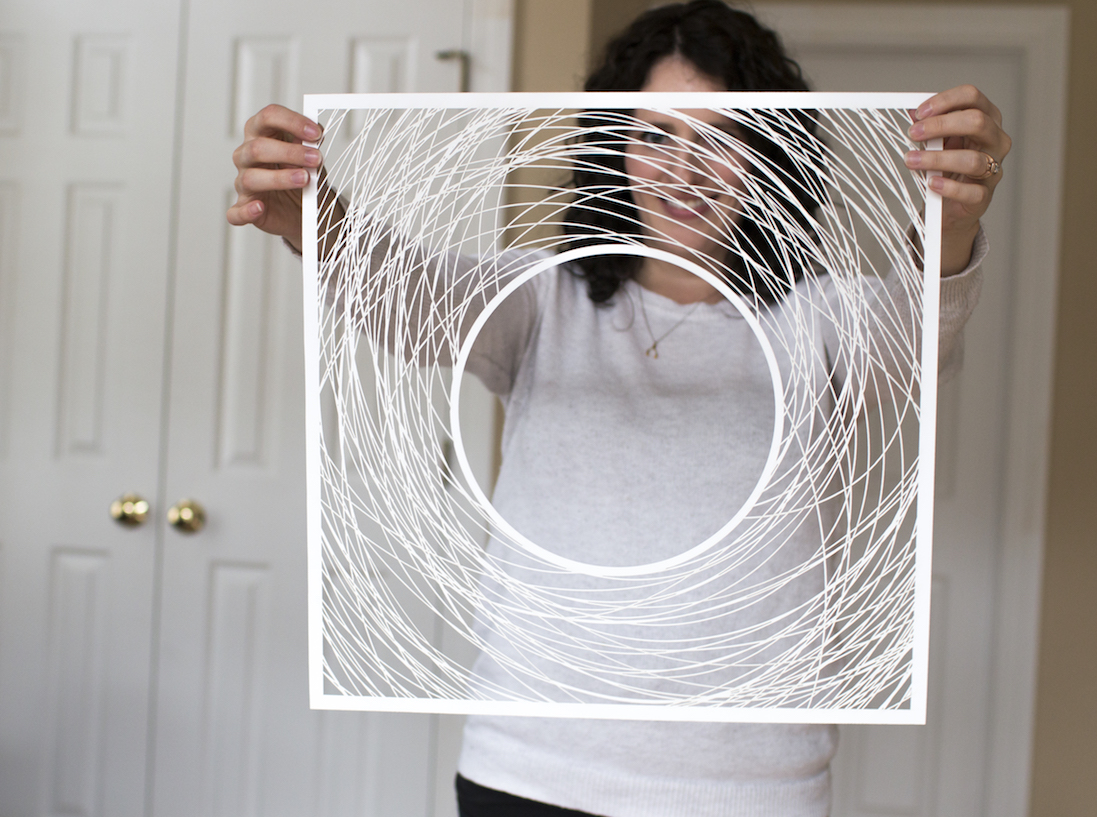
  • Member Made: Adriana Saipe & her laser cut paper Ketubah elements

    Member Made: Adriana Saipe & her laser cut paper Ketubah elements

    Some words from Adriana Saipe on her recent work here at Generator:

    I’m a full-time illustrator who focuses mostly on Jewish and Quaker wedding ceremonial art. Or “Ketubahs” if you’re familiar with Jewish wedding customs. I joined Generator because I wanted to explore adding some paper cut elements to some of my designs. Here’s a recent piece I made this week at the Generator!  Been loving my time in this community so far. 🙂

    Thanks for being here, Andriana!

    You can learn more about Andriana and her work at inkwithintent.com.

  • Member Made: Elliott’s Microscopic Tree Structure Installation

    Member Made: Elliott’s Microscopic Tree Structure Installation

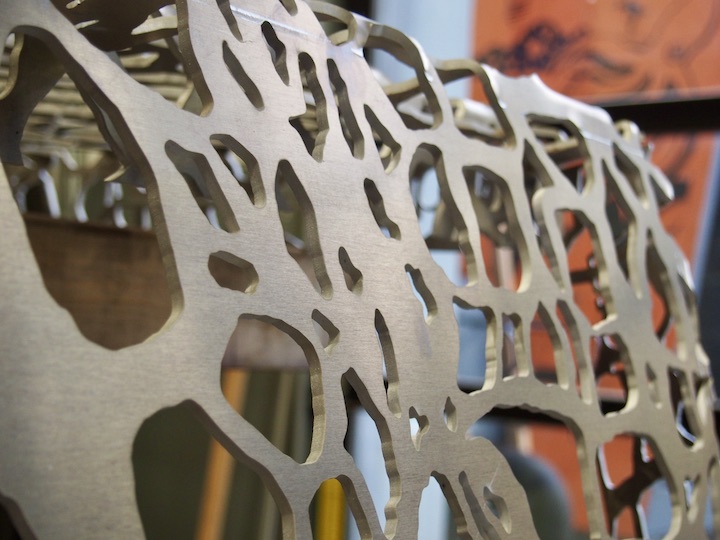
    [vc_row type=”in_container” full_screen_row_position=”middle” scene_position=”center” text_color=”dark” text_align=”left” overlay_strength=”0.3″][vc_column column_padding=”no-extra-padding” column_padding_position=”all” background_color_opacity=”1″ background_hover_color_opacity=”1″ width=”1/1″ tablet_text_alignment=”default” phone_text_alignment=”default”][vc_column_text css=”.vc_custom_1614780652401{padding-bottom: 40px !important;}”]The other day I walked into Generator and saw these beautiful grates waiting near the back door.

    Turns out they were made by Generator’s Operations Director, Elliott Katz!

    From Elliott:

    “These were for a public art installation commissioned by the University of Maine Farmington’s Life Science department. They invited me to make the pieces and I collaborated with their SEM (scanning electronic microscope) technician to capture the microscopic structure of the four most prominent tree species in Maine: Jack Pine, White Spruce, Black Spruce and Balsam Fir. I brought samples to their lab and we imaged the physical structure @ 350x. I transferred the imagery into vector tool paths and water jet cut offsite.”

    See what the pieces look like installed and check out more of Elliott’s public installation work here.[/vc_column_text][/vc_column][/vc_row][vc_row type=”in_container” full_screen_row_position=”middle” scene_position=”center” text_color=”dark” text_align=”left” overlay_strength=”0.3″][vc_column column_padding=”no-extra-padding” column_padding_position=”all” background_color_opacity=”1″ background_hover_color_opacity=”1″ width=”1/1″ tablet_text_alignment=”default” phone_text_alignment=”default”][vc_gallery type=”flexslider_style” images=”10892,10893,10894″ onclick=”link_no” img_size=”full”][/vc_column][/vc_row]
  • Maker In Residence: Peace Paper Project

    Maker In Residence: Peace Paper Project

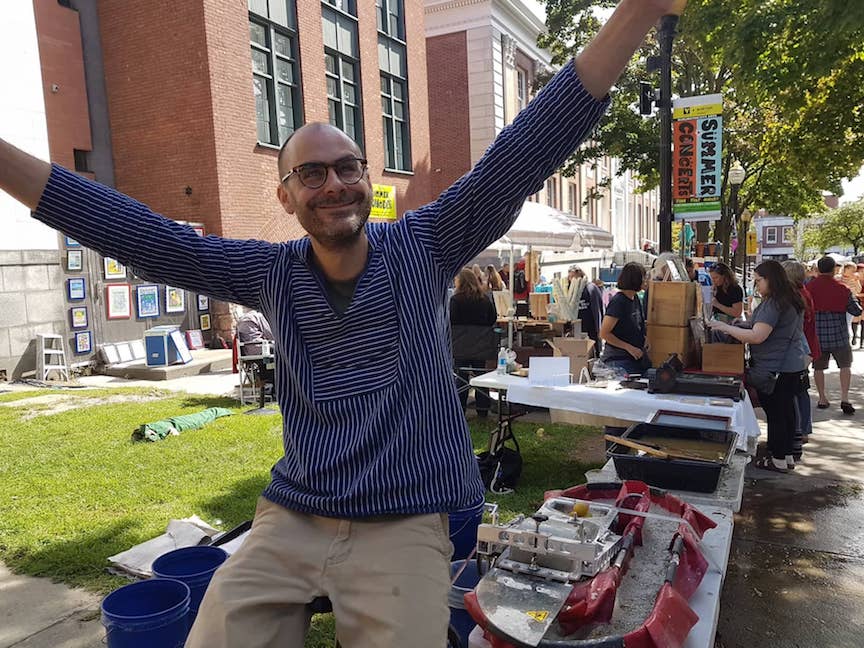
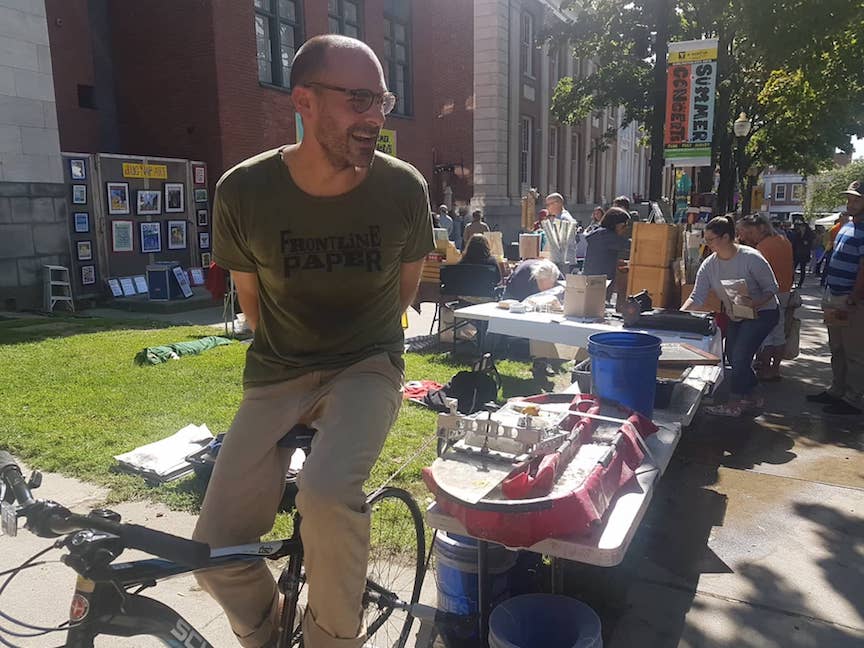
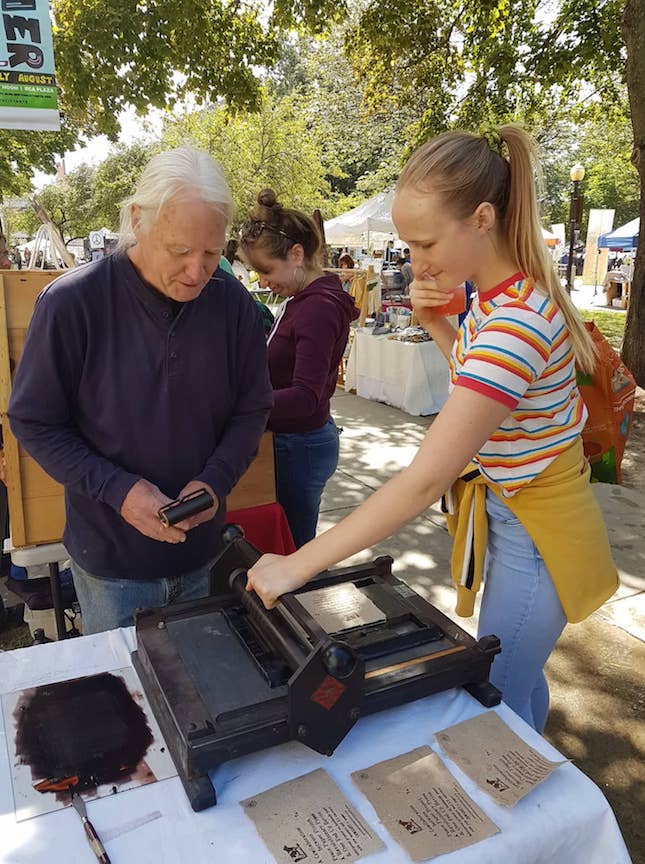
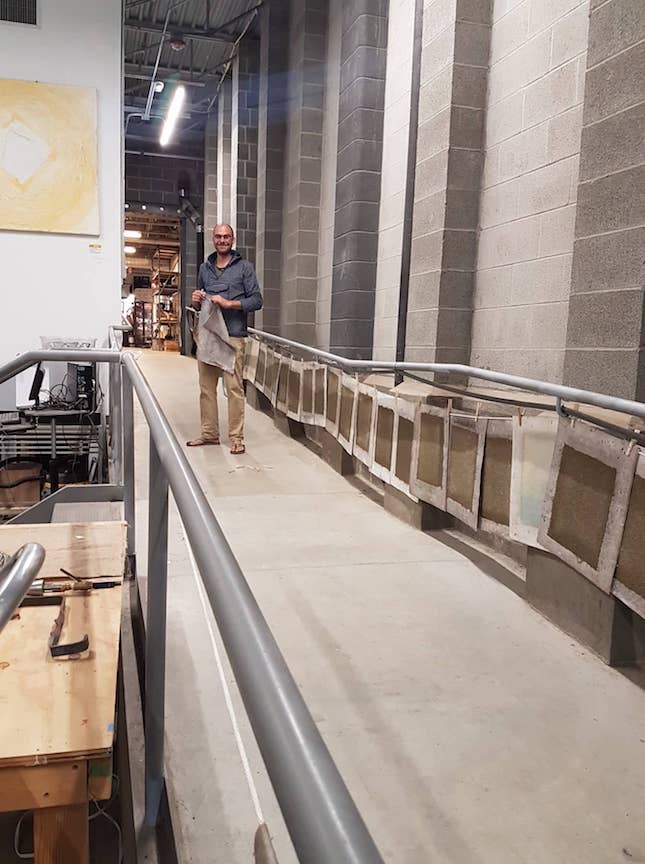
    Drew Matott and Peace Paper Project was our Maker In Residence for August and September 2018.

    We asked him to share a little bit about his residency and he shared a summary of his work below. Thanks so much for being part of Generator’s community, Drew!

    Peace Paper Project is an international organization of hand papermakers, art therapists and social activists. We set up hand papermaking studios around the world that in turn engage with the communities addressing specific issues.


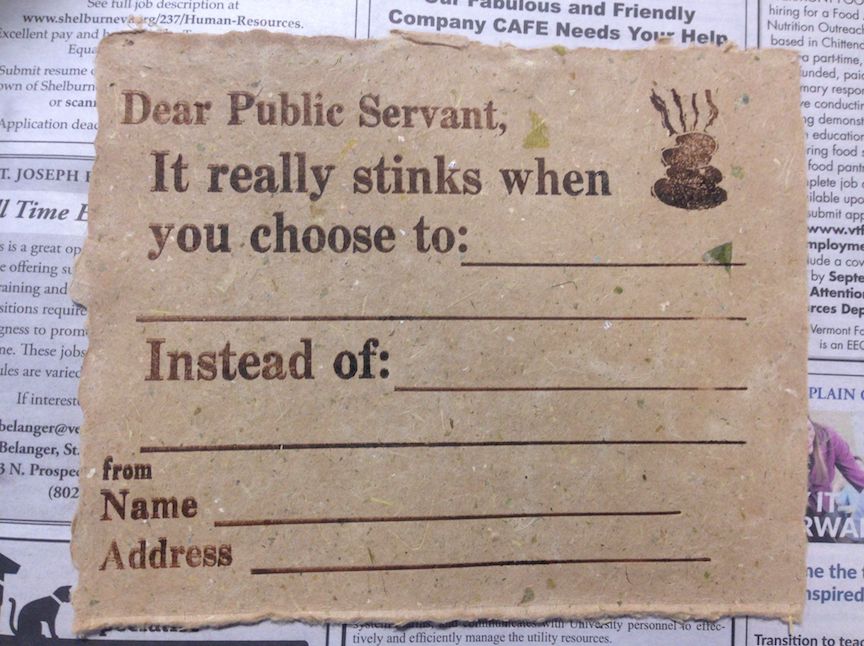
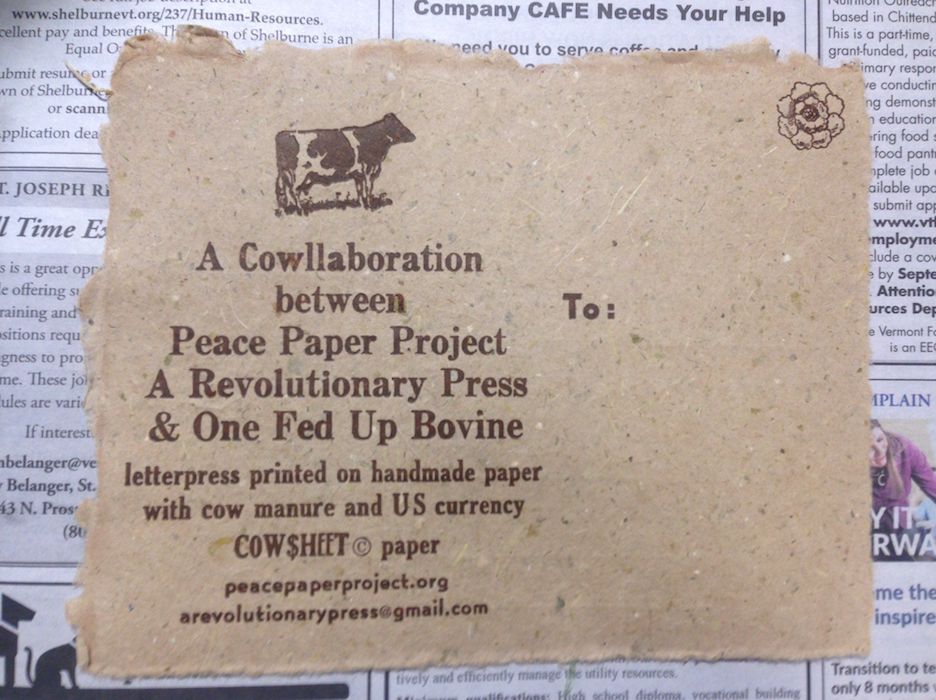
    Since 2011, when Peace Paper Project was founded, we have established over 40 studios and worked with more than 30,000 survivors of war, terrorism, human trafficking, incarceration, mental illness… transforming clothing into paper, transforming associations of trauma & loss into the building blocks for healing.


    While Peace Paper Project is currently based out of Hamburg, Germany, we spend most of our time traveling the world conducting workshops and setting up papermaking as art therapy programs.


    The extreme portability of our studio and the transient nature of our operation allows us to have a wide impact with communities affected by war & terrorism and trauma & loss. The trade-off is that we rarely are able to spend quality time off the road focusing on developing specific projects. Our residency at the Generator afforded us with this much needed time and space to make innovations to, not only our program but also our tools.


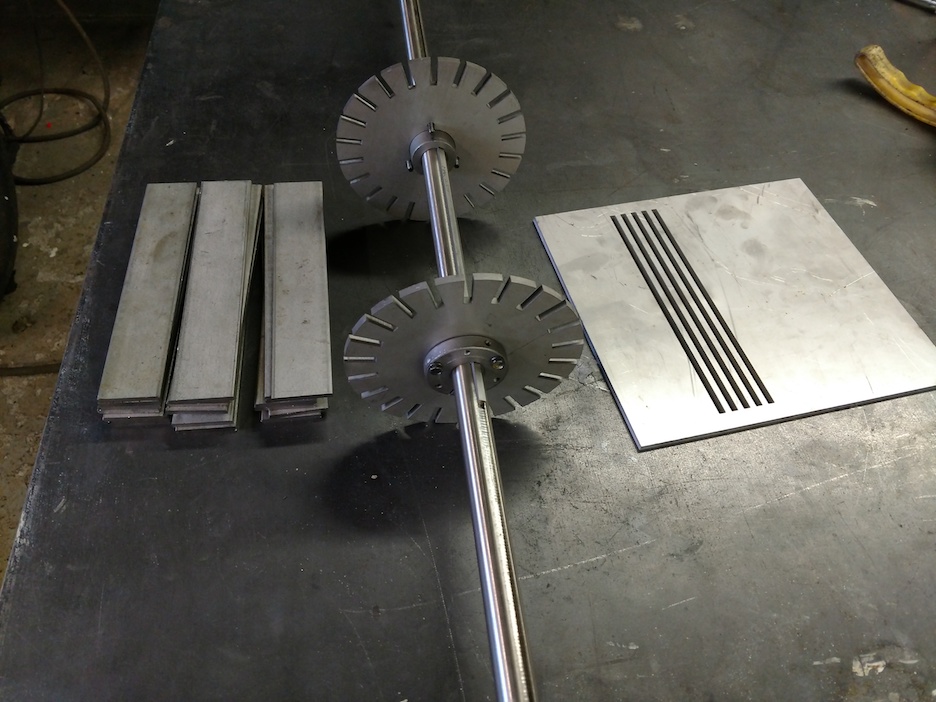
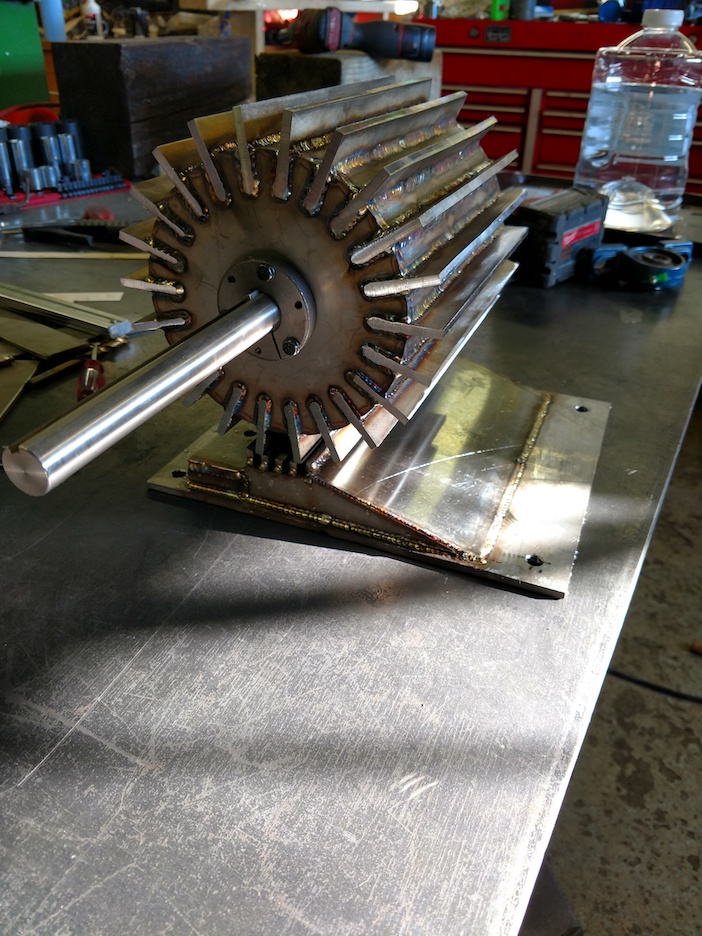
    For our Maker-In-Residence at the Generator, we set out to make improvements on the tools that we use. Specifically, we focused on the Hollander beater, the machine that transforms the old textiles (rags) into paper pulp.


    While hand papermaking field is growing in popularity and practice around the world, there are only a few individuals who make Hollander beaters for sale. Since there are so few individuals making these machines, they are extremely expensive, which presents challenges to Peace Paper Project operations when setting up studios in countries that are often disaster-torn.


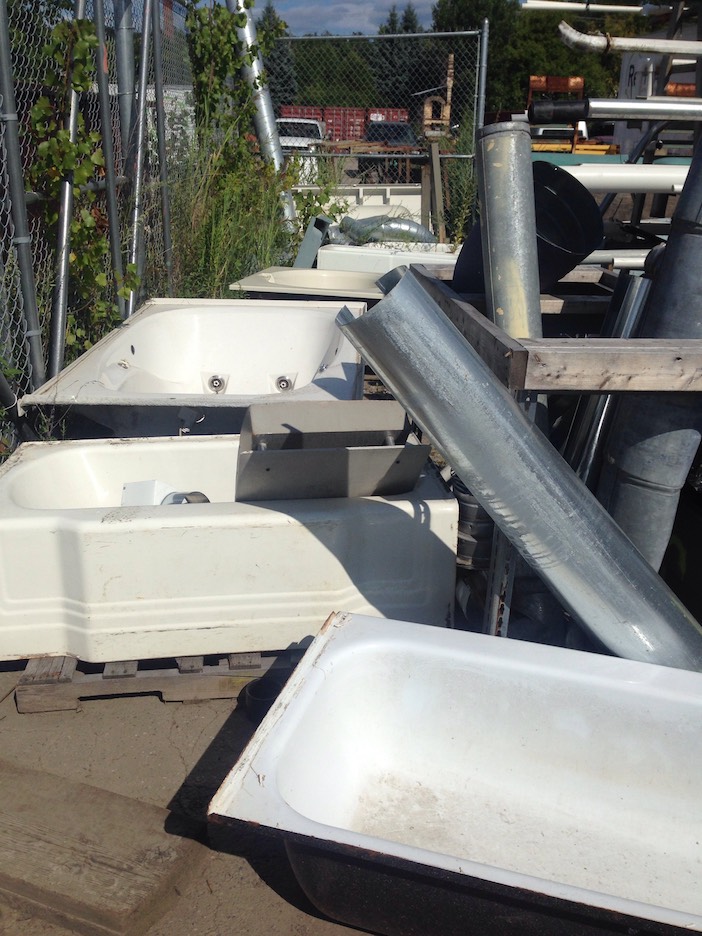
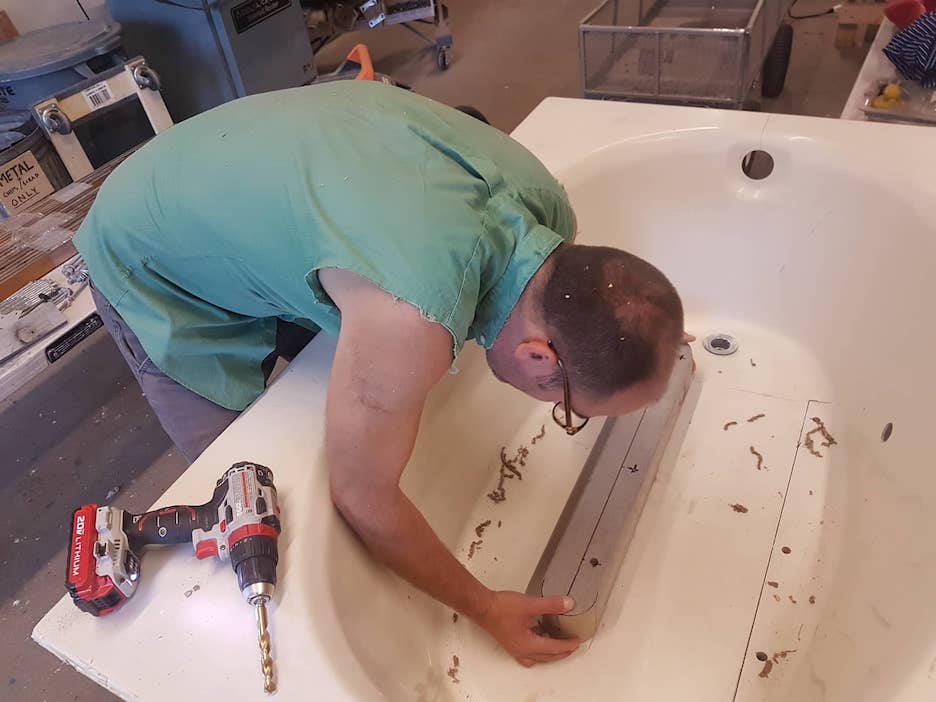
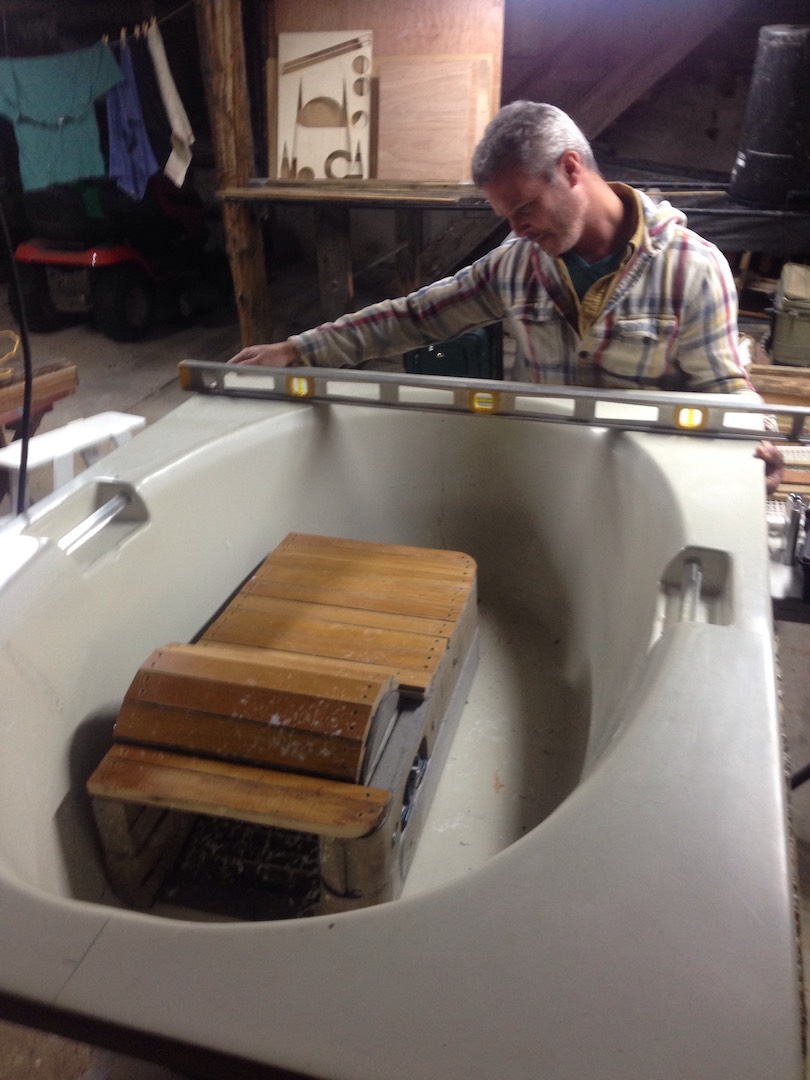
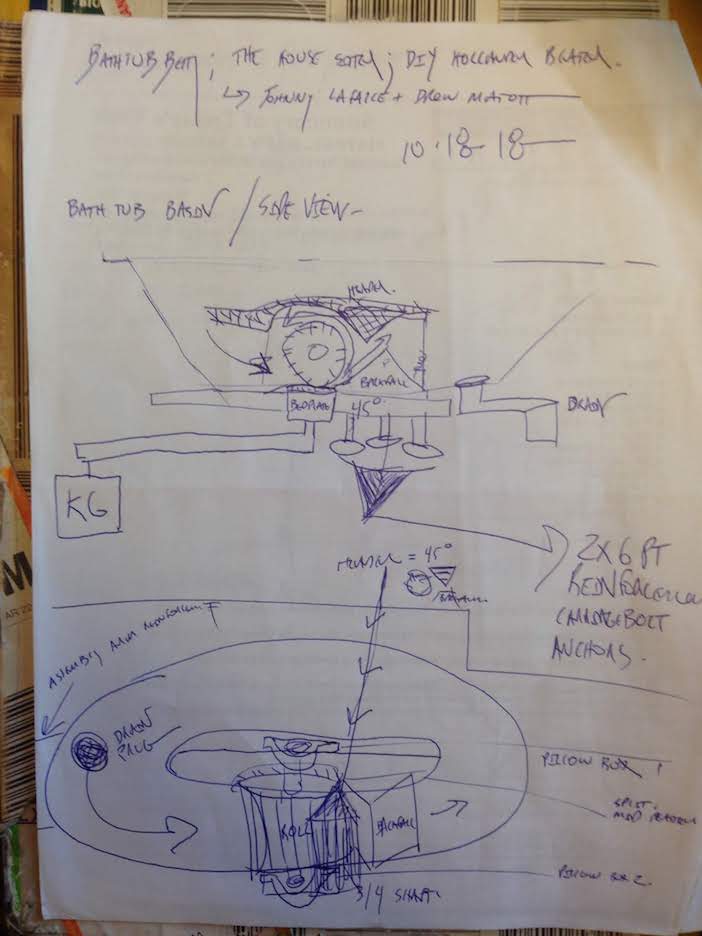
    With our time at the Generator, we set out to design and build a DIY Hollander beater that could be built for less than $1,000, using locally sourced materials and labor.


    The finished result will be published as an open source file on Peace Paper Project’s website, with a complete step-by-step to the process. It is our goal to make papermaking more accessible to communities in need and to inspire a new generation of hollander beater builders.


    The Generator wan the perfect location to embark on this journey; for over two weeks we were able to take classes and personal tutorials to learn how to use the tools and equipment needed to conceptualize, engineer and construct our DIY Hollander beater. The staff were incredibly helpful and the maker community offered fresh insight, inspiration and were always willing to lend a hand.

    Learn more about Peace Paper Project at peacepaperproject.org.

  • Generator wins Mayor’s Prize for Entrepreneurship

    Generator wins Mayor’s Prize for Entrepreneurship

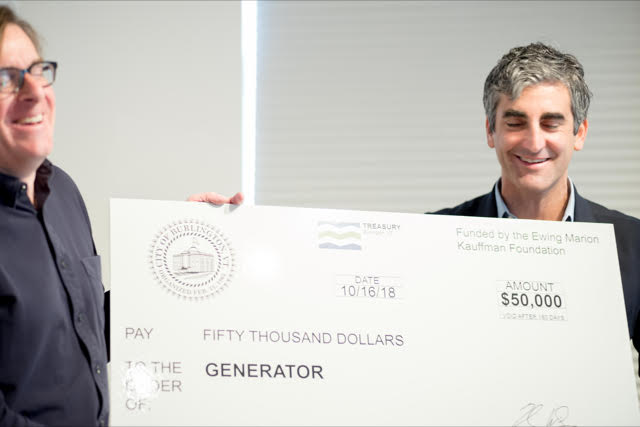
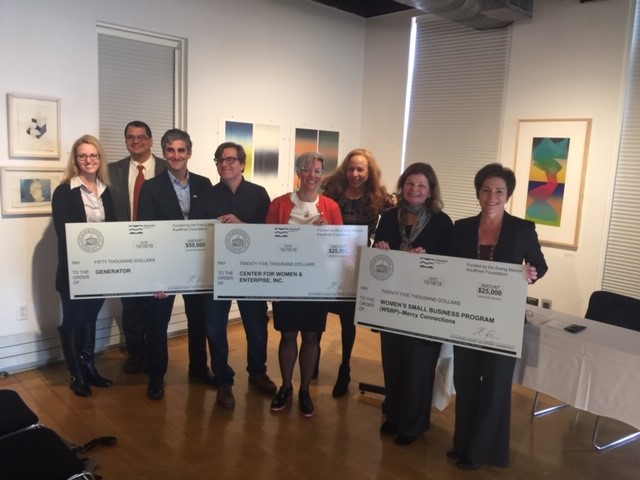
    Burlington Mayor Miro Weinberger announced that Generator is one of the three winners of this year’s Mayor’s Prize for Entrepreneurship.

    Generator received $50,000 to expand its successful JumpStart program. This program provides high-quality founder education and support for early stage entrepreneurs.  

    Thanks to this grant, Generator can add a summer incubator to help college students launch and grow businesses in Vermont. Generator also plans to launch a new business bootcamp for artist entrepreneurs next fall.  

    JumpStart is created in partnership with Lake Champlain Regional Chamber of Commerce’s LaunchVT.

    Generator begins accepting applications for the Spring 2019 session of JumpStart in November.

    The goal of the Mayor’s Prize is to foster the growth and development of entrepreneurship in the city and encourage outside-the-box thinking about how best to achieve this. The Mayor’s Prize is entirely funded by a grant from the Kansas City-based Ewing Marion Kauffman Foundation.

    Other winners include Mercy Connections and the Center for Women and Enterprise.  

    You can find more information about the Mayor’s prize and winning programs on City of Burlington’s website.

    We’re proud to be selected for this competitive award and excited to have this additional support as we promote entrepreneurship in Burlington.   More information about JumpStart will be released in the new future and we look forward to helping companies stay and grow in our community!  


  • The fastest growing sectors in 3D printing for 2015

    If you have difficulty viewing this mail, please click here or paste this link into your browser: https://www.idtechex.com/emails/5511.asp

  • Mud Houses from 3D printers

    From Yahoo! 3D printing is now being used to produce anything from personalized action figures to tactile maps that help the visually impaired navigate. Now, Italian social business WASP is developing a full size portable 3D printer which prints bio-architecture houses — combining one of humanity’s latest technological developments with one if its oldest building materials, mud.

    In many parts of the world where affordable housing shortages are a growing problem, mud remains the most affordable and widely available raw material. However, building with it is an arduous and labour-intensive process. WASP intend to produce a commercially-available three armed, 20ft portable 3D printer which can be assembled on site. Read more…

  • Printed Electronics Europe: Meet customers, do business

    Printed Electronics Europe / 28-29 April, 2015 / Estrel Berlin, Germanywww.PrintedElectronicsEurope.com IDTechEx-logo-colour.png
    co-located-events-Europe.jpg
    Printed Electronics Europe:
    Meet customers. Do business.
  • Talk with Your Hands?

    Fujitsu Smart Ring Lets User ‘Write’ in the Air
    eWeek (01/13/15) Jeffrey Burt

    Fujitsu Laboratories recently demonstrated a prototype for a ring-type computing device that would enable users to “write” words in the air and select menu items without physically touching a device. The researchers say the wearable technology would enable users to work hands-free. “Because operators do not need to hold devices in their hands to receive information in the field, there are especially high expectations for the use of such wearable devices in fieldwork for which operators need use of their hands at all times,” says a Fujitsu official. Fujitsu has designed the smart ring to make use of such technologies as a near-field communications tag reader, motion sensors, Bluetooth Low Energy, and a sensor-processing microcontroller that helps map the gestures of the user’s hand. A mobile device with Bluetooth that is running an app from Fujitsu can track the hand motion and understand what the user is doing. The technology has a recognition accuracy rate of about 95 percent for numbers, and Fujitsu expects to commercialize the technology in 2016.
    View Full Article | Return to Headlines | Share

  • Webinar Reminder – Visualizing the 3D Printing Landscape

    Reminder free IDTechEx webinar on Thursday 22 January 2015

    Visualizing the 3D Printing Landscape

    By Dr Jon Harrop, Director, IDTechEx

    Space is limited – reserve your seat today!

    The world of 3D printing continues to diversify and expand with ever more printers coming on the market and even completely new technologies. Each of these printing processes has its own advantages and disadvantages. We present our latest findings on the technical capabilities of current and forthcoming 3D printing technologies. We will use new visualizations developed for our latest market research report to highlight key differentiators between printing technologies and to identify some prominent gaps in the market. Finally, we shall take a look at the opportunities that are literally off the charts and identify some of the major innovations we expect to emerge commercially over the next year that will fill some of these unmet needs.

    • Overview of existing 3D printing technologies
    • Latest quantitative data
    • New visualizations of the market
    • Unmet needs and market opportunities

    Registration
    We will be hosting the same webinar twice in one day, so please join whichever session is the most convenient for you.

    Date: Thursday 22 January 2015
    Duration: 30 minutes plus 10 minutes for Q&A

    Webinar #1: Europe & Asia-Pacific
    9:30am (GMT) London
    10:30am (CET) Amsterdam, Berlin, Rome
    11:30am (EET) Athens, Jerusalem
    12:30pm (MSD) Moscow
    4:30pm (GMT+7) Bangkok
    5:30pm (GMT+8) Singapore, Taipei
    6:30pm (GMT+9) Tokyo, Seoul
    7:30pm (GMT+10) Canberra

    Register here for Webinar #1

    Webinar #2: Americas
    9:00am Pacific Standard Time (USA & Canada)
    10:00am Mountain Standard Time (USA & Canada)
    11:00am Central Standard Time (USA & Canada)
    12:00noon Eastern Standard Time (USA & Canada)
    5:00pm (GMT) London

    Register here for Webinar #2

    View system requirements

    Contact Us
    research
    UK: +44 (0)1223 812300
    US: +1 617 577 7890