
Author: GeneratorVt

  • Making as Professional Development

    Making as Professional Development

     “The more we can turn the nation into a nation of makers, they will be smarter, they’ll be better problem-solvers, and they’ll be more equipped for the problems of tomorrow.”~ Nolan Bushnell

    The world is a buzz about “MAKING”  and so am I!  But is it a new ‘trend”?  I think not! But it is a way of learning that is capturing the attention of many and for me I want to SHOUT from the rooftop –  “It’s about TIME  you notice!”  to anyone who sees this as a NEW TREND.

    I personally  consider this trend to be more than just “making” , but instead prefer to combine the words   “Creating” AND “Making” which I think helps expand our thinking to more ways to “MAKE”  than we might consider if limited by our stereotypes of who makes and what making involves.
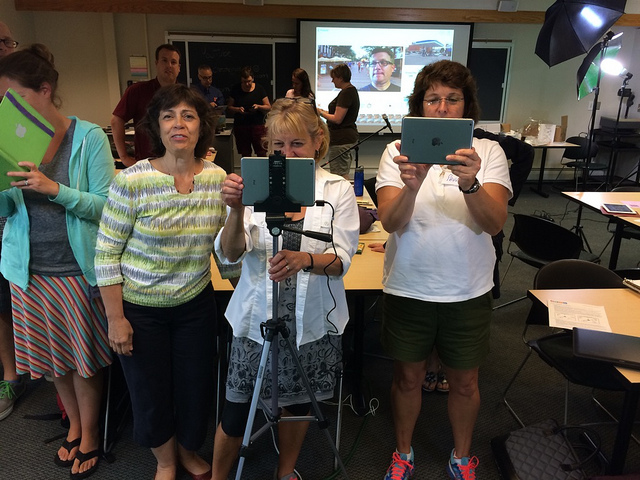
    This summer I created a professional development opportunity for teachers around this concept – called Create Make Learn.   It was the 3rd in a series of PD opportunities that I have designed with this trend in mind.  When I started promoting my summer institute idea last year,  people didn’t quite get the idea of ‘making’  so we played it down a bit and focused on something people were connecting with “mobile learning”  especially how to effectively use the iPads that were being adopted by schools.    So last year, we focused our ‘Making”  to the topic of Making Mobile Media and became ambassadors to use tablets to CREATE not just to consume.    By popular demand we repeated this strand this year and were fortunate enough to convince Wes Fryer to join us in Vermont to continue the important message of  ‘creating’  media as a powerful way of learning.

    However this year,  many educators were ready to expand  beyond what they were comfortable with because “making’ has become very visible in the media and has entered the educational jargon.   But the WHY this conversation is causing a stir in education is something that intrigues me.   I think it has given a whole group of educators permission to enter a journey that feeds their soul.
    For several years now,  the creative part of being a teacher has been drowned with the mandates of high stakes testing.  We listen to speakers like Sir Ken Robinson talk about Schools Killing Creativity  and we wonder how to best raise the next generation of creative innovative problem solvers.    Well the answer is not going to come from the professional development offerings that today’s teachers must sit through.

    But the answer ‘might come’  from brave educators like Sean Wheeler  and friends who have challenging a broken professional development model by organizing  “a networked and human response to a systemic and impersonal failure in our profession. We’re carrying the baggage of a fixed mindset, and by putting ourselves in a learning situation that none of us are good at, we aim not to fix the education system, but help it grow and shift into what it, and we, could be”

    Sean challenged a group of educators to join him by enrolling in a woodworking class and documenting their experience of engaging in the maker community and also engage in deep dialogue about design process, assessment, feedback, curation and other important educational concepts.
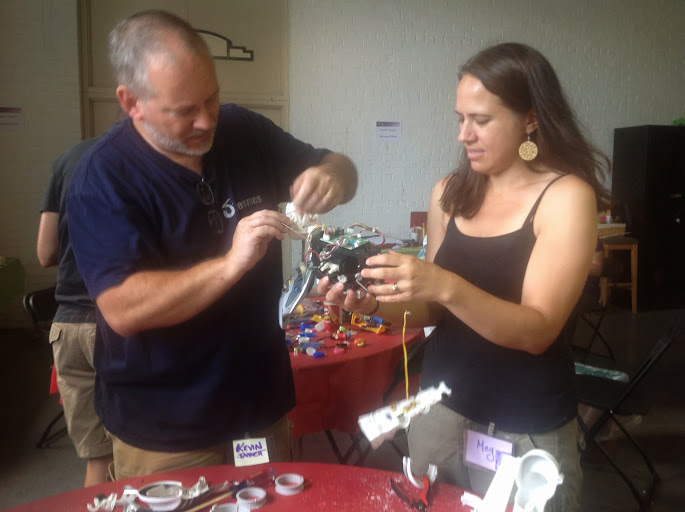
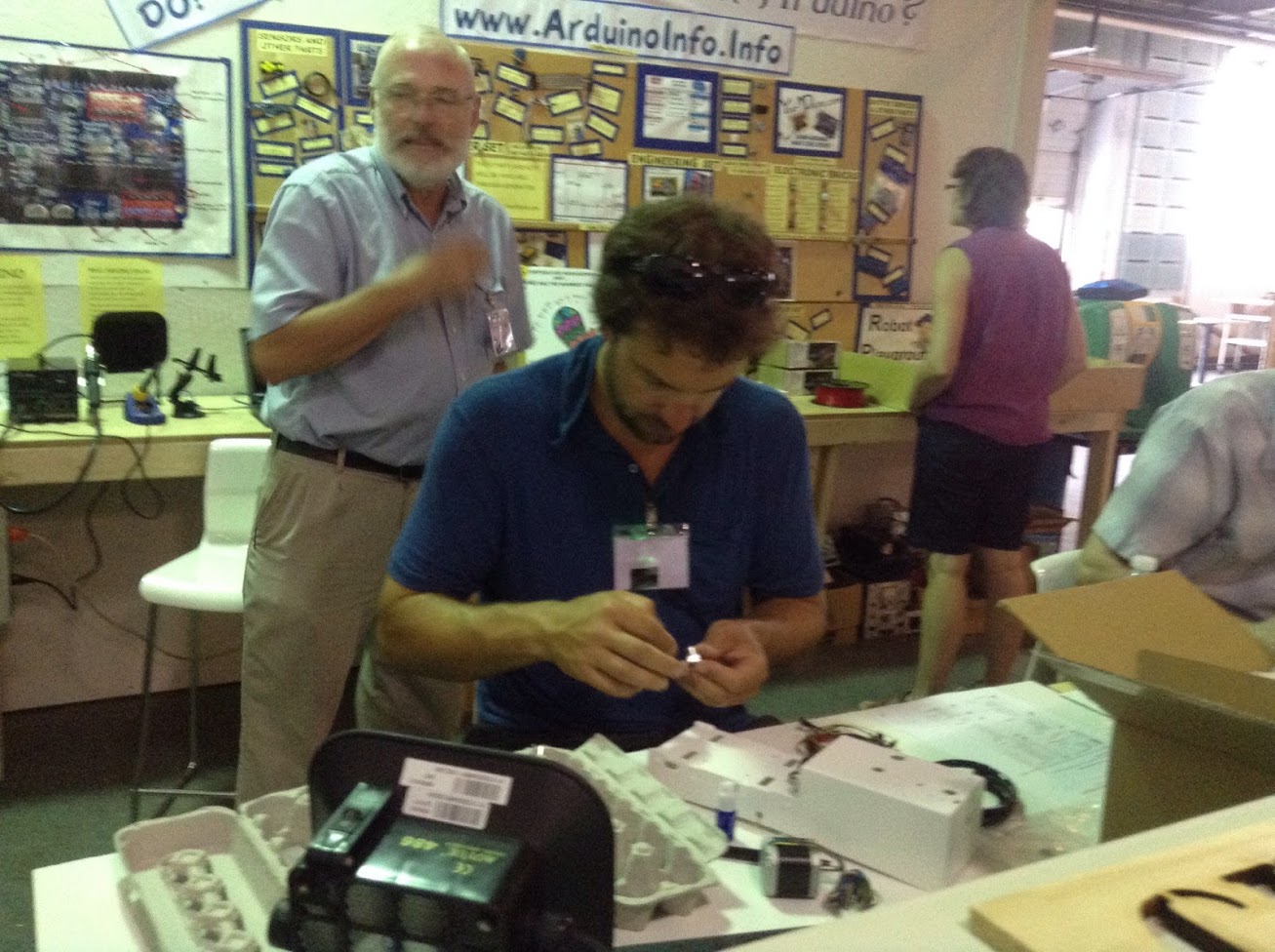
    The Soulcraft Cohort (as they call themselves) was much more organic than what the Create Make Learn Summer Institute I designed this summer, but had one of the same outcomes — teachers connected with learning at a soul level and immersed in a flow of creating and making and learning unlike the professional development they have often been required to sit through.  We were lucky enough to recruit a unique blend of makers from the Generator membership and educators like Wes Fryer, Caleb Clark and Kevin Jarret who understood  how to to encourage teachers to remove their teacher hat and play, create, make to learn.  We used a Google Community for discourse along with ‘walk and talks”   between The Generator (Burlington’s new Maker space) and  our Champlain College classroom.    During the week, teachers not only learned by doing and tapped into their own creativity,  but they also continued to make (and document their process) for weeks after our 5 day face to face experience.

    As I read the course reflections and documentations and listened to teachers share their final products during our Google Hangout Virtual Showcase, I knew that we had hit the mark on creating a professional development opportunity that got to the heart of learning.
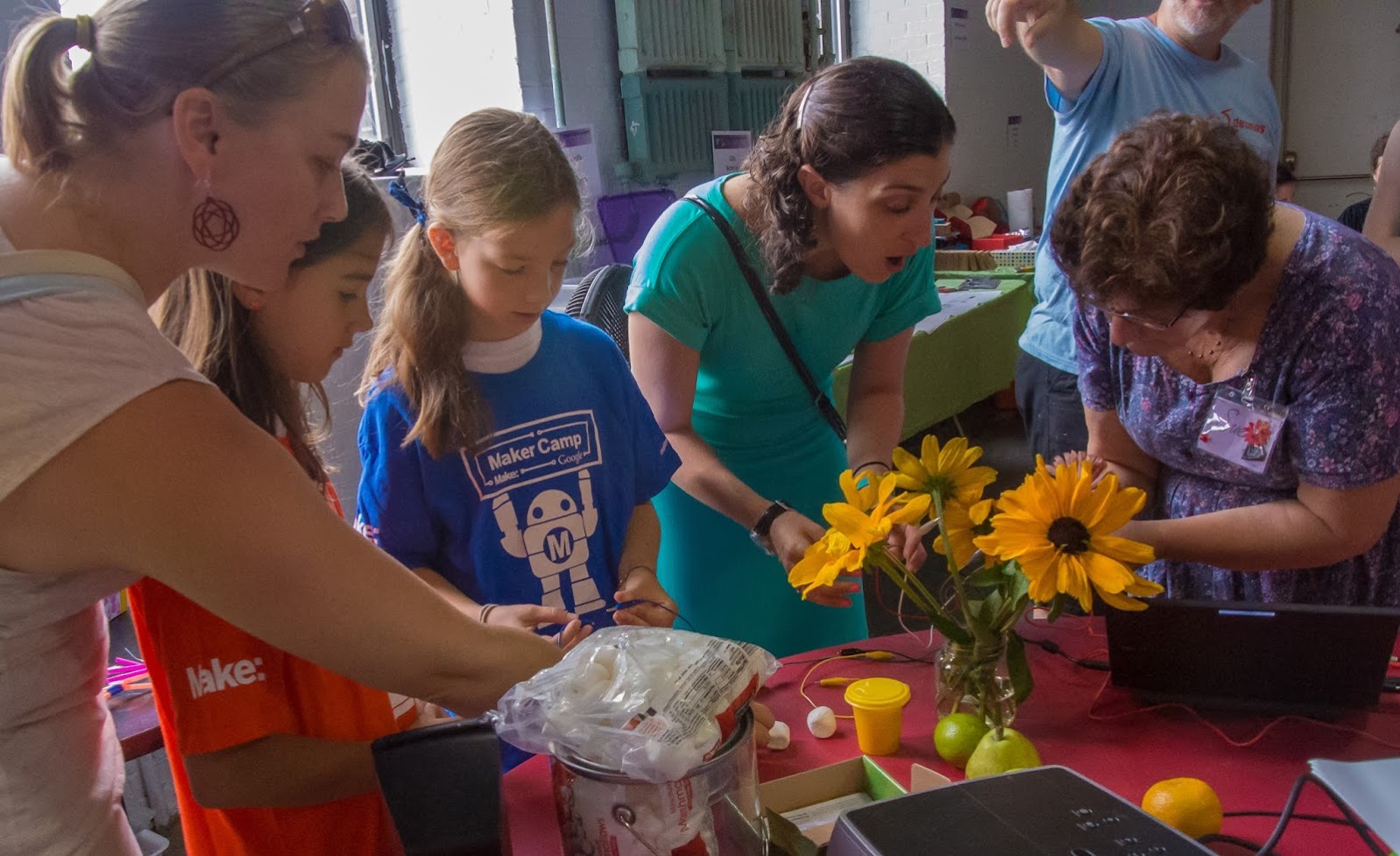
    As Sean mentions in his blog post “Teachers are not very good at not feeling smart”,  but putting yourself in a learning situation that you are NOT naturally good at offers plenty of opportunity to dissect the learning process from a place of experience which is very different than analyzing data about student test scores.

    I look forward to watching how the ‘maker’ trend plays out in education – and  being a part of a professional development movement that feeds my soul.

    #reflectiveteacher

    Originally posted Wednesday, September 24, 2014 and reblogged from our studio member Lucie’s blog.

  • Ian Ray featured in Seven Days

    Congratulation to our Generator member and current Generator-In-Residence: Ian Ray, for being featured in Seven Days this month:

    Below the Radar

    Stashed under Ian Ray’s desk at Generator, Burlington’s high-ceilinged, industrial-chic maker space, is an angular contraption that looks more like a child’s Erector Set than a $20,000 business venture. Perched atop that same desk is another, slightly smaller contraption covered in multicolored electrical tape and topped by four helicopter-type blades.

    They’re not toys but drones — or, more accurately, unmanned aerial vehicles. Ray’s cubicle is home to AirShark, a two-man startup intended to put drones to work surveying, inspecting and photographing large solar installations. Ray is a photographer by training and a tinkerer at heart; he brought the drone expertise to the partnership. His cofounder, Jon Budreski, is licensed pilot who spent eight years selling solar panels through RGS Energy and SunCommon before striking out on his own with Ray.

    “If there’s a panel that’s failing, it’s going to generate more heat,” said Ray. With a thermal image, he said, “You’ll see that well before you notice a physical problem.”

    Surveying large solar arrays for ongoing maintenance is just one of the ways drones could help solar developers. Budreski imagines deploying drones to scope out sites for solar development and to document the construction process for state permitting agencies and insurance companies. As the solar industry matures, drones could also evaluate the condition of larger, aging projects.

    While Budreski and Ray focused on the solar industry first for their startup, it’s just the tip of the iceberg for AirShark. Drones equipped with thermal sensors could perform energy audits of buildings — pinpointing the places where heat is escaping, for instance. They could inspect wind turbines and other industrial infrastructure, such as bridges or power lines, that can be difficult or hazardous to access.

    Ray and Budreski do face one major hurdle: The legal framework governing drones in the United States is “nebulous” at best, said Budreski. The Federal Aviation Administration was set to release regulations for drones by the end of next year — but the FAA has pushed back the release of new drone regs before and is running behind schedule this time, too. In the meantime, the pair is talking to would-be customers and focusing on developing software and engineering solutions — like the little gimbal Ray designed to house a GoPro camera and high-end thermal sensor on one of the drones. It was fabricated on the 3D printer at Generator.

    When they take their drones out to fly, Ray and Budreski follow common sense: Stay within line of sight. Use checklists. Avoid airports and manned air traffic.

    “It’s a learned skill — like riding a bicycle or driving a car,” said Ray of flying the drones. But as AirShark’s makers think about industrial applications for the unmanned aerial vehicles, he said, the value won’t come from the contraptions themselves.

    “At the end of the day, we’re not going to be a drone company,” said Ray. “We’re going to be a software and data company. The value comes from the information.”

    The trick is educating clients, many of whom are unfamiliar with a drone’s capabilities, about what that information can be. It’s a good problem to have, said Ray: “To be on the bleeding edge of something is a good place to be.”

    SOURCE Seven Days, 11/18/2014

  • Norwich University hosts second annual FIRST LEGO League competition

    NORTHFIELD, Vt. – Norwich University will host the state’s second annual FIRST LEGO League (FLL) regional qualifying tournament on Sunday, Nov. 16, beginning at 9 a.m. in Plumley Armory.

    Groups of 9-14 year olds around the country have been tasked with researching a real-world scientific issue and designing and building an original robot in the FIRST® LEGO® League (FLL), an event designed to inspire children in science and technology through the use of robotics.

    Using LEGO MINDSTORMS® technologies, teams of tech-savvy kids will showcase the results of weeks of intense preparation as they deploy their robots to complete thematic challenges in autonomous robot matches. Teams connect with their local and global communities by using critical thinking, creativity, and math/science/engineering concepts to create and present innovative solutions to real-world challenges.

    Each year the challenges are based on a theme. This year’s theme, “World Class – Learning Unleashed,” challenges teams to invent new and better ways of helping people learn.

    With 24 teams of up to 10 students each, along with coaches and parents, there will be much to see throughout the day, and spectators are encouraged to attend. In the afternoon, there will be presentations by the NAO Robotics Club, the CNC Machining and 3D printing lab, and the structures and materials testing lab. Also, the Sullivan Museum and History Center, the state’s only Smithsonian Affiliate, will be open to the public.

    The opening and closing ceremonies, as well as the robot matches, take place at Plumley Armory. At other locations across campus, teams will give presentations on how they came up with their technological solutions and complete challenges to demonstrate their ability to work as a team—an important component of the competition.

    According to its website: “[The FLL Core Values] are among the fundamental elements that distinguish FLL from other programs of its kind. By embracing the Core Values, participants learn that friendly competition and mutual gain are not separate goals, and that helping one another is the foundation of teamwork.”

    After teams check-in, Lars Hasselblad Torres will give opening remarks at 9:00 a.m. Formerly the director of Vermont’s Office of the Creative Economy, Torres left the post recently to take over as the executive director of Burlington’s makerspace: Generator. As someone who knows a lot about innovation and creativity, Torres will help the students kick off the big day.

    Robot matches begin at 9:40 a.m., with judging occurring throughout the day. The day will conclude with an awards ceremony around 3:45 p.m.

  • Behind the Masks of a Generator Artist-in-Residence

    9d836dd2-7aca-4140-8752-7b8291a6cb4cSource
    Published on October 29, 2014, Seven Days Newspaper

    Plenty of fright fans have dressed up for Halloween as Leatherface, the gruesome villain of The Texas Chain Saw Massacre. But how many have worn an actual leather mask?

    It’s no picnic to craft one, as native Vermonter Eric Roy could tell you. More than a decade ago, when he was working as the art director of a musical theater production of John Milton’s Paradise Lost in Laguna Beach, Calif., Roy picked up an unusual artistic passion: creating hand-tooled leather masks. (And unlike Leatherface’s, they’re not made of human skin.)

    “For the angels and demons, we wanted something that would separate them from the mortals in the piece,” Roy remembers. A local artist, called in to create masks for those characters, gave Roy a crash course. Soon, Roy was experimenting with the scraps of leather the artist had left behind.

    “I just kind of fell in love with the material,” he says. “I’d done some work with papier-mâché and sculptable plastics, and it didn’t really enthuse me. But as soon as I started playing with this, it was kind of like coming home.”

    “This” was vegetable- or oak-tanned leather, which is relatively malleable while wet but extremely rigid when dry. The mask-making process that Roy learned was intensive: He’d hand-cut the leather, then wet it and massage it to fit the contours of a customer’s face, a process he had to repeat several times. It took hours to create a single mask — even before he added decorative designs, paint or surface treatments.

    “It’s been parked in the hobby space [for years],” Roy admits. “The templating stages would take several hours. I’d be hand-cutting pieces with an X-Acto knife, so there were limitations in terms of how intricate the designs could be. Given the cost of the material as well as the time that went into it, it was never something that I could sell and charge adequately for my time.”

    These days, though, Roy is churning out masks at a much faster rate. As the October artist-in-residence at Burlington’s Generator maker space, he’s been taking advantage of new technologies such as a laser cutter and 3-D printer.

    “I was able to overhaul a decade-long process in a few weeks,” Roy says. Now he uses the laser cutter to eliminate the hours spent hand cutting, and digitally etches patinas and other intricate designs onto his masks. All told, he’s cut his production time by two-thirds, to the rate of one mask per hour, “while enhancing the quality of the finished product.”

    Roy started hanging out at Generator as a volunteer and soon became a studio member. During parts of his residency, he admits, he was there at all hours. And not just for the machines but for the maker community. “The peers that I have [here] are able to temper me and sharpen me in ways that are going to propel me forward,” Roy says.

    That’s exactly the goal of residencies in the maker space, says former executive director Christy Mitchell, who launched the maker-in-residence program at Generator in June. (Mitchell, who’s also the owner and creative director of S.P.A.C.E. Gallery on Pine Street and a mixed-media artist, turned the reins of Generator over to Lars Hasselblad Torres last Friday.)

    “[Roy] was able to expedite his process completely, to the point where he’s going to be able to start a company,” Mitchell notes. So far, seven businesses have formed under Generator’s roof, crafting products such as drones, puzzle maps and buildings.

    “That’s what excites us,” Mitchell continues. “And it doesn’t just excite us, it excites the state; it excites the local government as well, where they’re realizing, Wow, Generator’s not only super cool and fun to talk about, but it’s actually generating jobs.”

    As for Roy, he has no employees yet, but he has plans to tap into local and regional theater and events markets. Next year, he hopes to capitalize on the spooky season. Perhaps he’ll even craft a literal “Leatherface” for some future Halloween.

  • Generator in the Charlotte News

    METZ SEES MAKER SPACE MAKING DIFFERENCE
    Published October 23, 2014
    Source

    After nearly six months, Burlington’s Generator space is making things happen, Charlotter Michael Metz told The Burlington Free Press in a story that appeared in its Oct. 15 edition. The nonprofit startup accelerator based in Memorial Auditorium has bred seven businesses and boasts 47 members, including “an industrial designer working on a cellphone accessory for athletes, a business that wants to make custom puzzle pieces maps for schools, and a jeweler who’s exploring ideas for opening her own store,” writes the article’s author, April Burbank. Perhaps most exciting for Generator, the organization has hired Lars Hasselblad Torres, director of the state’s Office of the Creative Economy, to run the organization.

    With memberships, studio rental revenue and fundraising ahead of expectations— It has secured $250,000 in donations and in-kind support—Generator has a lot to look forward to, Metz notes. However, there is one issue: the space at Memorial Auditorium, which boasts a room filled with studios, computers, a 3-D printer, laser cutter and other tools. Metz and the Generator board are exploring options for new spaces or new partnerships.

  • Congratulations to Board Member, John Cohn

    Congratulations to Board Member, John Cohn on being awarded the 2014 Alumni Distinguished Achievement Honoree.

    SOURCE

    John M. Cohn’s (E’91) passion has impact. From cutting edge computer chip design to addressing world issues through technology to sparking budding scientific curiosity, the Carnegie Mellon University alumnus is helping to change the world.

    Cohn is widely regarded as a pioneer in chip design automation, garnering more than 65 patents, 30 technical papers and contributions to four books on the topic through his 33 years with IBM. He was named an IBM Fellow in 2006, the company’s highest technical honor, given to just 246 people in IBM’s more than 100-year history.

    As excited as he is to further science and technology in his day job, he’s even more enthusiastic to share that passion with youth. His dedication extends from his favorite activity — a traveling road show filled with shooting fire and electrified pickles — to educational videos and a stint on Discovery Channel’s engineering survival show “The Colony.”

    “I believe science is beautiful, like music or art, and my interest is in sharing that,” Cohn said. “The best thing is when somebody gets excited about it — you can see the look in their eyes.”

    “I know how important it was to me as a kid,” he added. “A child shouldn’t reach adulthood without being exposed to that visceral love of science, technology and materials.”

    The self-described ‘space age baby’ grew up in Houston among astronaut families, drawn to taking things apart and refurbishing them.

    “I watched every launch,” he said. “It was so much a part of our existence and a huge influence on me. I never remember not loving science.”

    Cohn came to CMU for his graduate degree in electrical and computer engineering, attracted by the school’s impressive reputation and personal atmosphere.

    He credits his time at CMU for much, including an invaluable network and helping him to crystallize his professional strengths.

    The 2014 Alumni Distinguished Achievement Award recipient credits his time at CMU for much, including an invaluable network and helping him to crystallize his professional strengths.

    “The network of people that I met have been incredibly helpful to me, professionally and in my other passions,” he said. “The connections I made at CMU were absolutely key.”

    In 2009, Cohn appeared on “The Colony” in an effort to inspire a wider audience but found himself equally inspired by working once again with his hands. He transformed his career and is now a key figure helping IBM realize its vision of a “Smarter Planet.”

    Along with his work, he enjoys using technology to design musical instruments, festival Ferris wheels and to further the Maker movement, among countless other activities.

    In the best Tartan tradition, however, his greatest passion is his youth outreach.

    “It’s where my heart is, where I’m most proud — the fact that I’m reaching kids,” he said. “Even grown-up kids like me.”

  • LARS TORRES TO LEAVE OFFICE OF CREATIVE ECONOMY

    Source, published on OCT. 21 2014.

    Lars Torres will depart the state’s Office of the Creative Economy on Oct. 24. He’ll take over as executive director of Generator, a combination artist studio, classroom and business incubator in Burlington.

    Torres has led the Office of the Creative Economy since March 2013. Before taking the job, he opened Local 64, a coworking space in Montpelier. Torres has at least 15 years experience across the arts, public policy, education and community development, according to a 2013 news release announcing his entry into state government.

    “I was ready to dive back into entrepreneurial world,” Torres said Tuesday.

    “Vermont is at a uniquely ripe moment to be fostering entrepreneurialism and innovation among its small startups and independent creatives,” Torres said. “I wanted to be somewhere where that would be the focus of our efforts.”

    He said the tools available to the state’s economic development efforts tend to fit larger entities that already have solid business footing and are poised for economic growth.

    Lisa Gosselin, Commissioner of the Department of Economic Development, in which the OCE resides, praised the work Torres did while being spread very thin across many different areas.

    “He made a lot of wonderful connections,” Gosselin said. “He really looked at supporting existing organizations. And frankly, when it’s a one-person office, that’s what we really have to do: look to who can be our eyes and ears and arms and feet.”

    Gosselin said the department intends to formally recruit for his replacement, but the timeline for filling his position is flexible.

    In Fiscal Year 2014, Torres earned $59,144 in base pay, plus benefits, according to public records from the Department of Human Resources.

  • Burlington maker space is growing

    Source, Published October 15, 2014

    When Burlington supported the launch of a new space for science, art and creativity at Memorial Auditorium in late March, organizers weren’t certain of success.

    “We’re feeling our way,” Michael Metz, president of the Generator board of directors, said at the time. The budding nonprofit had unveiled a room with studios, computers, a 3-D printer, a laser cutter, sand blaster and other tools, and it was looking for a sustainable business model, which would be evaluated over the summer.

    After about half a year, Metz now says the initative has been a success, and it will probably stay in Memorial Auditorium for at least two years.

    Seven businesses have been born in Generator, using “rapid protoyping” tools and support available there, according to the organization’s first annual report, which was released Tuesday. None have yet graduated to find their own space.

    The 47 members at Generator include an industrial designer working on a cellphone accessory for athletes, a business that wants to make custom puzzle-piece maps for schools, and a jeweler who’s exploring ideas for opening her own store.

    “I think just from a progress perspective, we’re very satisfied with where we are,” said Doreen Kraft, executive director of Burlington City Arts and a member of Generator’s board of directors. “I’d give it a B+,” she said, before revising that assessment to an “A.”

    Generator is one of a group of startup accelerators, coworking spaces and maker spaces that have recently sprung up in Burlington — including a new MakerLab at Champlain College and a coworking space for startups at the Vermont Center for Emerging Technologies in Burlington, which opened this week.

    ‘A unique moment’

    The budding nonprofit also recently announced a significant hire: Lars Hasselblad Torres will soon become executive director, leaving a job as director of the state Office of the Creative Economy.

    Torres calls Generator “a design and fabrication sandbox.” He said he’s excited to get to know Burlington’s entrepreneurs and technology innovators.

    “I think Burlington is at a unique moment in its startup culture,” Torres said in an interview.

    Torres wants to draw businesses to Burlington by marketing a “made in BTV” movement.

    “How do we celebrate the Queen City as a hub for restless innovators anywhere on the East Coast, anywhere in the country?” Torres asked.

    In its annual report, Generator cited a Small Business and Entrepreneurship Council news release that ranked Vermont 48th out of 50 for business-friendly policies.

    “At Generator, we understand the obstacles to business creation and offer important support for small business development in our region,” the report stated.

    Generator also has an educational goal: Anyone can experiment with the tools there by becoming a member, and members who are teachers have brought school children to the space. Burlington City Arts organizes educational programs at Generator, and Metz is excited about bringing in top students from Champlain College, the University of Vermont and Vermont Technical College.

    The nonprofit wants to reach out to “underrepresented groups” such as veterans, New Americans and women, and provide scholarships for low-income members.

    Fundraising, memberships and studio rental revenues are ahead of expectations, Metz said — though other costs, like the adaptation of Memorial Auditorium and labor costs, exceeded budget.

    The organization raised more than $250,000 in donations and in-kind support through the summer and has pledges for future years.

    Matt Penney, a shop operations manager who oversees the metal department at Generator in Burlington, discusses the future expansion on Tuesday.

    Blueprints

    The organization needs to decide where it’s headed, physically. Burlington is allowing Generator to remain in the historic city-owned Memorial Auditorium annex through the end of 2016, paying rent with money received from 12 studio rentals.

    Rent to the city is currently about $1,800 per month, said Kraft, the executive director of Burlington City Arts.

    “We have a issue here with our size,” Metz said as he sat in a corner of the space on Tuesday. “I wish this were 5,000 square feet larger. We could have more tool sets.”

    Eventually, Generator may choose to move to Pine Street — Metz said he’s eying the old Burlington Street Department site, which could be redeveloped in partnership with Burlington City Arts — or consolidate spaces with Champlain College.

    Under a third option, after discussions with the city, Generator might expand within Memorial Auditorium.

    For now, however, Generator’s members and leaders are still getting used to the first floor.

    “This is theoretically going to be our woodshop,” Metz said, leading a tour toward tools on one side of the room that still aren’t set up. “We have to have a ventilator, it has to be sealed from the atmosphere. …. Right now, we basically have tools for our own build-out.”

  • Creative economy champion, Lars Hasselblad Torres, will lead Generator, Burlington’s maker space

    FOR IMMEDIATE RELEASE

    Lars will join Generator on October 27 from Vermont’s Agency of Commerce where he served as Director of the Office of the Creative Economy. During his time at the agency, Lars established a presence, visibility and standing by fostering strategic partnerships, putting support behind key events around the state, directing research and policy efforts and developing a communications platform.

    Lisa Gosselin, Commissioner of the Department of Economic Development which oversees the Office, cited the Agency’s loss while acknowledging “the right move for Lars and a great opportunity for Generator and for emerging Vermont businesses.”

    Lars brings an extensive knowledge of, and connections across, Vermont’s innovation ecosystem.

    “This understanding of the spirit and role of maker spaces,” observed Generator board chair Michael Metz, “combined with his seasoned experience in technology and the arts, education and entrepreneurship makes Lars a great fit for the Generator at a time when we are laying new groundwork for our future direction and growth.”

    “As a widely respected leader in innovation thinking, Lars brings the skills and experience needed to take Generator to the next level as a makers hub of entrepreneurial energy, creativity, and education,” added Mayor Miro Weinberger. “The City looks forward to working with Generator and Lars to accelerate Burlington’s creative economy and leverage new job opportunities.”

    Generator is a design and fabrication hub at the intersection of art, science and technology that fosters a community of collaboration between artists, engineers, entrepreneurs and artisans. Located in Memorial Auditorium on Main Street, Generator offers a full suite of tools including electronic fabrication, rapid prototyping, jewelry, metal shop, and (forthcoming) woodworking. Generator members (50 strong and growing) and the community at large benefit from shared learning, companionship, and the cross-fertilization of ideas.

    Prior to joining the Agency of Commerce, Lars served as Innovation Prize Advisor to the Office of Science and Technology at the US Agency for International Development; before that he led the design and development of the MIT IDEAS Global Challenge (https://globalchallenge.mit.edu). He was a founding faculty member of the Booker T. Washington Public Charter School for Technical Arts (https://btwschool.org), where he developed an award-nominated urban studies curriculum that integrated technical and fine arts frameworks to explore and understand the evolution of urban form. In 2012 he founded Local 64, Central Vermont’s first co-working hub, in Montpelier.

    “I count it as a privilege to have been able to serve the State of Vermont,” said Torres, “And I am thrilled to roll up my sleeves and work with the Generator board, staff, members and allies to steer the growth and success of this remarkable asset in the months and years ahead.”
    Lars lives with his family in northeast Vermont where he maintains a studio where he can often be found tinkering and making art with kids in the neighborhood.

    Congratulations, Lars, and welcome aboard!

    Media Contact:
    Michael Metz, Generator Board Chair

  • Shapeco CNC machine build at Generator

    The team at Generator tackled the project of building a Shapeco CNC machine. They thought it would take a few days but the teamwork was so great, it was finished in 3 hours.