Tag: metal shop

  • Greg Kuchyt

    Greg Kuchyt

    [vc_row type=”in_container” full_screen_row_position=”middle” scene_position=”center” text_color=”dark” text_align=”left” overlay_strength=”0.3″][vc_column column_padding=”no-extra-padding” column_padding_position=”all” background_color_opacity=”1″ background_hover_color_opacity=”1″ width=”1/1″ tablet_text_alignment=”default” phone_text_alignment=”default”][vc_column_text]
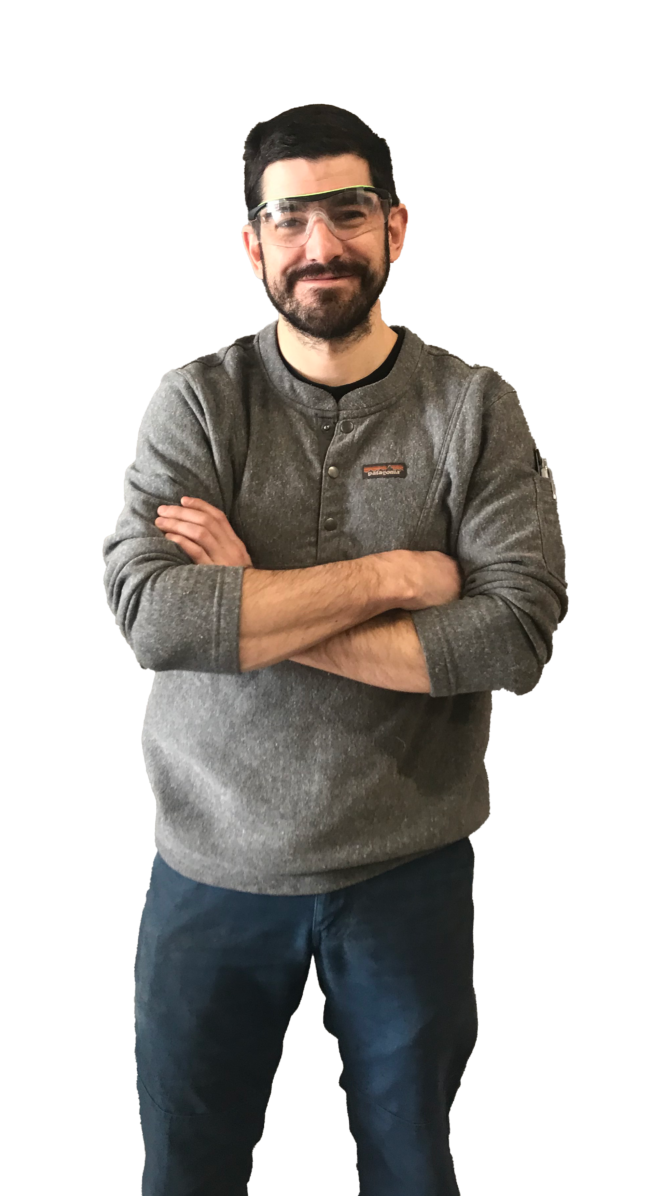
    MEMBER SPOTLIGHT – GREG KUCHYT

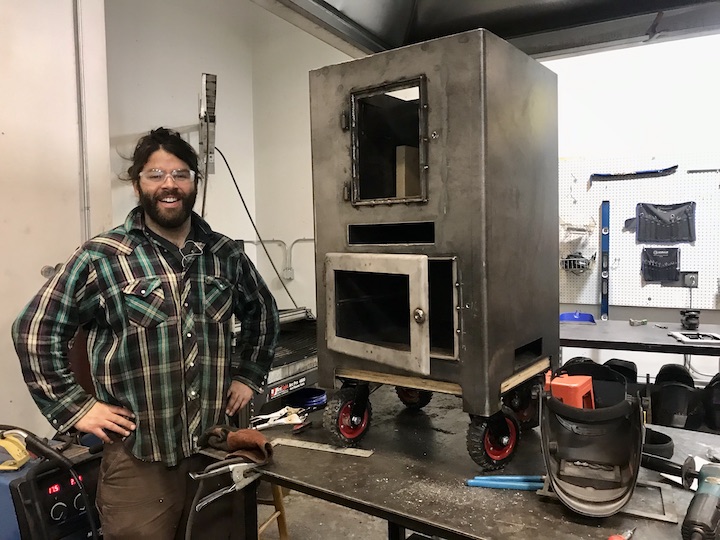
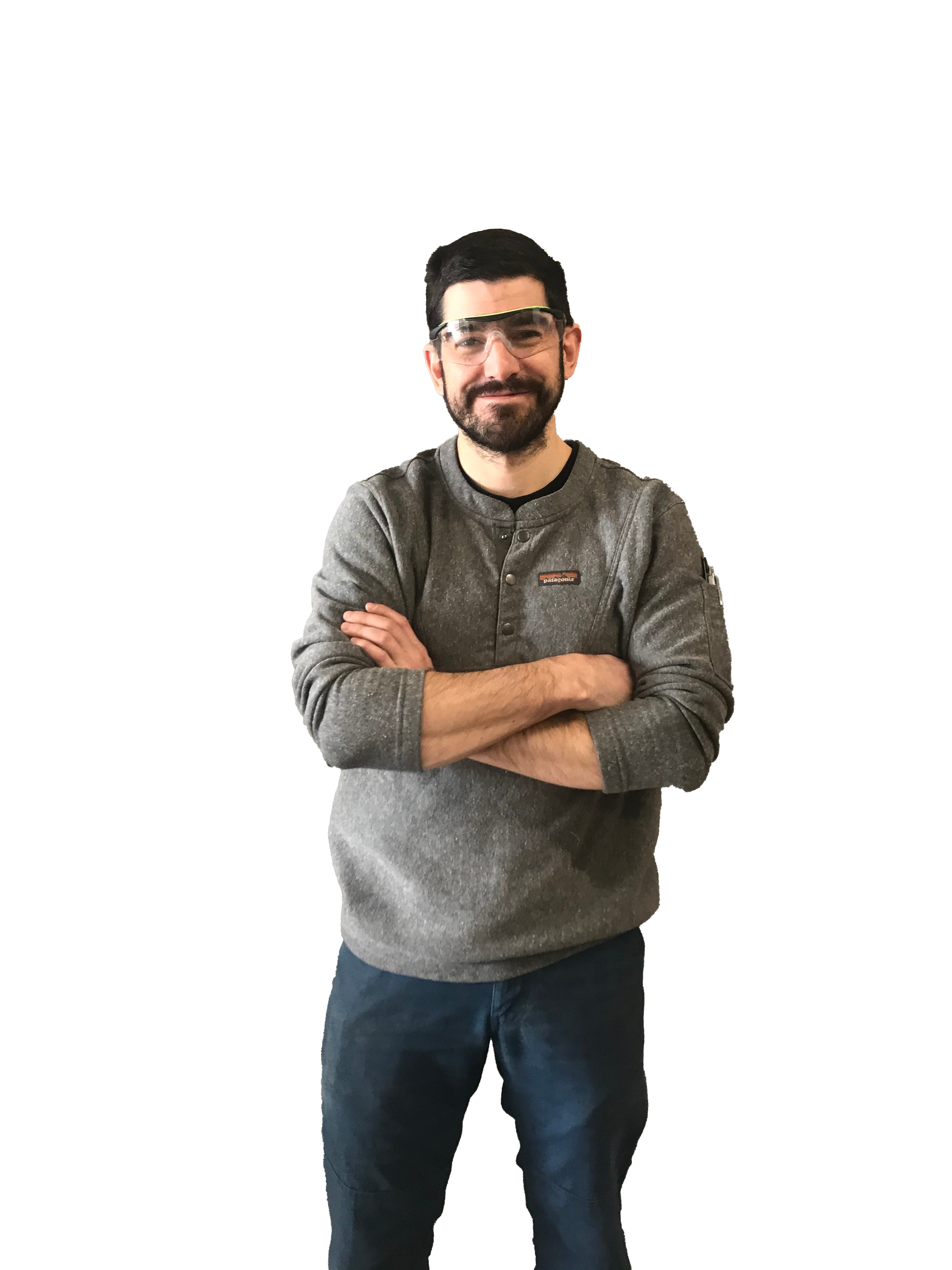
    [/vc_column_text][divider line_type=”No Line”][/vc_column][/vc_row][vc_row type=”in_container” full_screen_row_position=”middle” scene_position=”center” text_color=”dark” text_align=”left” overlay_strength=”0.3″][vc_column column_padding=”no-extra-padding” column_padding_position=”all” background_color_opacity=”1″ background_hover_color_opacity=”1″ width=”1/1″ tablet_text_alignment=”default” phone_text_alignment=”default”][vc_column_text]Greg Kuchyt is the current Metal Shop & CNC Router shop lead at Generator. Before his time in Vermont, he originally resided in the North Country of New York. He moved to Vermont in 2013, and as an avid climber, he enjoyed climbing a lot of the local cliffs. He noticed the poor condition of some of the anchors used by climbers for fall protection. Greg emphasized that these anchors are “ a life critical piece of equipment” and he got involved with a national movement seeking to effect the replacement of inadequate/improper anchors with standardized and vetted equipment.

    Greg’s volunteer work in the replacement of anchors led him to Generator. He learned that all of the tools required to replace such critical climbing equipment are custom one-off tools that do not exist through any commercial means. With no metal working experience Greg sought out local machine shops to produce the various components needed, but none of the shops he contacted responded to his inquiries. This issue turned into an opportunity as Greg learned about Generator, which had two tools he needed: a lathe and a mill. As Greg puts it “Generator has been a tremendous resource for me but also has been a resource that provides to the local climbing community, and at a national level as well.”[/vc_column_text][divider line_type=”No Line”][image_with_animation image_url=”12702″ alignment=”center” animation=”Fade In” box_shadow=”none” max_width=”100%”][divider line_type=”No Line”][vc_column_text]Since then Greg has poured countless hours into creating these tools and replacing over 600 of these anchors which has contributed tremendously towards improved climbers’ safety. Greg notes that while “it’s unlikely these things (anchors) will fail, when they do the consequences are pretty severe.” Greg noted that failures of climbing anchors have caused serious and even fatal accidents in the past. As a result, climbing organizations around the world are now tackling the issues related to replacing inadequate and aging anchors. Greg fully appreciates the barriers that exist to these organizations’ ability to remove these anchors and he has volunteered his expertise through conferences, presentations/clinics, and as a resource/tool maker for others to ensure appropriate vetted equipment is in place for climbers across the nation.

    Throughout this process, Greg was exposed to the world of machining, material science, and tenets of engineering in general. Greg is excited by material science and the comprehensive nature of designing effective mechanical devices. Originally, Greg studied computer science and worked as a Linux systems engineer at the State University of New York and University of Vermont. In 2020, Greg transitioned into the manufacturing industry to continue his learning of machining and to apply his experience from IT systems and programming. Currently, he works as a product developer at a manufacturing engineering group that specializes in the application of CNC technology, specifically post processor development and the commissioning of digital twins; digital twins are digital replicas of a CNC machine. According to Greg, these digital twins allow users to simulate the condition of materials and catch undesirable events like crashes of a machine. “We want to be able to emulate a lot of the real world in the digital space because it’s easier to fail in the digital space versus failing in the real world.” In turn, these processes are critical in the high-value low volume manufacturing world where scraped parts are costly and waste ultimately gets pushed on the consumer/tax payer.

    Greg continues to use his manufacturing experience to grow and support Generator’s emerging Fabrication Services, where custom solutions are provided to other non-profits of the City of Burlington. Greg believes that workforce development strengthens a community especially during times of need. As he puts it “There is a lot of value in having a community that is more aware of how modern manufacturing processes work because it makes that community more robust and resilient to external influences.” One example is when Generator, Burlington City Arts and the Church Street Marketplace collaborated to create huts for the Winter Artist Market in 2020. Greg lent his experience in concert with the Generator team of staff and volunteers to design and optimize the manufacturing process of the winter sheds. As a result, local artists had an opportunity to sell and promote their art safely during the pandemic.

    Greg continues to support and help at the Generator whenever he can. His current project is to “try to be like a sponge and grow as a human.”[/vc_column_text][divider line_type=”No Line”][vc_column_text]

    Intro To Digital Manufacturing: Laguna CNC Router Training Course

    [/vc_column_text][divider line_type=”No Line”][image_with_animation image_url=”12697″ alignment=”center” animation=”Fade In” box_shadow=”none” max_width=”100%”][divider line_type=”No Line”][vc_column_text]If you’re interested in learning more about Generator’s CNC and Digital Manufacturing technology, check out the upcoming series of trainings listed below that will provide students with an introduction to digital manufacturing and CNC router operation. Students will cover CAD/CAM software and CNC machine tool operation to produce a custom smartphone docking station. Students will be guided through the processes of creating 3D models in CAD and programming the manufacturing process in CAM followed by step by step instruction for safe operation of the CNC router.

    July 18th, 25th, & August 1st – 7.5 Hours Total 

    August 15th, 22nd, & 29th – 7.5 Hours Total 

    September 7th, 13th, & 21st – 7.5 Hours Total[/vc_column_text][divider line_type=”No Line”][/vc_column][/vc_row]
  • Member Made: Alex’s Scrap Pile Dumbbell

    Member Made: Alex’s Scrap Pile Dumbbell

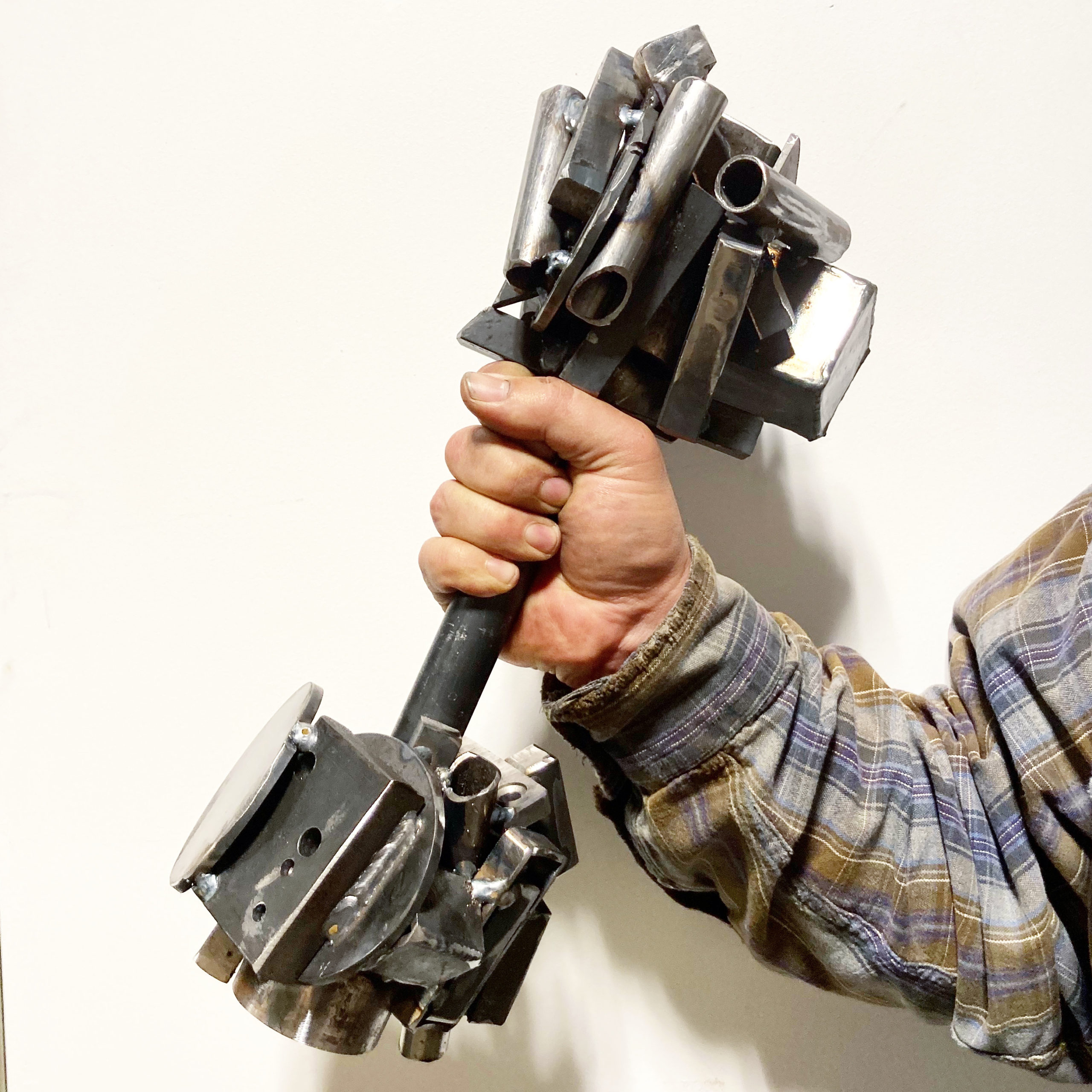
    [vc_row type=”in_container” full_screen_row_position=”middle” scene_position=”center” text_color=”dark” text_align=”left” overlay_strength=”0.3″][vc_column column_padding=”no-extra-padding” column_padding_position=”all” background_color_opacity=”1″ background_hover_color_opacity=”1″ width=”1/1″ tablet_text_alignment=”default” phone_text_alignment=”default”][vc_column_text]In the era of home workouts, it’s apparently pretty hard to come across exercise equipment at your local sporting good shop.

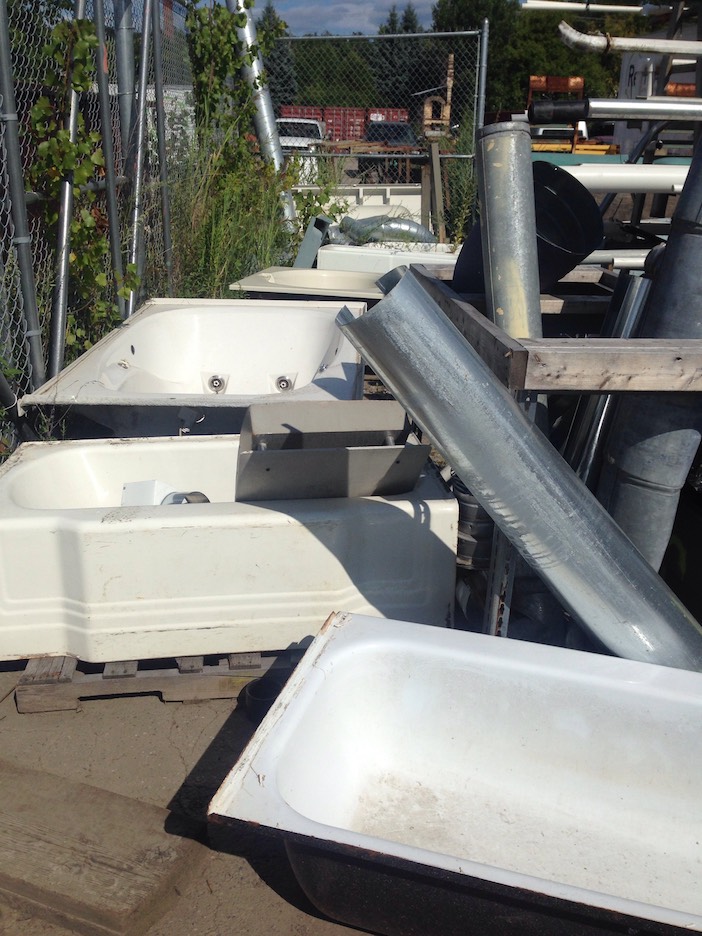
    Not a problem for our member Alex Hahl, who took a few minutes to clean up Generator’s metal shop scrap pile and make himself a dumbbell at the same time.

    [/vc_column_text][/vc_column][/vc_row][vc_row type=”in_container” full_screen_row_position=”middle” scene_position=”center” text_color=”dark” text_align=”left” overlay_strength=”0.3″][vc_column column_padding=”no-extra-padding” column_padding_position=”all” background_color_opacity=”1″ background_hover_color_opacity=”1″ width=”1/1″ tablet_text_alignment=”default” phone_text_alignment=”default”][image_with_animation image_url=”10478″ alignment=”” animation=”Fade In” box_shadow=”none” max_width=”100%”][vc_column_text]Addressing scarcity and cleaning up the scrap pile and having fun while doing it?

    That gets an A++++ from us.[/vc_column_text][/vc_column][/vc_row]

  • Member Made: Jake Pill and Kyle Sikora’s Giant Cattails

    Member Made: Jake Pill and Kyle Sikora’s Giant Cattails

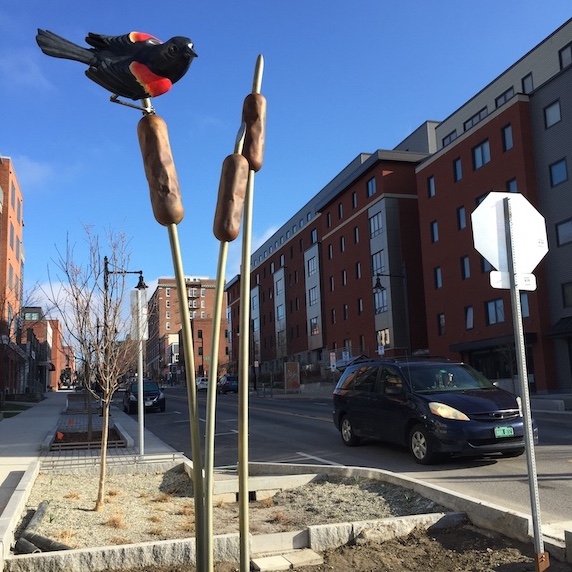
    [vc_row type=”in_container” full_screen_row_position=”middle” scene_position=”center” text_color=”dark” text_align=”left” overlay_strength=”0.3″][vc_column column_padding=”no-extra-padding” column_padding_position=”all” background_color_opacity=”1″ background_hover_color_opacity=”1″ width=”1/1″ tablet_text_alignment=”default” phone_text_alignment=”default”][vc_column_text css=”.vc_custom_1614780986733{padding-bottom: 40px !important;}”]The metal shop has been buzzing lately, and Generator members Jake Pill and Kyle Sikora are largely responsible thanks to their latest commission through Sikora Studios.

    Jake and Kyle won a bid through Burlington City Arts for a permanent outdoor sculpture at the entry to the newly redesigned St. Paul Street, one of Burlington’s “first great streets.”

    Burlington City Arts wrote:

    “Pill and Sikora fabricated the sculpture at Generator’s metal shop in the South End and at Arcana Workshop in Barre. The bird is sculpted out of foam, fiberglass, and stainless steel, while the cattails are made of a patinated mild steel with polished stainless steel accents.

    The artists worked closely with Artisan Engineering and the City’s project team to design a base that would provide the right support for the sculpture’s 12-17 foot height without impeding the rain garden’s function. This is Pill and Sikora’s second major public art commission locally, the other recently installed in South Burlington’s Cathedral Square development on Market Street.”

    [/vc_column_text][/vc_column][/vc_row][vc_row type=”in_container” full_screen_row_position=”middle” scene_position=”center” text_color=”dark” text_align=”left” overlay_strength=”0.3″][vc_column column_padding=”no-extra-padding” column_padding_position=”all” background_color_opacity=”1″ background_hover_color_opacity=”1″ width=”1/1″ tablet_text_alignment=”default” phone_text_alignment=”default”][image_with_animation image_url=”10905″ alignment=”” animation=”Fade In” box_shadow=”none” max_width=”100%”][image_with_animation image_url=”10903″ alignment=”” animation=”Fade In” box_shadow=”none” max_width=”100%”][image_with_animation image_url=”10904″ alignment=”” animation=”Fade In” box_shadow=”none” max_width=”100%”][/vc_column][/vc_row]
  • Member Made: Dwyer Haney’s Wood Stoves

    Member Made: Dwyer Haney’s Wood Stoves

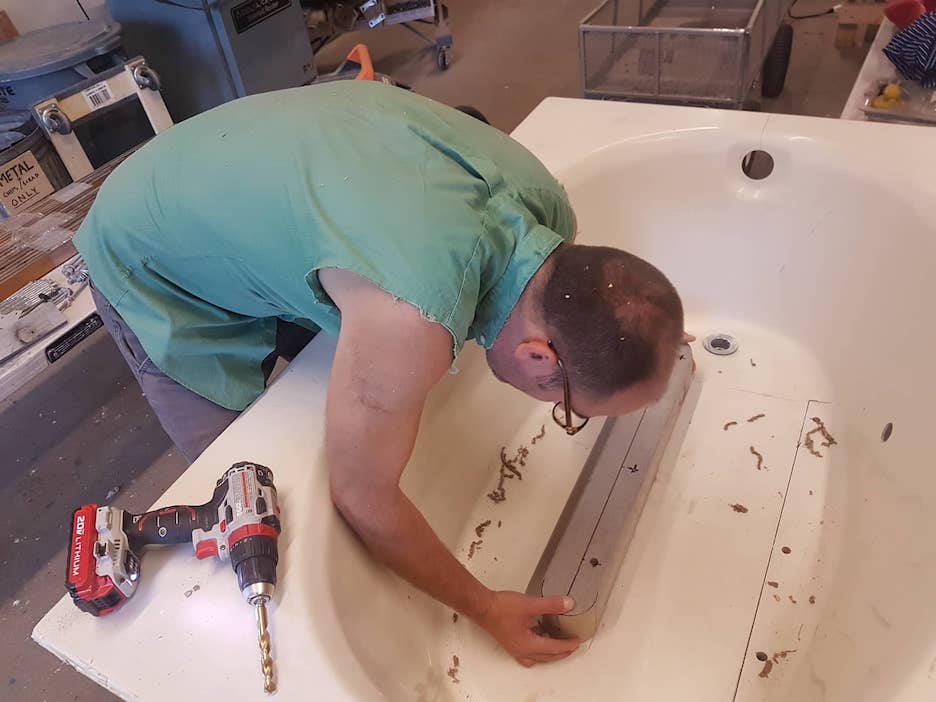
    [vc_row type=”in_container” full_screen_row_position=”middle” scene_position=”center” text_color=”dark” text_align=”left” overlay_strength=”0.3″][vc_column column_padding=”no-extra-padding” column_padding_position=”all” background_color_opacity=”1″ background_hover_color_opacity=”1″ width=”1/1″ tablet_text_alignment=”default” phone_text_alignment=”default”][vc_column_text css=”.vc_custom_1611952652145{padding-bottom: 40px !important;}”]We were pretty thrilled when WCAX picked up Dwyer Haney’s amazing story.

    Dwyer is one of Generator’s most active metal shop users. He’s the owner and fabricator behind Cole Forge Stoves, making multi-function wood stoves that replace the three appliances in the modern home that use the most fossil fuels: space heaters, stoves for cooking, and domestic hot water heaters.[/vc_column_text][image_with_animation image_url=”10909″ alignment=”” animation=”Fade In” box_shadow=”none” max_width=”100%”][vc_column_text css=”.vc_custom_1611952767334{padding-bottom: 40px !important;}”]While Dwyer has loved his time working out of Generator, it wasn’t the original plan — our metal shop was a life boat after a natural disaster took out his shop.

    Watch WCAX’s video for the full story:

    [/vc_column_text][image_with_animation image_url=”10910″ alignment=”” animation=”Fade In” img_link_target=”_blank” box_shadow=”none” max_width=”100%” img_link=”https://www.wcax.com/content/news/Stove-builder-surviving-the-storm-566417261.html”][/vc_column][/vc_row][vc_row type=”in_container” full_screen_row_position=”middle” scene_position=”center” text_color=”dark” text_align=”left” overlay_strength=”0.3″][vc_column column_padding=”no-extra-padding” column_padding_position=”all” background_color_opacity=”1″ background_hover_color_opacity=”1″ width=”1/1″ tablet_text_alignment=”default” phone_text_alignment=”default”][/vc_column][/vc_row]
  • Artist in Residence: Ryan Miller

    Artist in Residence: Ryan Miller

    Ryan Miller, frontman for the band Guster, shreds on guitar but has limited experience working with industrial power equipment.

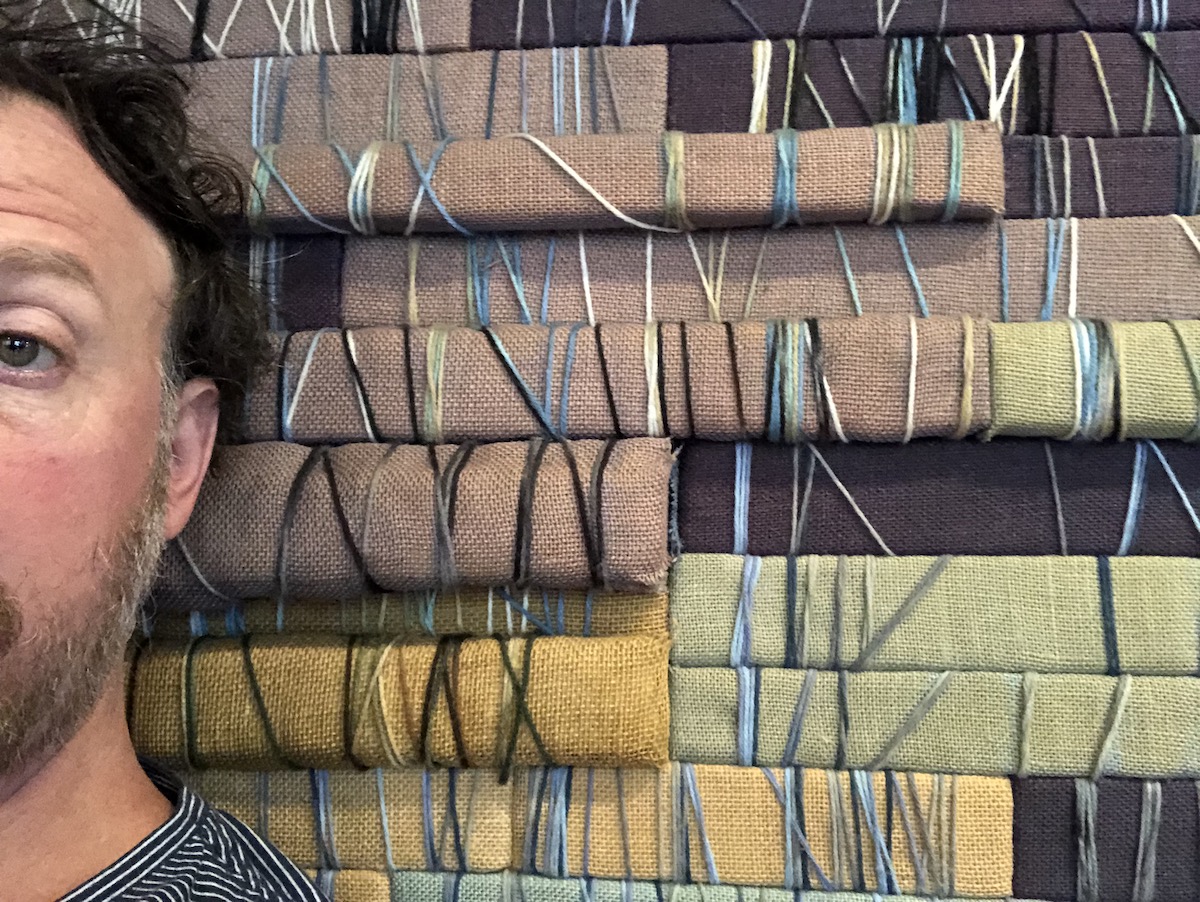
    While in residence at Generator, Ryan wasted no time acquiring the technical skills necessary to catapult his other obsession, embroidery, into a whole new universe.

    With the wood and metal shops at his disposal, Ryan invented a style of home decor that integrates semi-precious metals and embroidery into salvaged mid-century furniture.

  • Member Made: Elliott’s Microscopic Tree Structure Installation

    Member Made: Elliott’s Microscopic Tree Structure Installation

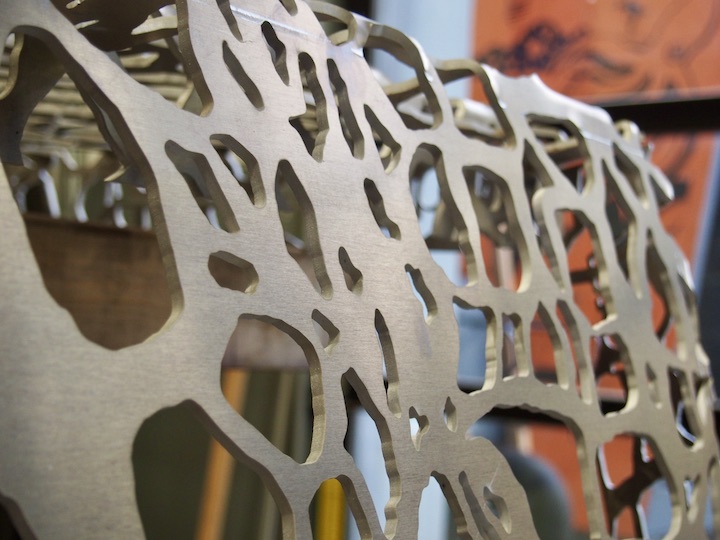
    [vc_row type=”in_container” full_screen_row_position=”middle” scene_position=”center” text_color=”dark” text_align=”left” overlay_strength=”0.3″][vc_column column_padding=”no-extra-padding” column_padding_position=”all” background_color_opacity=”1″ background_hover_color_opacity=”1″ width=”1/1″ tablet_text_alignment=”default” phone_text_alignment=”default”][vc_column_text css=”.vc_custom_1614780652401{padding-bottom: 40px !important;}”]The other day I walked into Generator and saw these beautiful grates waiting near the back door.

    Turns out they were made by Generator’s Operations Director, Elliott Katz!

    From Elliott:

    “These were for a public art installation commissioned by the University of Maine Farmington’s Life Science department. They invited me to make the pieces and I collaborated with their SEM (scanning electronic microscope) technician to capture the microscopic structure of the four most prominent tree species in Maine: Jack Pine, White Spruce, Black Spruce and Balsam Fir. I brought samples to their lab and we imaged the physical structure @ 350x. I transferred the imagery into vector tool paths and water jet cut offsite.”

    See what the pieces look like installed and check out more of Elliott’s public installation work here.[/vc_column_text][/vc_column][/vc_row][vc_row type=”in_container” full_screen_row_position=”middle” scene_position=”center” text_color=”dark” text_align=”left” overlay_strength=”0.3″][vc_column column_padding=”no-extra-padding” column_padding_position=”all” background_color_opacity=”1″ background_hover_color_opacity=”1″ width=”1/1″ tablet_text_alignment=”default” phone_text_alignment=”default”][vc_gallery type=”flexslider_style” images=”10892,10893,10894″ onclick=”link_no” img_size=”full”][/vc_column][/vc_row]
  • Maker In Residence: Peace Paper Project

    Maker In Residence: Peace Paper Project

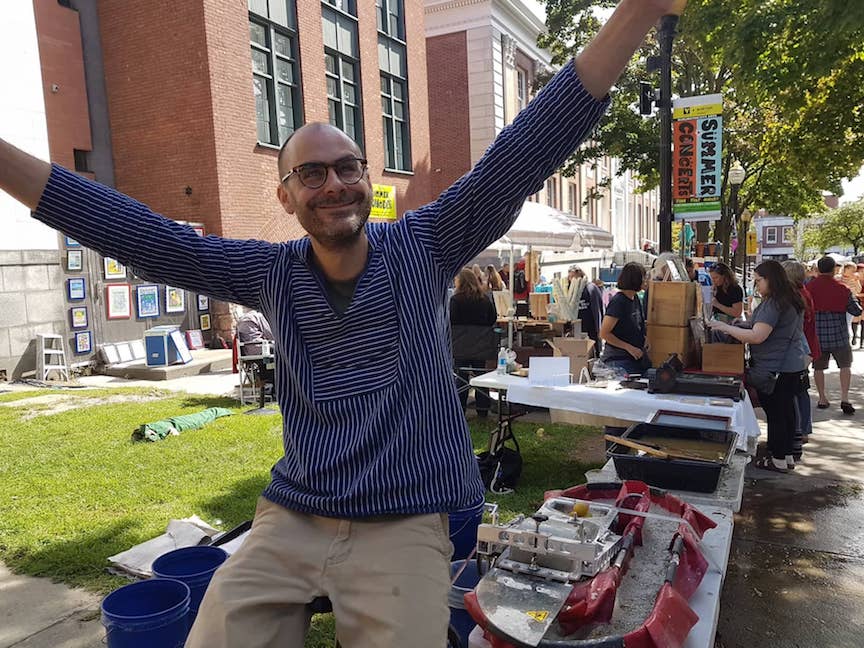
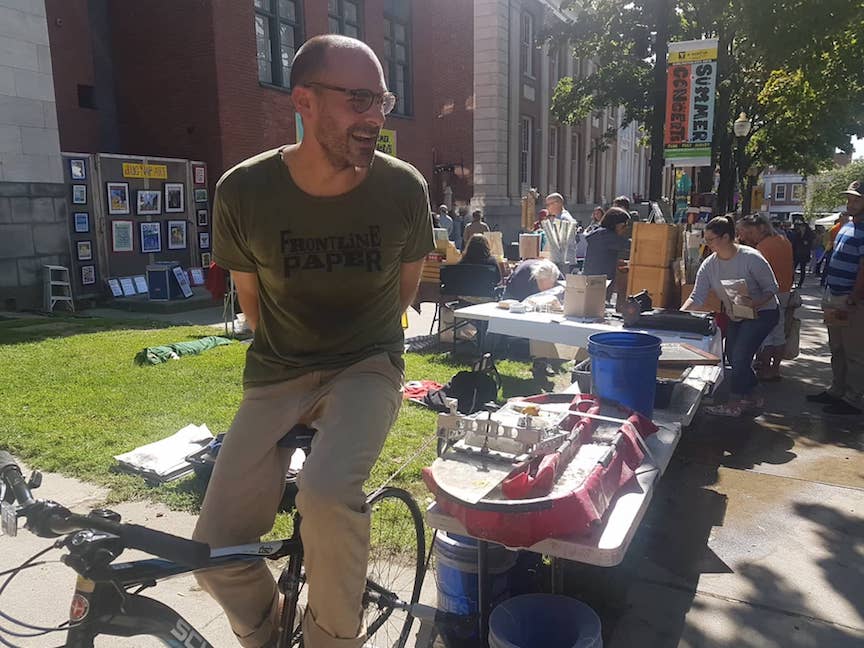
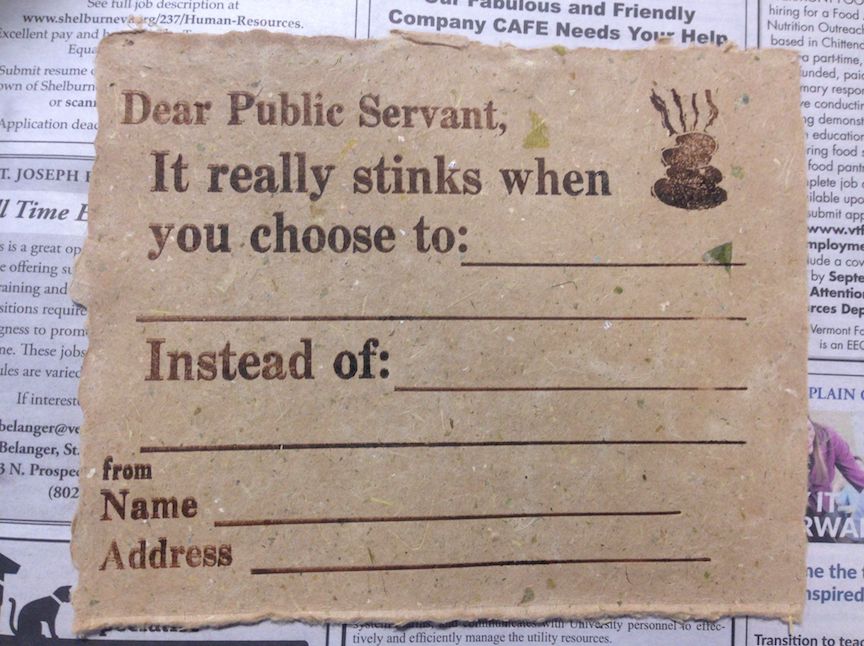
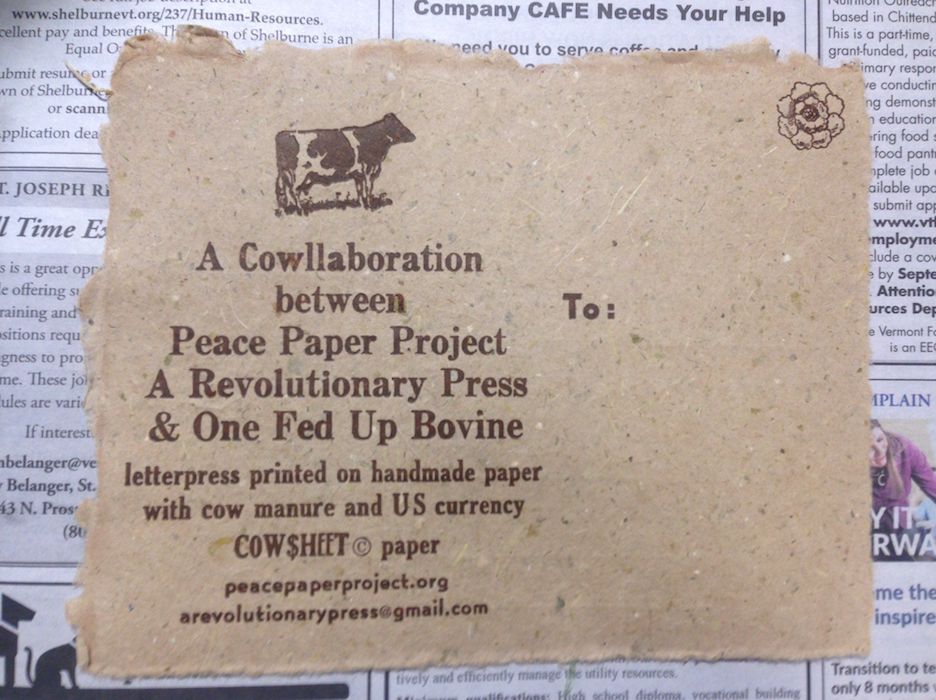
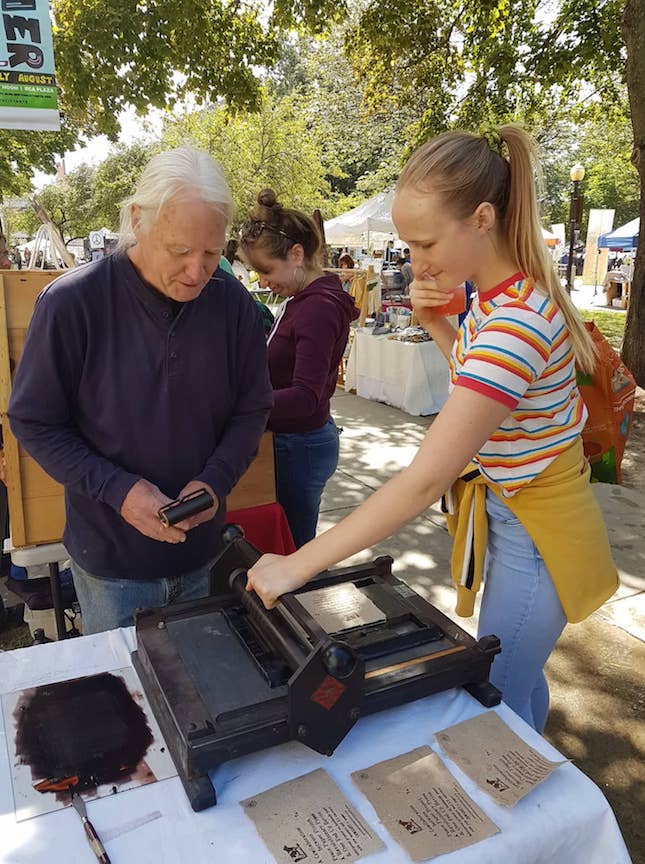
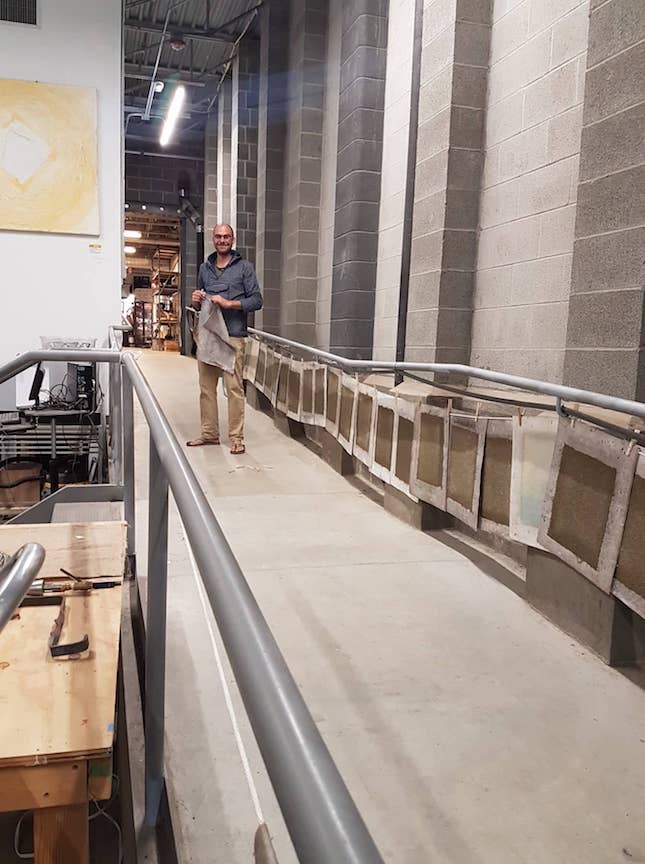
    Drew Matott and Peace Paper Project was our Maker In Residence for August and September 2018.

    We asked him to share a little bit about his residency and he shared a summary of his work below. Thanks so much for being part of Generator’s community, Drew!

    Peace Paper Project is an international organization of hand papermakers, art therapists and social activists. We set up hand papermaking studios around the world that in turn engage with the communities addressing specific issues.


    Since 2011, when Peace Paper Project was founded, we have established over 40 studios and worked with more than 30,000 survivors of war, terrorism, human trafficking, incarceration, mental illness… transforming clothing into paper, transforming associations of trauma & loss into the building blocks for healing.


    While Peace Paper Project is currently based out of Hamburg, Germany, we spend most of our time traveling the world conducting workshops and setting up papermaking as art therapy programs.


    The extreme portability of our studio and the transient nature of our operation allows us to have a wide impact with communities affected by war & terrorism and trauma & loss. The trade-off is that we rarely are able to spend quality time off the road focusing on developing specific projects. Our residency at the Generator afforded us with this much needed time and space to make innovations to, not only our program but also our tools.


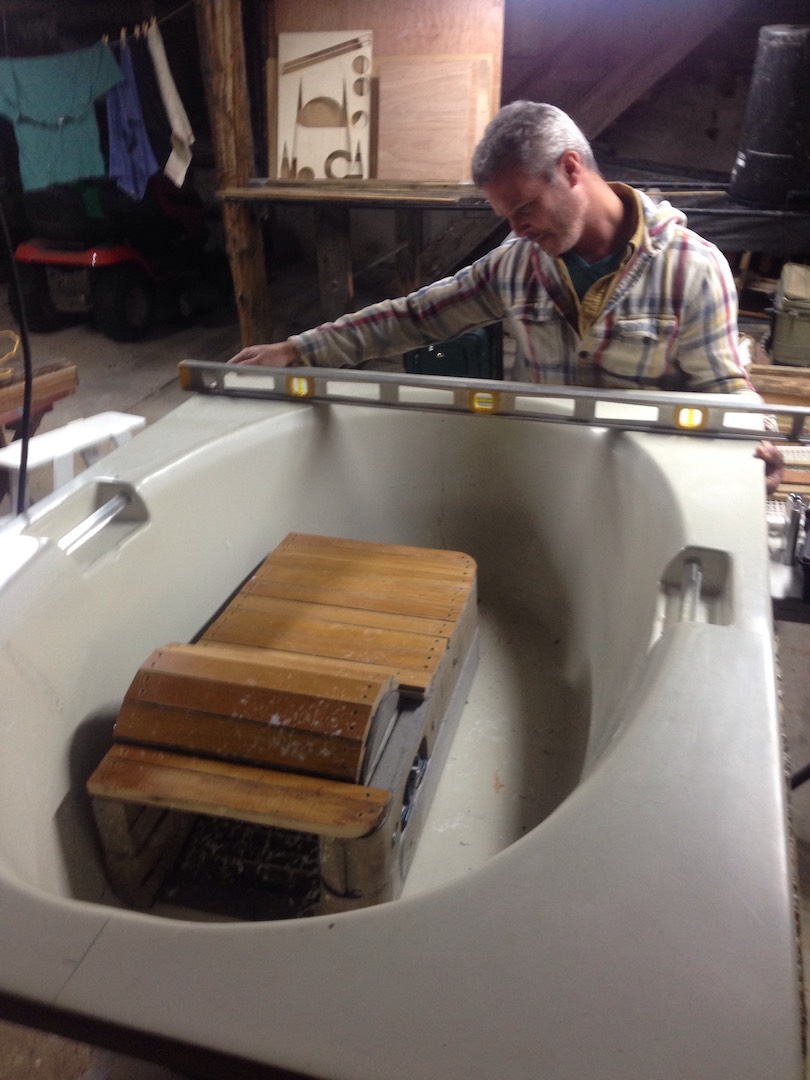
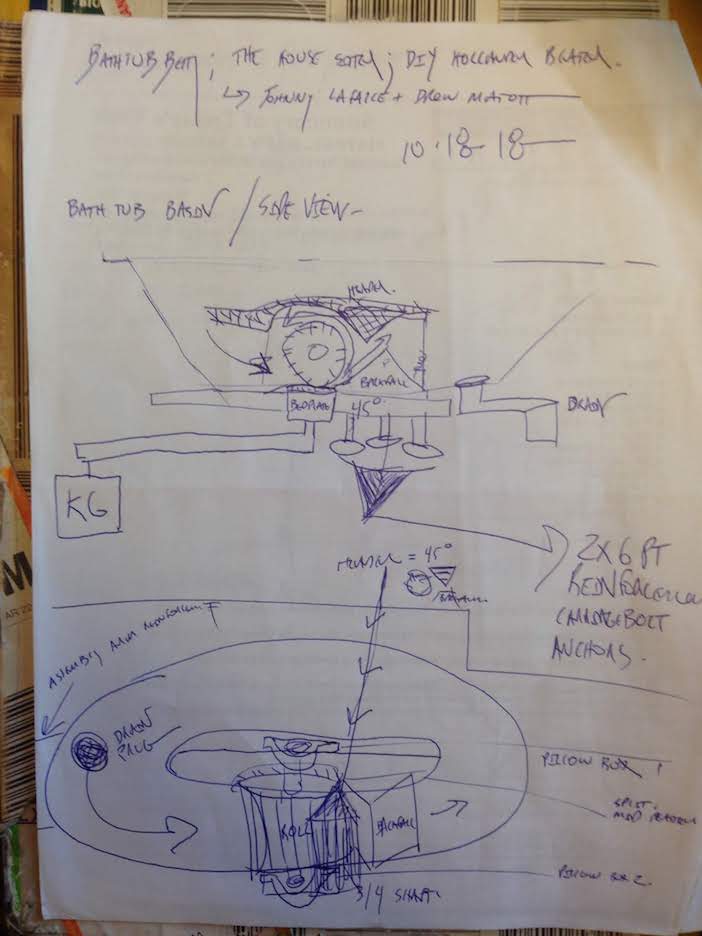
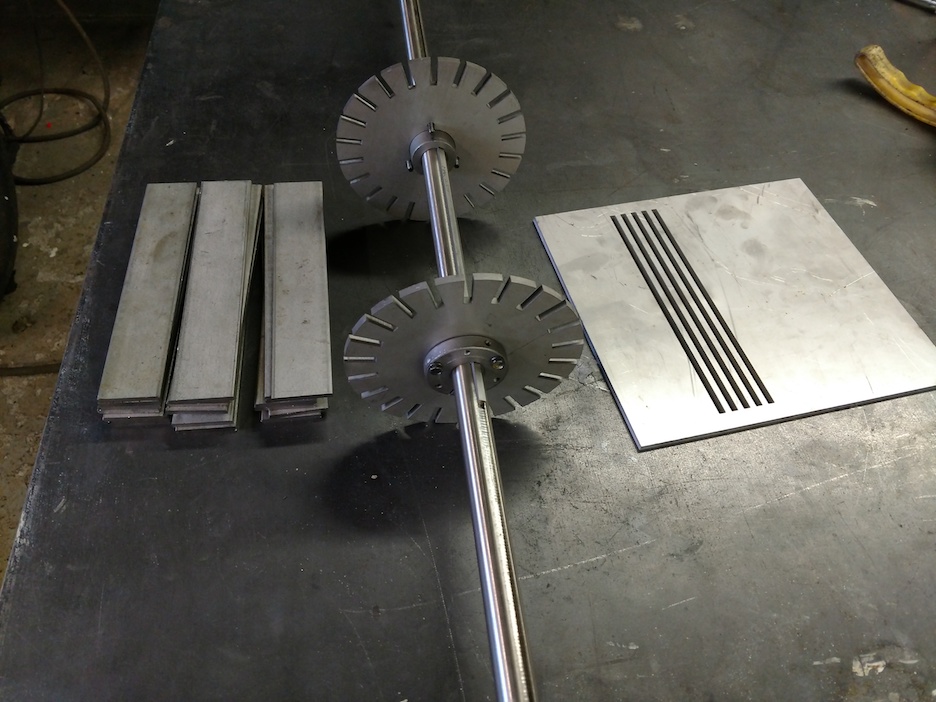
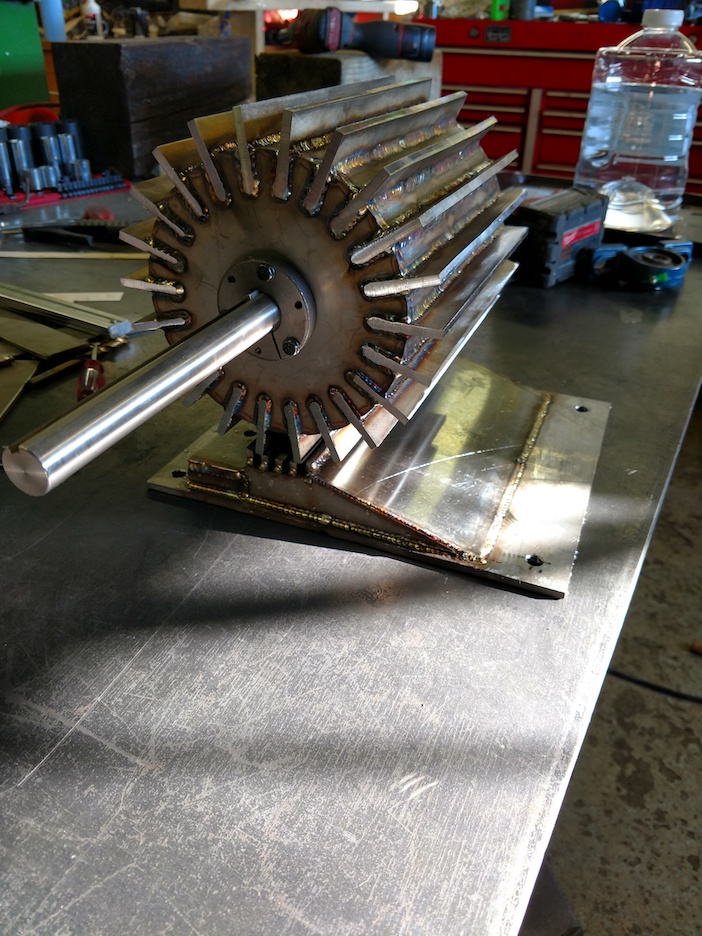
    For our Maker-In-Residence at the Generator, we set out to make improvements on the tools that we use. Specifically, we focused on the Hollander beater, the machine that transforms the old textiles (rags) into paper pulp.


    While hand papermaking field is growing in popularity and practice around the world, there are only a few individuals who make Hollander beaters for sale. Since there are so few individuals making these machines, they are extremely expensive, which presents challenges to Peace Paper Project operations when setting up studios in countries that are often disaster-torn.


    With our time at the Generator, we set out to design and build a DIY Hollander beater that could be built for less than $1,000, using locally sourced materials and labor.


    The finished result will be published as an open source file on Peace Paper Project’s website, with a complete step-by-step to the process. It is our goal to make papermaking more accessible to communities in need and to inspire a new generation of hollander beater builders.


    The Generator wan the perfect location to embark on this journey; for over two weeks we were able to take classes and personal tutorials to learn how to use the tools and equipment needed to conceptualize, engineer and construct our DIY Hollander beater. The staff were incredibly helpful and the maker community offered fresh insight, inspiration and were always willing to lend a hand.

    Learn more about Peace Paper Project at peacepaperproject.org.